

Apartment turns Houston property managers deal with every week aren’t just maintenance tasks. They directly affect how fast units get leased and how much revenue slips through the cracks.
Every extra day a unit sits empty adds up. And in a market like Houston, where there’s always another property competing for the same tenant, slow turns show up fast in your numbers.
This guide walks through how apartment turns actually play out on the ground, where things usually go wrong, and what you can do to keep them moving without sacrificing quality.
What Are Apartment Turns and Why They Matter
Apartment turns, or “make ready” services, are what happens between one tenant moving out and the next one moving in. Sounds straightforward. In practice, this is where operations either run smoothly or start to fall apart.
You’re dealing with:
- Unknown unit condition
- Tight timelines
- Multiple vendors or teams
- Leasing pressure
If the turn process drags, you don’t just lose time. You lose rent, and your leasing team ends up trying to sell something that isn’t ready.
Well-run apartment turns Houston operations aren’t about doing more work. They’re about doing the right work, in the right order, without delays stacking up.
Typical Apartment Turn Process in Houston
On paper, most properties follow the same steps. The difference is how cleanly those steps connect.
Move-Out Inspection
This is where everything starts, and where a lot of problems quietly begin.
- Walk the unit right after move-out
- Document everything clearly
- Build a realistic scope
If this step is rushed, you’ll end up discovering issues halfway through the turn. That’s when timelines start slipping.
Maintenance and Repairs
This is your core work:
- Plumbing leaks
- Electrical fixes
- HVAC performance
- Safety items
In Houston, HVAC is non-negotiable. If the system isn’t cooling properly, the unit isn’t ready. Doesn’t matter how good everything else looks.
For larger scopes, working with experienced apartment renovation services in Houston helps avoid delays and rework while keeping the process aligned with basic housing quality standards.
Painting and Surface Work
- Patch and repair walls
- Full paint or touch-ups
- Cabinets and trim
The challenge here isn’t the work itself. It’s keeping the quality consistent across multiple units, especially when different crews are involved.
Cleaning and Final Prep
This part gets underestimated more than anything else.
- Deep cleaning
- Appliances
- Floors
You can do a perfect repair job, but if the unit doesn’t feel clean when someone walks in, it doesn’t lease the same way.
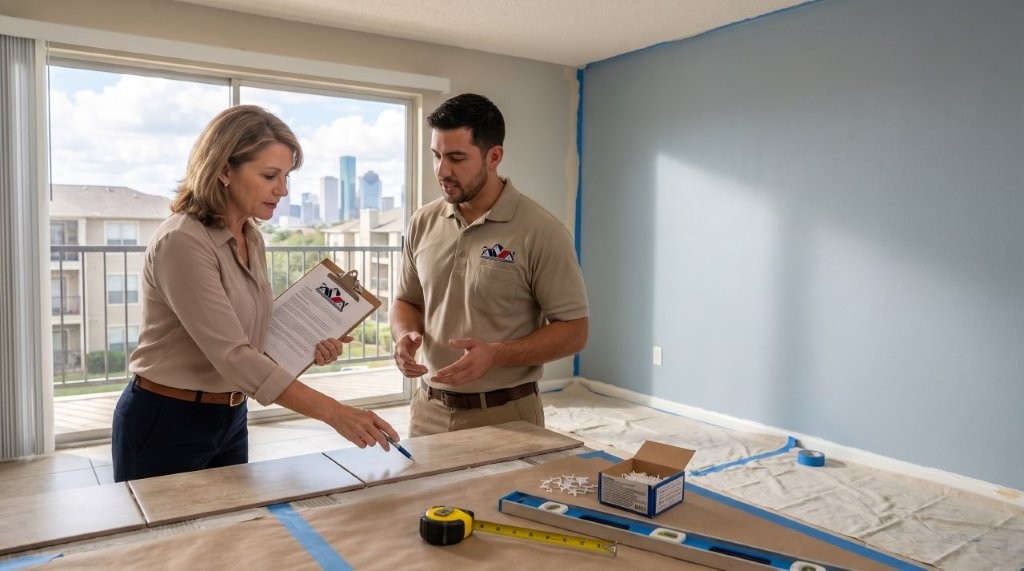
Property manager and contractor reviewing a unit during an apartment turn in Houston. The scene reflects real coordination between finished and in-progress areas.
Final Inspection and Leasing Approval
Before handing it off:
- Walk it like a tenant would
- Check the small stuff
- Make sure nothing was missed
Skipping this step is how you end up with callbacks after move-in, which is the last thing anyone wants.
7 Essential Steps to Improve Apartment Turns Houston Operations
If your turns feel unpredictable, it’s usually not because the work is too complex. It’s because the process isn’t tight.
1. Pre-Schedule Before Move-Out
Waiting until the unit is empty to start planning is already late. Line up your teams ahead of time so you’re not scrambling.
2. Standardize Your Scope of Work
Every unit shouldn’t require a brand-new decision-making process. Set a baseline for what gets done every time, then adjust only when needed.
3. Use Turn Checklists
People miss things. It happens. Checklists catch those misses before they turn into delays.
4. Focus on What Actually Affects Leasing
Not everything has equal priority.
If you’re choosing where to focus:
- HVAC
- Flooring condition
- Paint quality
These move the needle more than small cosmetic upgrades.
5. Cut Down Decision Delays
One of the biggest hidden delays is waiting for approvals. Define what your team can handle without needing constant sign-off.
6. Track Turn Times
If you’re not tracking how long turns actually take, it’s hard to improve anything.
Look at:
- Average days per turn
- Where delays happen
- Which vendors slow things down
7. Stay in Constant Communication
Most delays don’t come from the work itself. They come from people not being aligned.
Daily check-ins between:
- Maintenance
- Vendors
- Management
Strong coordination between vendors and internal multifamily maintenance services teams is what keeps turns moving.
Common Make Ready Challenges in Houston
Even well-run properties deal with these.
Vendor Delays
Someone shows up late, or not at all. Now everything behind them shifts.
Scope Creep
What looked like a quick turn turns into a heavier job because something was missed early.
Communication Breakdowns
One team thinks something is done. Another team is waiting on it. Nobody realizes the gap until time is already lost.
Inconsistent Quality
Different crews, different standards. Now your units don’t match, and leasing has to explain why.
How Long Do Apartment Turns Take in Houston?
There’s no single answer, but there are realistic ranges:
- Light turn: 1–3 days
- Standard turn: 3–5 days
- Heavy turn: 5–7+ days
What usually affects timing:
- Condition of the unit
- How fast decisions get made
- Vendor availability
- How organized the process is
Strong apartment turns Houston operations don’t just aim for speed. They aim for consistency. That’s what keeps everything predictable.
In-House vs Outsourced Make Ready Services Houston
This is where a lot of properties struggle to decide.
When In-House Works
- Smaller properties
- Lower turnover
- Reliable internal team
When Outsourcing Makes More Sense
- High volume of turns
- Tight timelines
- Need for consistency across units
The Real Trade-Off
In-house looks cheaper on paper. But if turns take longer, that savings disappears fast.
Outsourcing often helps with:
- Keeping schedules tight
- Handling multiple units at once
- Delivering more consistent results
For many properties, bringing in professional make ready services in Houston is the better fit when volume, timing, and consistency all matter at once.
Apartment Turns Checklist for Property Managers
Keeping things simple usually works best.
Before the Turn
- Confirm move-out timing
- Schedule crews
- Set expectations
During the Turn
- Check progress daily
- Adjust when needed
- Keep communication open
Final Walk
- Test everything
- Look at details
- Make sure it’s truly ready
Real-World Turn Insight
In a lot of Houston properties, the delays don’t come from big repairs. It’s the small things that pile up. Waiting a day for paint, another day for cleaning, then another for approval—it adds up quickly. The teams that stay ahead are the ones who plan turns before the unit is even vacant, not after.
How to Choose a Make Ready Service in Houston
Not every vendor operates the same way, even if they offer the same services.
What actually matters:
- Showing up when scheduled
- Communicating clearly
- Handling multiple units without falling behind
- Delivering consistent results
A vendor who keeps things moving is usually more valuable than one who focuses on perfection but slows everything down.
Conclusion: Faster Apartment Turns Houston Means Faster Revenue
At the end of the day, apartment turns Houston operations come down to one thing: keeping units moving.
When your process is tight:
- Units get back on the market faster
- Leasing has something solid to show
- You avoid last-minute surprises
It’s not about rushing the work. It’s about removing the friction that slows everything down.
CTA
If your turn process feels slower or more unpredictable than it should, it’s usually not the work—it’s how the work is being managed.
American Renovating Group helps Houston property teams streamline apartment turns so units are ready faster, with fewer delays and more consistent results.
FAQ: Apartment Turns Houston
What is included in an apartment turn?
Short answer:
An apartment turn includes inspection, repairs, cleaning, and final preparation to make a unit ready for the next tenant.
Expanded answer:
The process typically starts with a move-out inspection, followed by maintenance work like plumbing or HVAC fixes, then painting and deep cleaning. The goal is to deliver a unit that’s fully functional and ready for leasing without delays or callbacks.
How long do apartment turns usually take in Houston?
Short answer:
Most apartment turns in Houston take between 2 to 7 days depending on the condition of the unit.
Expanded answer:
Light turns with minimal repairs can be completed in a couple of days, while heavier turns may take closer to a week or more. Timing depends on how organized the process is, how quickly decisions are made, and whether vendors are scheduled properly.
What slows down apartment turns the most?
Short answer:
The biggest delays usually come from poor coordination, missed inspections, and vendor scheduling issues.
Expanded answer:
It’s rarely one big issue. More often, small delays stack up—waiting on approvals, crews arriving late, or discovering additional repairs mid-process. Staying ahead with planning and communication is what keeps everything moving.
Should apartment turns be handled in-house or outsourced?
Short answer:
It depends on your property size, workload, and how fast you need units turned.
Expanded answer:
In-house teams work well for smaller or predictable workloads. For larger properties or high turnover, outsourcing can improve speed and consistency. The real factor is whether your current setup keeps units leasing-ready without delays.
How can I speed up apartment turns in Houston?
Short answer:
You can speed up apartment turns Houston operations by pre-scheduling vendors, using checklists, and improving daily coordination.
Expanded answer:
Start planning before the tenant moves out, not after. Standardize your scope of work so teams aren’t making decisions from scratch every time. Daily communication between maintenance, vendors, and management helps prevent small issues from turning into delays.
What are make ready services?
Short answer:
Make ready services include all the work required to prepare a unit for a new tenant.
Expanded answer:
This typically includes repairs, painting, cleaning, and final inspections. The goal is to ensure the unit meets property standards and is ready to show without needing additional work after leasing begins.
What should be checked during a final walkthrough?
Short answer:
A final walkthrough should confirm all repairs are complete, systems are working, and the unit is clean and ready.
Expanded answer:
Walk the unit like a tenant would. Check HVAC performance, appliances, lighting, and finishes. Small missed details at this stage often lead to complaints or maintenance calls after move-in.
Why are apartment turns important for property performance?
Short answer:
Faster apartment turns reduce vacancy time and help maintain steady rental income.
Expanded answer:
Every extra day a unit sits empty impacts revenue. Efficient turns also improve leasing confidence and reduce stress on property teams. Consistency matters just as much as speed.
How do I know if my turn process is inefficient?
Short answer:
If your timelines are inconsistent or units aren’t ready when leasing needs them, your process likely needs improvement.
Expanded answer:
Look for patterns like frequent delays, repeated vendor issues, or last-minute fixes. If every turn feels different and unpredictable, it’s usually a sign the process isn’t standardized.
What should I look for in a make ready service provider?
Short answer:
Look for reliability, communication, and the ability to handle multiple units consistently.
Expanded answer:
A good provider shows up on time, keeps you updated, and delivers the same quality across units. Speed matters, but consistency and coordination are what actually keep your operations running smoothly.