

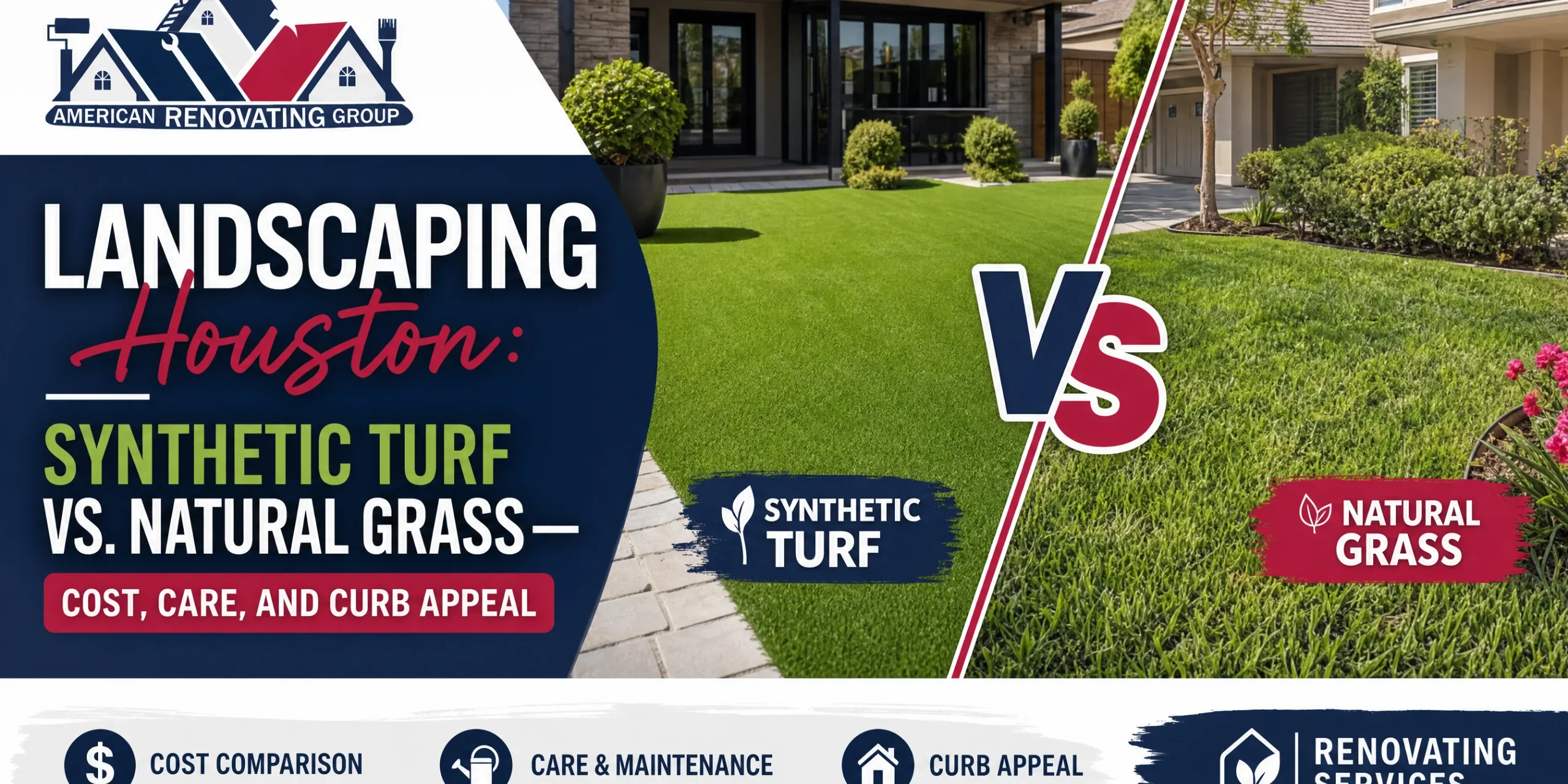
Landscaping Houston: Synthetic Turf vs. Natural Grass for Cost, Care, and Curb Appeal
Landscaping Houston: Synthetic Turf vs. Natural Grass—Cost, Care, and Curb Appeal
In Landscaping Houston projects, the choice between synthetic turf and natural grass often comes down to how each handles our heat, sudden downpours, and clay-heavy soils. The right answer depends on your site’s conditions, irrigation setup, maintenance style, and the curb appeal you want on your block.
Key differences at a glance:
- Installation: Synthetic turf needs well-built base prep and clean seams; sod needs soil conditioning, grading, and steady watering to establish.
- Irrigation: Turf typically reduces irrigation demand; sod requires efficient, well-zoned watering.
- Maintenance: Turf calls for debris cleanup and occasional infill checks; sod needs mowing, feeding, and weed management.
- Durability: Turf excels in high-traffic, pet, or shaded areas; sod performance varies by grass type and sun.
- Curb appeal: Premium turf looks consistent year-round; sod’s look changes with season, sun, and care.
Quick answer:
Is synthetic turf or natural grass better for Houston? It depends on your site and goals. Choose synthetic turf if you want a consistently green look with less watering and no mowing—especially in high-traffic, pet, or shaded areas. Choose natural grass if you prefer a living lawn and don’t mind ongoing yard care, and if you can support proper irrigation and drainage. Many Houston properties take a hybrid approach: turf where traffic or shade is highest, and sod or drought-tolerant plantings elsewhere.
Landscaping Houston Considerations: Climate, Soils, and Sun
Heat, humidity, and sun exposure across the seasons
- Houston summers push lawns hard. Zoysia and St. Augustine usually handle the warmth better than cool-season grasses, but even they can stress during extreme heat.
- Full-sun areas can thrive with well-chosen sod and reliable irrigation. In partial shade—under live oaks or between buildings—synthetic turf Houston solutions often outperform sod over time.
- Winters are mild, yet the occasional cold snap can cause warm-season grasses to brown. If year-round green matters, weigh that seasonal shift against turf’s steady color.
Heavy rains, drainage, and clay “gumbo” soils
- Our clay soils hold water, then bake hard. That cycle is tough on roots and invites compaction and runoff.
- Intense storms demand a drainage plan. For turf, that means a compacted, permeable base with the right slope and weep holes along edges. For sod, it means amending clay (compost/sand), grading, and sometimes adding French drains to prevent pooling.
- Poor drainage is the most common reason natural lawns turn muddy—and why turf that’s installed on the wrong base can feel “spongey.”
HOA, curb appeal expectations, and common grass types in Houston
- Many HOAs allow synthetic turf, but rules vary. Confirm accepted pile height, color range, and how much turf you can use relative to planting beds before you commit.
- Popular grasses here include St. Augustine (better shade tolerance), Zoysia (dense, lush texture), and Bermuda (drought-tolerant, loves sun). Texas A&M AgriLife turfgrass selection for Texas
- If consistent curb appeal is a neighborhood priority, premium turf delivers uniform color. With attentive care and feeding, sod can look fantastic too—just with more seasonal variation.
Cost Factors That Really Drive the Decision (Without Guessing Numbers)
Upfront install: base prep, grading, sod installation, and turf materials
- Synthetic turf: The base determines performance and cost. Expect excavation, removal of organics, installation of crushed rock or decomposed granite, compaction, geotextile fabric (site-dependent), edging, and seams. Turf quality—fiber shape, density, and backing—also influences longevity and price.
- Sod installation: Costs center on soil preparation (loosening clay), amending with compost and sand, grading for drainage, and installing fresh sod rolls. For both turf and sod, disposal of old material and tight site access affect labor and equipment needs.
Irrigation needs: retrofits, drip vs. spray, and smart controllers
- Turf: Many owners cap or reroute existing spray lines; a quick-connect hose bib for occasional rinsing is handy. Converting adjacent beds to drip improves water efficiency and prevents overspray onto turf edges.
- Sod: A smart irrigation plan is essential—zoned coverage for sun versus shade, matched nozzles, and a controller with rain or weather-based adjustment to handle Houston’s swings.
Ongoing yard maintenance: mowing, fertilizing, weed control, cleaning
- Turf: No mowing or fertilizing. Maintenance focuses on removing debris, rinsing high-use areas, sanitizing pet zones with turf-safe products, and topping off infill to keep fibers upright.
- Natural grass: Regular mowing and edging, fertilization, pre-emergent weed control, pest and disease management, plus seasonal tasks like aeration and topdressing.
Repairs and lifespan considerations for turf and natural lawns
- Turf: Over time, seam touch-ups, infill refreshes, or pet-traffic restoration may be needed. Lifespan depends on product quality, UV exposure, foot traffic, and routine care.
- Natural grass: Expect to overseed or patch bare spots. Long-term resilience improves with healthy soil, aeration, and proper watering—especially with clay underfoot.
Care and Maintenance in Houston Conditions
Synthetic turf Houston maintenance: debris removal, sanitizing, infill top-offs
- Clear leaves and pollen with a blower or brush so organic matter doesn’t mat down the fibers.
- Rinse high-use areas after heavy activity or storms; use turf-safe deodorizers and sanitizers for pet zones.
- Check infill levels annually and top off as needed to maintain a springy, natural feel and support the blades.
Natural grass care: mowing height, seasonal feeding, aeration, and overseeding
- Mowing: Follow grass-specific heights—keep St. Augustine taller to shade out weeds; maintain moderate heights for Zoysia for density.
- Feeding: Light, well-timed fertilization supports color and vigor; avoid over-fertilizing during peak heat.
- Aeration/topdressing: Annual core aeration plus a compost or sand-compost blend helps counter clay compaction and improves drainage.
- Overseeding: Patch thin spots in fall or spring, and manage thatch to reduce disease and pest pressure.
Drought-tolerant strategies: turf alternatives, native blends, and watering schedules
- For natural lawns, consider drought-tolerant varieties and reduce the lawn footprint with native or adapted beds.
- Group plants by water needs and mulch beds to retain moisture and cool roots.
- Water deeply but infrequently to encourage deeper roots, and adjust for sun versus shade zones.
Irrigation best practices: coverage, pressure, and water-use efficiency
- Audit coverage to eliminate dry spots and overspray onto hardscapes.
- Match precipitation rates across heads to prevent runoff on clay soils.
- Use smart controllers with rain/freeze sensors and local weather data to fine-tune watering across seasons.
Curb Appeal: What Looks Best on Your Block?
Color, texture, and “realism” of modern synthetic turf
- Today’s premium turf blends multiple blade shapes and green tones with a thatch layer for a convincing, natural look.
- The payoff is steady, uniform color through summer heat and winter slowdowns—ideal where year-round green is a priority.
Fresh sod installation for an instant lawn vs. grow-in periods
- Sod transforms a front yard in a day, but it needs diligent watering for several weeks to root and knit.
- Expect seasonal shifts in color and density with natural grass. Many homeowners appreciate that “alive” quality and the subtle changes through the year.
Shade, tree roots, pets, and play areas—matching use to material
- Under live oaks or in narrow courtyards, turf avoids the bare patches sod often develops.
- Heavily used side yards, dog runs, and play zones are strong candidates for turf with pet-friendly infill.
- Open, sunny front lawns typically excel with sod for a classic Houston streetscape—as long as irrigation and drainage are dialed in.
Safety, Comfort, and Environmental Considerations
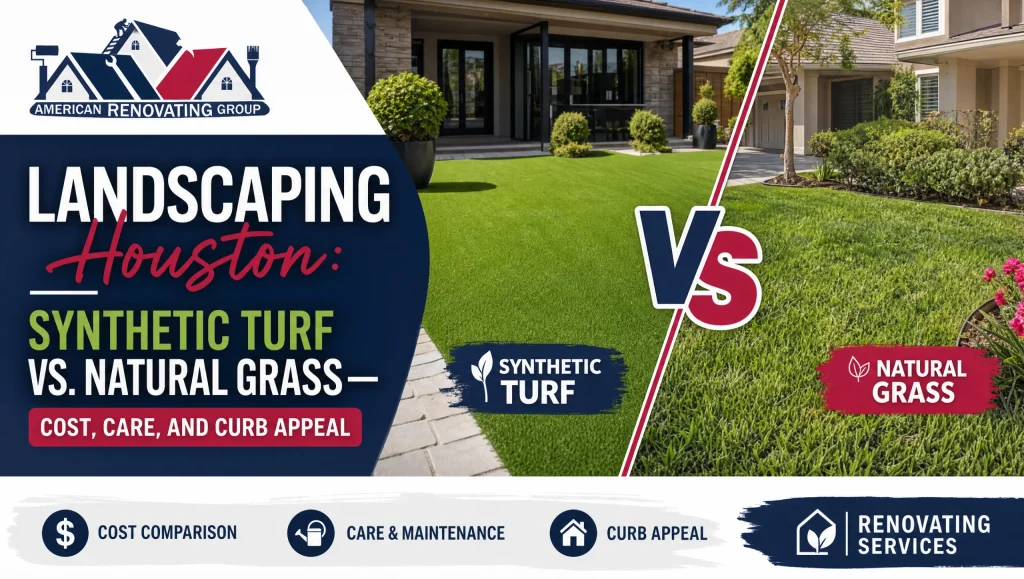
Houston homeowners compare synthetic turf and sod installation, irrigation needs, and curb appeal to choose what fits their yard and budget.
Heat buildup on turf and cooling workarounds
- In direct sun, synthetic turf can feel hotter than natural grass. Light misting, shade sails, and choosing lighter, cooler infills help manage surface temperature.
- Where kids or pets play at midday, add shade or plan outdoor time around peak sun.
Runoff, drainage, and permeability for both options
- Properly built turf bases are designed to drain; poorly built ones can trap water. Correct grading and permeable base layers are non-negotiable.
- Natural lawns infiltrate water when soil is healthy; compaction and thatch reduce permeability. Aeration and soil amendments improve performance.
Allergies, pollen, and cleanability for families and pets
- Turf doesn’t produce pollen and is easy to hose off after high pollen days.
- With natural lawns, time mowing and yard work to avoid peak pollen. Pet odors are easier to manage on turf with a consistent cleaning routine.
Myth vs. Fact (Houston edition)
- Myth: “Turf means zero maintenance.” Fact: Turf reduces mowing and watering but still needs cleaning, occasional rinsing, and infill checks—especially with pets or nearby trees.
- Myth: “Any sod will thrive if you water a lot.” Fact: In clay soils without proper prep and drainage, extra water often leads to runoff, fungus, and weak roots.
Quick Decision Guide: Which Option Fits Your Property?
Choose synthetic turf if…
- Shade, heavy foot traffic, or pets keep beating up natural grass.
- You want consistent, year-round curb appeal with reduced watering and no mowing.
- You’re ready to invest in thorough base prep and edging for long-term performance.
Choose natural grass if…
- You love a living lawn and don’t mind regular yard maintenance.
- Your site offers good sun, improved soil, and a well-planned irrigation system.
- HOA rules or personal preference favor a traditional lawn with seasonal change.
Hybrid ideas: turf + planting beds, limited sod zones, and xeriscape accents
- Use turf in shaded or high-traffic strips; keep sod in sunny, showcase areas.
- Convert side yards or dog runs to turf; pair with drought-tolerant beds out front.
- Add xeriscape bands along drives and sidewalks to cut edging and reduce overspray.
Real-World Insight from the Field in Houston
On recent projects around Houston, we’ve seen synthetic turf shine in shady courtyards and pet runs where grass thins out, while fresh sod delivers standout curb appeal at entries and wide, sunny lawns. The biggest wins come from doing the unglamorous work: building a proper base and drainage for turf, and closely managing irrigation for new sod during the first few weeks while it roots.
Installation Steps and Timelines at a Glance
Synthetic turf: base prep, edging, seams, infill, and grooming
- Site evaluation and layout: Confirm drainage paths and elevations, and mark utilities.
- Excavation and base: Remove organics, install compacted crushed rock or DG, and add geotextile if needed based on soil.
- Edging and seams: Secure perimeter edging; dry-fit, seam, stretch, and secure the turf for a smooth finish.
- Infill and grooming: Brush in your chosen infill, power-broom to stand fibers upright, and tidy edges.
- Timeline notes: Weather and access affect speed; base work is the longest—and most important—phase.
Sod installation: soil prep, grading, laying, rolling, and first watering
- Soil conditioning: Loosen clay, blend in compost/sand, and grade for a 1–2% slope away from structures.
- Laying sod: Stagger seams, butt edges tightly, and avoid gaps or overlaps.
- Rolling and watering: Roll to ensure soil contact; water immediately and keep the lawn consistently moist while roots establish.
- Timeline notes: You’ll have an instant lawn on day one; full establishment typically takes several weeks with careful watering and light traffic.
Planning help and related resources
- For a broader view of renovation planning alongside your landscape updates, see Master Renovation Planning: Budgeting Tips & Project Management Strategies
- To organize indoor and outdoor scopes together, visit Home Renovation Project Management: Strategies for a Successful Remodel at https://americanrenovating.com/home-renovation-project-management-strategies-for-a-successful-remodel/
- If energy savings are part of your outdoor refresh, check out Energy-Efficient Home Upgrades for Sustainable Living
- For multifamily sustainability tie-ins, see Transform Your Space with Sustainable Apartment Renovation at https://americanrenovating.com/sustainable-apartment-renovation/
Get Local Help with Landscaping Houston
Whether you’re leaning toward synthetic turf Houston solutions, new sod installation, or a smart hybrid, we can help you balance cost drivers, irrigation, and curb appeal for Houston’s heat, rain, and clay soils. Call American Renovating Services Group at +1 (346) 666-7705—our team is available 24/7 for inquiries. Explore our Houston renovating services for apartments and homes. For multifamily managers, see our Comprehensive Guide to Apartment Community Renovation and Maintenance at https://americanrenovating.com/comprehensive-guide-to-apartment-community-renovation-and-maintenance-projects-boost-resident-satisfaction-and-efficiency/ and our insights on Occupied Apartment Renovations at https://americanrenovating.com/occupied-apartment-renovations-strategy/. Let’s design a landscape that works beautifully on your block and keeps performing season after season.
Suggested image alt text: Landscaping Houston—synthetic turf and natural grass side-by-side in a Houston front yard showing drainage and curb appeal contrasts.
Frequently Asked Questions
1) Is synthetic turf or natural grass better for Houston’s climate?
Short answer: It depends on your site, use, and maintenance goals.
Expanded: For Landscaping Houston decisions, turf excels in shade, heavy traffic, and pet areas with less watering and no mowing. Natural grass shines in sunny yards with solid irrigation and soil prep. Many homes choose a hybrid: turf where grass struggles, sod in showcase, sunny zones.
2) How does Houston’s clay soil affect turf vs. sod installation?
Short answer: Clay demands proper base prep for turf and soil conditioning for sod.
Expanded: Synthetic turf needs excavation, a compacted, permeable base (crushed rock/DG), and correct grading to avoid “spongey” feel. Sod installation benefits from loosening clay, adding compost/sand, and grading or French drains to prevent pooling and compaction.
3) Will synthetic turf get too hot in Houston sun?
Short answer: Turf can feel hotter than grass in direct sun; there are workarounds.
Expanded: Midday heat can raise surface temps. Mitigate with light misting, shade sails, and cooler infills. Plan playtimes outside peak sun, or add shade in kid/pet zones for comfort.
4) What irrigation changes are needed if I switch to turf?
Short answer: Most owners cap or reroute sprays and keep a quick-rinse option.
Expanded: Synthetic turf Houston projects often cap existing spray lines and add a hose bib for rinsing or sanitizing. Convert adjacent beds to drip to reduce overspray onto turf edges and improve overall water efficiency.
5) What ongoing yard maintenance do turf and sod require?
Short answer: Turf needs cleaning and infill checks; sod needs mowing, feeding, and weed control.
Expanded: Turf maintenance includes debris removal, occasional rinsing, pet-zone sanitizing, and infill top-offs. Natural grass requires regular mowing/edging, seasonal fertilization, pre-emergent weed control, pest/disease monitoring, aeration, and topdressing.
6) How do pets and kids affect the choice?
Short answer: Turf handles heavy use and pet traffic very well.
Expanded: For play zones, side yards, and dog runs, turf with pet-friendly infill resists wear and cleans easily. If you love a living lawn for open, sunny areas, sod can work great with diligent irrigation and drainage planning.
7) What about drainage and Houston’s heavy rains?
Short answer: Proper drainage is non-negotiable for both options.
Expanded: Turf requires a well-compacted, permeable base with correct slope and weep holes at edges. Sod needs amended soils and grading; in problem spots, add French drains. Poor drainage leads to muddy sod and soft turf bases.
8) Are HOAs in Houston okay with synthetic turf?
Short answer: Many allow turf, but rules vary by community.
Expanded: Confirm pile height, color range, and percentage limits relative to planting beds before you commit. Getting approvals first can save rework and delays.
9) How long does installation take for turf vs. sod?
Short answer: Turf timelines hinge on base work; sod looks instant but needs weeks to root.
Expanded: Turf’s longest phase is base prep, followed by edging, seams, infill, and grooming. Sod provides a same-day green look, but expect several weeks of careful watering and light traffic while roots establish.
10) Can a drought-tolerant landscape still include grass?
Short answer: Yes—use a smaller lawn plus native/adapted beds.
Expanded: Choose drought-tolerant grasses for sunny areas, group plants by water needs, mulch, and water deeply but infrequently. Many Houston yards pair limited sod or turf with drip-irrigated, drought-tolerant beds.
11) Which grasses work best for Houston yards?
Short answer: St. Augustine, Zoysia, and Bermuda are common choices.
Expanded: St. Augustine tolerates some shade; Zoysia offers dense texture; Bermuda loves full sun and handles drought well. Match mowing height, feeding, and irrigation to the grass type and site sun.
12) Field insight: What issues do you see most often in Houston installs?
Short answer: Drainage misses with turf and overwatering new sod.
Expanded: In recent local projects, turf problems almost always trace back to thin or poorly compacted bases, while new sod struggles when watering isn’t zoned for sun vs. shade. The best results come from proper base/drainage for turf and tight irrigation management for fresh sod during the first weeks.