


HVAC Replacement vs Repair Houston: How to Decide in Real Heat and Humidity
Houston summers aren’t just hot—they’re long, humid, and relentless. That’s why HVAC replacement vs repair Houston decisions feel higher-stakes here than in most places. This guide gives Houston property managers and homeowners a clear, local framework to protect comfort, uptime, and operating costs without hype.
HVAC replacement vs repair in Houston means weighing a targeted fix against a full system change-out using reliability, comfort, energy efficiency (SEER2), indoor air quality, and timing considerations that reflect our long, hot, humid seasons.
Key decision factors at a glance
- Age and reliability: frequency of breakdowns and part availability
- Comfort performance: temperature balance, humidity control, and runtime
- Energy use: current bills vs projected savings from higher SEER2 equipment
- Indoor air quality: filtration, ventilation, and moisture concerns
- Maintenance history: documented tune-ups, coil/drain cleanliness, filter changes
- Timing and risk: peak-season outages, lead times, and resident impact
[Image alt: Technician evaluating HVAC replacement vs repair Houston]
The Houston reality: why HVAC decisions are different here
Heat, humidity, and runtime stress on AC lifespan
Houston’s cooling season starts early and runs deep into fall, so your air conditioner logs far more hours than in milder regions. That extended runtime accelerates wear on compressors, fan motors, contactors, and drain systems. High humidity forces systems to work harder to wring moisture from the air, and when condensate drains clog, water damage and IAQ issues can follow. The bottom line: even well-maintained systems here often reach the end of their practical AC lifespan sooner than the same models in cooler climates.
Energy bills and SEER2: what changes with newer equipment
SEER2 is the updated efficiency standard that better mirrors real-world operating conditions. Modern equipment designed for SEER2 can deliver meaningful energy savings, especially in Houston where cooling loads dominate. If your current system was rated under the previous SEER method, a replacement that meets or exceeds today’s SEER2 minimums can reduce runtime, cut peak demand, and stabilize costs. You’ll notice the gains most in properties with continuous cooling needs—upper-floor apartments, south- and west-facing homes, or units with older windows and insulation. For broader ideas that pair well with new HVAC, see our energy efficiency upgrades: https://americanrenovating.com/energy-efficient-home-upgrades-eco-friendly-remodeling-savings/
U.S. Department of Energy guidance on AC efficiency and SEER2
Indoor air quality and moisture control in Gulf Coast climates
IAQ isn’t just about dust. Around here, it’s about moisture—the driver of microbial growth, odors, and comfort complaints. Upgrading filtration, sealing duct leaks, and improving dehumidification can be as impactful as a bump in SEER2. If your system struggles to keep indoor relative humidity in a reasonable range, you’ll feel sticky and uncomfortable even when the thermostat says you should be fine. Replacement is a chance to match the right equipment with IAQ solutions tailored to Houston’s humidity.
HVAC replacement vs repair Houston: a simple decision framework
Use this structured pass/fail check to narrow your choice.
Reliability factors: frequency of breakdowns, parts availability, refrigerant type
Ask: Have you logged two or more unplanned outages in the last cooling season? Are key components (like the compressor or control board) past warranty? Is the unit running on an older refrigerant with harder-to-source components? Frequent failures and obsolete parts tilt the decision toward replacement.
Performance factors: comfort, runtime, hot spots, humidity control
Ask: Does the system run nearly nonstop without reaching setpoint? Do you have persistent hot or musty rooms? Are summer indoor humidity levels uncomfortable even when the thermostat reads correctly? If yes, first rule out maintenance issues (filters, coils, duct leakage). If problems persist, consider replacement plus airflow and duct improvements.
Cost factors: repair estimate vs projected energy savings from higher SEER2
When a major repair is quoted, compare it to the potential 5–10+ year savings from a higher-efficiency SEER2 system. You don’t need a precise number—just a reasonable range based on your energy patterns. If a large repair eats a big slice of the cost of a new system—and won’t solve comfort or humidity—replacement often wins on lifecycle cost.
Timing factors: peak-season risk, supply chain lead times, permitting windows
In Houston, a breakdown in June is more disruptive and costly than one in February. If your system is limping into summer, the risk of a mid-heat-wave outage, plus longer lead times for equipment, often tips the scale toward proactive replacement during shoulder seasons (spring/fall) when schedules and permitting are smoother.
Maintenance schedule health check: filters, coils, drains, and documentation
Before deciding, verify the basics: clean filters (monthly in peak season for many properties), clear condensate drains, and clean coils. Documented tune-ups reduce guesswork. If deferred maintenance is the main culprit, a repair plus a disciplined maintenance plan can restore performance.
When a repair makes sense
Targeted fixes that restore performance
Quick, focused repairs often resolve acute problems without replacing the whole system:
- Electrical components: capacitors, contactors, relays, and sensors
- Condensate issues: float switches, clogged drains, damaged pans
- Thermostat and low-voltage wiring faults
These items commonly fail under high heat and humidity but are generally fixable without large capital spending.
Maintenance-driven gains: cleaning coils, sealing ducts, thermostat calibration
A dirty evaporator coil or matted outdoor coil can quietly drag down capacity. Thorough coil cleaning, proper refrigerant charge verification, sealing obvious duct leaks, and calibrating thermostats can lift capacity, improve humidity removal, and cut runtime. If your system is mid-age and fundamentally sound, these steps can add years.
Short-term bridge strategies during peak season
If your unit fails during a heat wave and a right-sized, preferred replacement won’t be available for a week, a practical short-term repair can bridge the gap. Combine the fix with portable dehumidifiers or temporary cooling plans for sensitive units to protect occupants while you line up the best long-term solution.
When replacement is the smarter long-term move
Aging systems and diminishing returns on repeated repairs
If you’re stacking repair invoices and still fielding comfort complaints, you’re likely in diminishing returns. Houston’s stress profile—long runtime and heavy humidity—accelerates wear. After a certain point, replacing major components becomes a stopgap rather than a solution. If your unit is near the typical AC lifespan and the compressor or heat exchanger is in question, lean toward replacement.
Energy efficiency upgrades: SEER2 ratings, variable-speed options, smart controls
Newer SEER2-rated systems can:
- Use variable-speed compressors and ECM blower motors to match load, improve dehumidification, and reduce cycling
- Integrate with smart thermostats and zoning for better comfort in large homes and multifamily properties
- Deliver quieter operation—valuable for equipment near bedrooms or shared walls
Pair a high-efficiency system with building envelope improvements and other energy efficiency upgrades to meaningfully lower energy use over time. See our guide on energy efficiency upgrades: https://americanrenovating.com/energy-efficient-home-upgrades-eco-friendly-remodeling-savings/
IAQ upgrades during replacement: filtration, UV, dehumidification, fresh air
Replacement is the best time to:
- Right-size filtration (MERV level appropriate to the equipment and duct static pressures)
- Add UV or advanced air treatment where appropriate
- Integrate dedicated dehumidification or properly designed fresh air ventilation for Houston’s moisture load
These upgrades improve occupant health, reduce odors, and help maintain finishes and furnishings.
Planning the replacement window to avoid downtime
Coordinate replacement for shoulder-season windows or cooler weather breaks, pre-order equipment with confirmed lead times, and schedule electrical and permit inspections in advance. That planning reduces the risk of extended downtime and resident discomfort.
Budgeting and planning without surprises
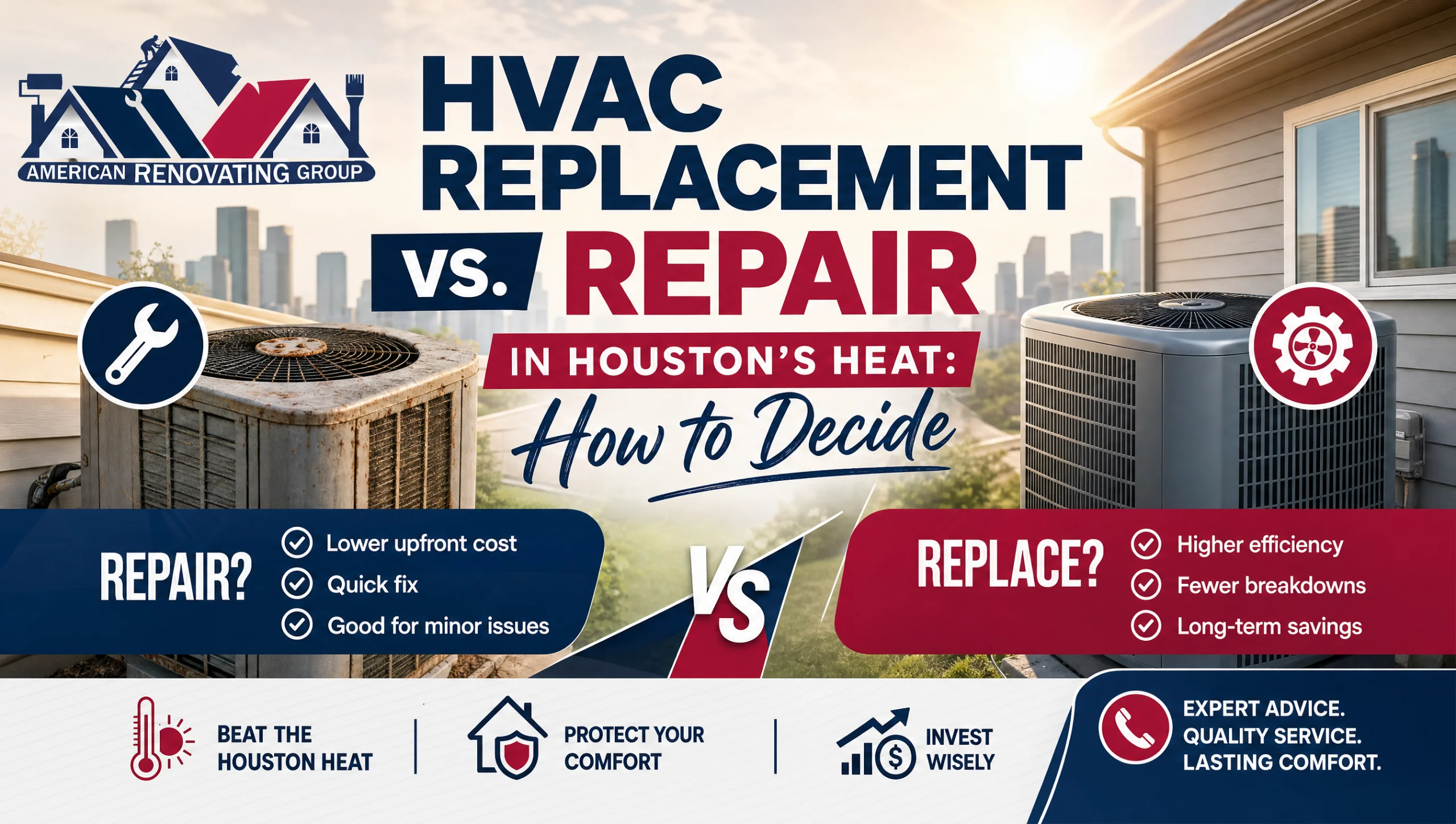
A Houston technician inspects an aging rooftop AC to decide between repair and a SEER2-compliant replacement for better comfort and costs.
Scope clearly: equipment, line sets, pad, electrical, permits, disposal
A clear scope protects your budget. Confirm whether your project includes:
- Condenser, air handler or furnace, coil, and thermostat
- New line set (or flush/pressure test existing), drain pan and safety switch, and pad
- Electrical whip/disconnect updates, and surge protection as applicable
- Permit fees and inspection scheduling
- Removal and responsible disposal of old equipment
Spelling out scope upfront avoids mid-project change orders.
Coordinate with residents or occupants to minimize disruption
Notify residents early, confirm access windows, and provide realistic timelines. For multifamily, stack replacements by building or riser line, aim for morning starts (cooler hours), and have contingency fans or portable dehumidifiers on hand. For broader renovation planning across a property, see our renovation planning tips: https://americanrenovating.com/renovation-tips/ and minimize disruption with proven coordination strategies.
Consider lifecycle costs: warranty, maintenance plan, energy use
Evaluate warranty length, parts/labor coverage, required maintenance schedule, filter sizing and availability, and estimated energy profile. A slightly higher upfront cost can be justified by longer warranties and lower operating costs. For broader budgeting strategy, review our budgeting and project planning guide: https://americanrenovating.com/master-renovation-planning-budgeting-tips-project-management-strategies/ to avoid surprises.
Houston-specific tips to extend AC lifespan
Seasonal maintenance schedule (pre-summer tune and mid-season check)
Schedule a comprehensive tune-up before summer and a quick mid-season health check. Confirm charge, clean coils, test safety switches, verify temperature split, and clear the condensate drain. In heavy-use properties, add a late-summer filter change as well.
Drainage and microbial growth control in high humidity
Keep the primary and secondary drains clear, confirm float switch operation, and use properly sloped drain lines. Consider pan tablets or approved treatment methods where appropriate to limit microbial growth. In properties with repeated pan overflows, evaluate adding a secondary drain pan or rerouting to a safe drain location.
Outdoor unit clearance and coil cleanliness in storm season
Maintain 18–24 inches of clear space around the condenser. Trim vegetation, remove storm debris, and gently rinse the coil fins as needed. After severe weather, inspect for shifted units, clogged coils, and damaged fan guards, and confirm the unit remains level on its pad.
Myth vs fact: Houston HVAC edition
-
Myth: “If it cools eventually, the system is fine.”
Fact: Long runtimes and poor humidity control signal capacity or airflow issues that drive up bills and reduce comfort, even if the setpoint is reached.
-
Myth: “Bigger tonnage always solves hot rooms.”
Fact: Oversizing hurts dehumidification. Duct leakage, poor airflow, or envelope issues often cause hot spots; address those first.
-
Myth: “Filters every three months are enough.”
Fact: In Houston’s peak season or dusty environments, monthly checks are smart—especially in multifamily settings or homes with pets.
Real-world experience from our field team
On a recent July call in the Heights, our team found a six-year-old system running constantly, with musty odors and a sweating supply plenum. Static pressure was high from a clogged filter and a partially matted evaporator coil; the drain line was also starting to back up. Instead of pushing an early replacement, we performed a deep coil cleaning, cleared the drain, upsized the return grille for better airflow, and calibrated the thermostat. The unit’s runtime dropped and indoor humidity stabilized. The owner scheduled a fall assessment to discuss SEER2 options and IAQ upgrades—on their timeline, without an emergency change-out.
Next steps: get a balanced assessment
Before committing to HVAC replacement vs repair Houston decisions, schedule a professional evaluation that includes:
- Manual load check (or equivalent) to confirm sizing
- Duct inspection with attention to leakage, static pressure, and airflow balancing
- Refrigerant charge and coil condition check
- IAQ review: filtration level, ventilation, and dehumidification strategy
- Energy usage review with a simple projection for potential SEER2 savings
American Renovating Services Group is a Houston-based team supporting residential and commercial properties with full-service renovations and HVAC solutions. For a clear, no-pressure assessment and 24/7 inquiries, call +1 (346) 666-7705. Explore our broader Houston renovating services for coordinated property upgrades: https://americanrenovating.com/ and see energy efficiency upgrades that can work alongside HVAC improvements: https://americanrenovating.com/energy-efficient-home-upgrades-eco-friendly-remodeling-savings/ For complex projects, our budgeting and project planning guidance can help you map costs and timelines: https://americanrenovating.com/master-renovation-planning-budgeting-tips-project-management-strategies/ Houston property managers can also review project expectations specific to our market: what Houston property managers should expect: https://americanrenovating.com/apartment-renovation-houston-process-expectations/ to plan resident communication and scheduling.
Conclusion
In Houston’s real heat and humidity, the smartest path in HVAC replacement vs repair Houston choices starts with a calm, structured look at reliability, comfort, humidity control, energy efficiency (SEER2), and timing. If a targeted repair paired with a disciplined maintenance schedule restores comfort and protects the AC lifespan, take it. If your system is aging, inefficient, and struggling with IAQ and humidity, plan a right-sized replacement with airflow and filtration upgrades. Either way, a balanced assessment protects comfort, operating costs, and indoor air quality for the long run.
Internal resources for deeper planning:
- Explore Houston renovating services: https://americanrenovating.com/
- Energy efficiency upgrades to pair with HVAC: https://americanrenovating.com/energy-efficient-home-upgrades-eco-friendly-remodeling-savings/
- Renovation planning tips for smoother coordination: https://americanrenovating.com/renovation-tips/
- Budgeting and project planning guide: https://americanrenovating.com/master-renovation-planning-budgeting-tips-project-management-strategies/
- What Houston property managers should expect: https://americanrenovating.com/apartment-renovation-houston-process-expectations/
Frequently Asked Questions
How do I decide between HVAC replacement vs repair in Houston?
Short answer: Use reliability, comfort/humidity, energy (SEER2), timing, and maintenance history to guide the choice.
Expanded: Start with a structured check: Are breakdowns frequent and parts hard to source? Does the system struggle with hot spots or humidity? Would energy savings from SEER2 equipment offset a major repair over the next 5–10+ years? What’s the risk of a peak-season outage? Confirm filters, coils, drains, and duct leakage first—then weigh repair vs replacement based on lifecycle cost and comfort.
What SEER2 considerations matter most for Houston?
Short answer: Choose equipment that meets or exceeds current SEER2 minimums and consider variable-speed options for humidity control.
Expanded: SEER2 better reflects real-world conditions. In Houston, higher-efficiency, variable-speed systems improve dehumidification and reduce cycling. You’ll notice gains most in higher-load homes and apartments (upper floors, west-facing units). Pairing a SEER2 upgrade with envelope and duct improvements can stabilize bills and comfort.
How does Houston humidity affect AC lifespan and comfort?
Short answer: Long runtimes and moisture stress parts, and poor dehumidification makes spaces feel sticky even at setpoint.
Expanded: Our longer cooling season means compressors, motors, contactors, and drains work harder and wear faster. If humidity isn’t managed, you’ll see musty odors, microbial growth risks, and comfort complaints. That’s why airflow, duct sealing, clean coils, and right-sized equipment matter as much as tonnage.
When is the best time of year to replace an HVAC system in Houston?
Short answer: Shoulder seasons—spring or fall—reduce downtime risk and ease scheduling.
Expanded: Replacing during cooler windows helps avoid mid-summer outages, navigates equipment lead times, and streamlines permitting and inspections. Planning ahead also gives time to stage electrical and duct adjustments without rushing.
What repairs commonly make sense instead of full replacement?
Short answer: Electrical parts, drain issues, and thermostat/wiring faults are often quick, cost-effective fixes.
Expanded: Capacitors, contactors, relays, float switches, clogged condensate lines, damaged drain pans, and simple control issues regularly fail under heat and humidity. If the system is mid-age and fundamentally sound, addressing these plus coil cleaning and duct sealing can restore performance.
What are clear signs that replacement is the smarter long-term move?
Short answer: Frequent outages, obsolete or major component failures, poor humidity control, and rising bills point toward replacement.
Expanded: If you’re stacking repair invoices and still hearing comfort complaints, you’re in diminishing returns. Aging equipment with compressor/control issues, outdated refrigerant/parts, and persistent humidity or airflow problems usually benefits from a right-sized SEER2 replacement with airflow and IAQ upgrades.
How can maintenance extend AC lifespan in Houston?
Short answer: Stay disciplined with filters, coil/drain cleaning, tune-ups, and documentation.
Expanded: Check filters monthly in peak season, clean indoor/outdoor coils, clear condensate drains, and verify thermostat calibration and refrigerant charge. A pre-summer tune and quick mid-season check help catch issues early. Documented maintenance also reduces guesswork when deciding repair vs replace.
How do indoor air quality (IAQ) and dehumidification factor into the decision?
Short answer: If humidity and IAQ issues persist after maintenance, plan upgrades during replacement.
Expanded: Right-size filtration (within equipment/duct static limits), seal ducts, consider UV/advanced air treatment as appropriate, and add dedicated dehumidification or fresh air ventilation sized for Houston’s moisture load. These steps improve comfort, protect finishes, and reduce odors.
What should be included in a replacement scope so there are no surprises?
Short answer: Equipment list, line set/drain details, electrical updates, permits/inspections, and disposal.
Expanded: Clarify condenser, air handler/furnace, coil, thermostat; new or tested/cleaned line set; drain pan and safety switch; pad; electrical whip/disconnect/surge as needed; permit fees and inspection scheduling; and responsible removal/disposal. A clear scope prevents mid-project changes.
How can property managers minimize resident disruption during HVAC work?
Short answer: Communicate early, stack work logically, schedule morning starts, and have temporary cooling/dehumidification ready.
Expanded: Provide access windows, realistic timelines, and building-by-building or riser-based schedules. In hot months, morning starts reduce discomfort and speed commissioning. Keep contingency fans or portable dehumidifiers available for sensitive units.
How do I weigh a big repair estimate against potential energy savings?
Short answer: Compare the repair cost to a reasonable multi-year savings range from a SEER2 system based on your bills.
Expanded: You don’t need a perfect model—use typical summer bills and runtime patterns to estimate a broad savings range over 5–10+ years. If a large repair takes a big slice of a new system’s cost—and won’t solve humidity or comfort—replacement often wins on lifecycle value.
What should I ask during a professional HVAC evaluation?
Short answer: Confirm sizing, duct health, refrigerant/coil condition, IAQ strategy, and an energy usage review.
Expanded: Ask for a load check, duct leakage/static pressure and airflow balancing review, refrigerant charge/coil condition verification, filtration/ventilation/dehumidification options, and a simple projection of potential SEER2 savings. For a balanced assessment in Houston, American Renovating Services Group is available 24/7 at +1 (346) 666-7705.