
Electrical Panel Upgrade Houston: What Older Homes and Apartments Need
An electrical panel upgrade Houston homeowners and property managers can trust means replacing or modernizing a home’s or apartment building’s main service equipment and breakers so it can safely handle today’s electrical loads, meet current code expectations, and deliver reliable power for HVAC and modern appliances. For many older Houston properties—single-family homes built before modern codes, garden-style apartments from the 1970s–1990s, and mixed-use buildings—upgrading the panel and addressing legacy wiring is first about safety, and then about comfort and capacity. This guide explains why and when to upgrade, how to plan for GFCI and AFCI protection, practical options for aluminum wiring replacement or repair, and what to expect with permitting and inspections in our area. You’ll also find field-tested strategies for coordinating multifamily electrical work with minimal disruption.
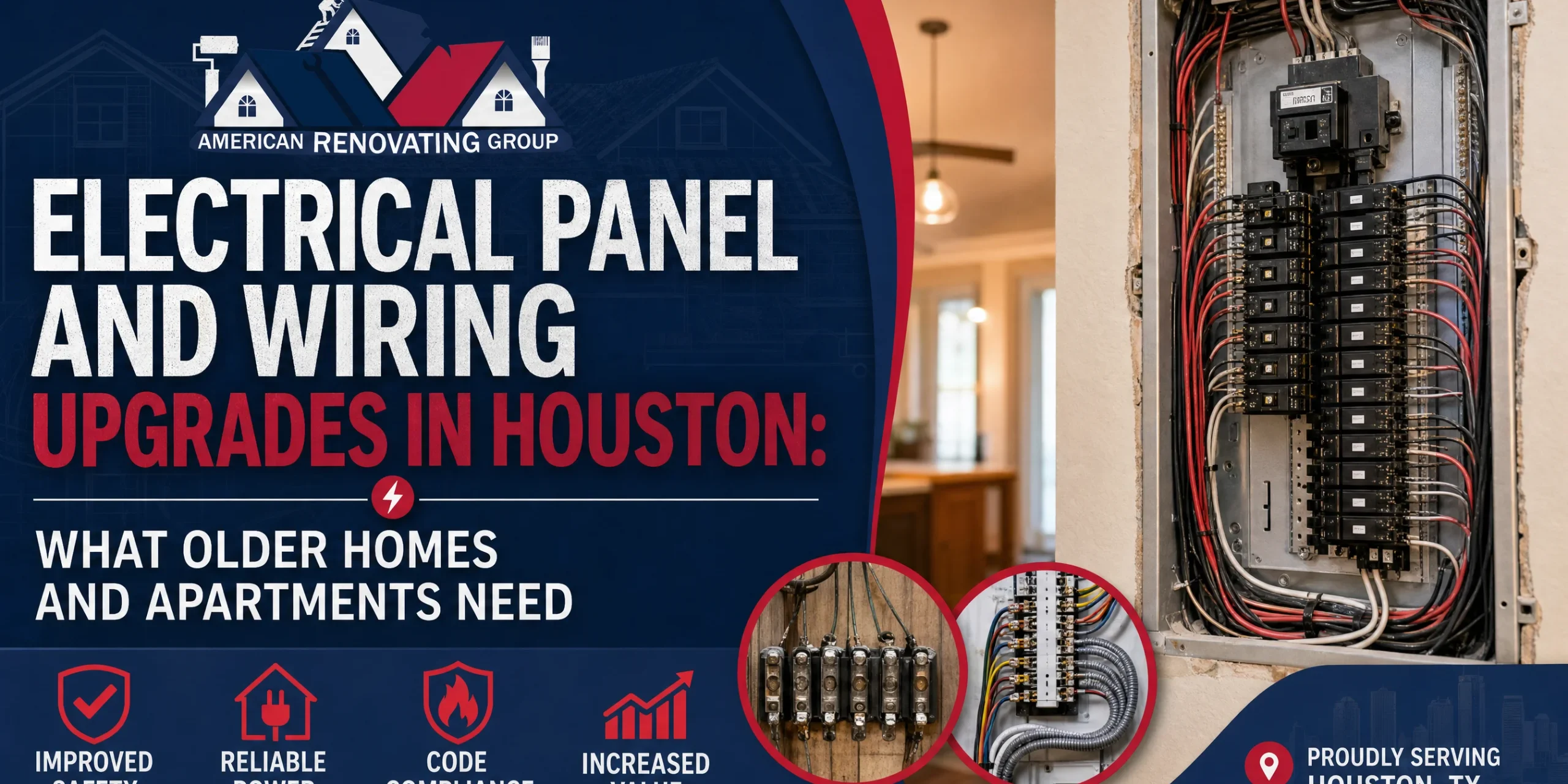
(Image alt: electrical panel upgrade Houston in older apartment building with labeled circuits)
How an Electrical Panel Upgrade Improves Safety and Capacity
Modern loads in Houston homes and apartments (HVAC, EV chargers, appliances)
- Air conditioning isn’t optional here. Heat pumps, larger air handlers, and multi-stage condensers can draw significant current—especially during peak heat.
- Kitchens now run multiple high-wattage appliances at once: induction ranges, microwaves, dishwashers, plus countertop devices.
- Laundry upgrades (including stackable washer/dryer units) and at-home EV charging add dedicated circuits and increase total service demand.
A properly sized, modern panel helps ensure these loads have the right circuit sizing and breaker protection—while leaving expansion room for future projects.
Reducing overloads, nuisance tripping, and heat-related risks
- Old or undersized panels, double-lugged breakers, and worn bus bars often create hot spots and repeated trips.
- Modern breakers and clean, torque-verified terminations reduce heat buildup and arcing risk—a big deal in Houston’s hot, humid climate where equipment already works harder.
- Clear labeling and correct breaker types (including GFCI and AFCI where required) support safer operation and easier maintenance.
Planning for future upgrades and resident comfort
- If you’re considering smart thermostats, whole-home surge protection, or EV-ready parking, you’ll want a panel with adequate capacity and spaces.
- Planning ahead reduces future shutdowns—combine electrical work with HVAC or other renovations to minimize downtime for residents.
Signs Your Houston Property May Need an Electrical Panel Upgrade
Frequent breaker trips, warm panel covers, buzzing, or burning odors
- Repeated trips—especially when HVAC starts—signal potential overloads or failing components.
- Warm panel doors, sizzling or buzzing sounds, or any odor of hot plastic warrant immediate professional attention.
Limited breaker spaces and obsolete equipment in older panels
- No open spaces, twin breakers used where not allowed, or panels from known obsolete brands are clear indicators it’s time to replace.
- If your panel can’t support today’s safety devices (GFCI/AFCI breakers), it may not be a suitable foundation for modern protection.
Lights dimming when HVAC starts or appliances run
- Noticeable dimming or flicker when large loads kick on can point to service limitations, loose neutrals, or undersized feeders—issues a qualified electrician should evaluate as part of an upgrade plan.
Wiring Concerns in Older Buildings: Aluminum Wiring Replacement
Where aluminum branch wiring is found and typical risks
- In some older Houston-area buildings, aluminum branch circuits were used for general lighting and receptacles.
- Aluminum expands and contracts more than copper at termination points. Without properly rated devices and terminations, that movement can loosen connections over time and increase heat and arcing risks.
Replacement vs. approved repair methods at terminations
- Aluminum wiring replacement (pulling new copper home runs) is the most comprehensive solution during larger renovations.
- When full replacement isn’t feasible, approved repair methods at terminations may include specialized connectors and devices rated for aluminum-to-copper transitions. A licensed pro should verify device ratings and select techniques that align with code and manufacturer instructions.
Coordinating room-by-room work in occupied apartments
- In multifamily projects, room-by-room scheduling limits each resident’s downtime.
- Plan short, staged shutdowns per unit; complete terminations, label circuits clearly, test GFCI/AFCI devices, and restore power the same day whenever possible.
Essential Protection: GFCI (and AFCI) Basics
Where GFCI protection is typically required (kitchens, baths, laundry, exterior)
- GFCI protection reduces shock risk where water is present: bathrooms, kitchens, laundry areas, garages, and outdoor receptacles are common zones.
- During a panel upgrade, your contractor can integrate GFCI protection at the breaker or at the first outlet in a circuit, depending on layout and goals.
AFCI protection for living areas and bedrooms
- AFCI breakers or devices monitor for arcing conditions common with cords and appliances in living rooms, bedrooms, and similar spaces.
- Many modern breakers offer dual-function GFCI/AFCI coverage for circuits where both protections apply.
Integrating GFCI/AFCI during panel upgrades without nuisance trips
- Proper circuit mapping, careful device selection, and correct neutral/ground separation in subpanels help avoid false tripping.
- During commissioning, a good workflow includes breaker testing, device testing, and verifying polarity and grounding continuity at representative outlets.
Code Compliance in Houston: Permits, Inspections, and Documentation
How permitting and inspection usually work for panel/wiring projects
- Panel replacements and significant wiring changes typically require a permit and a follow-up inspection.
- Expect a pre-work scope review, permit filing by your contractor, scheduling any required utility disconnect/reconnect, and an inspection before final closeout.
Load calculations, labeling, and panel clearances
- Load calculations guide proper service sizing—especially important if you’re adding HVAC capacity, a tankless water heater, or EV charging.
- Inspectors will check for required working clearances, correct conductor and breaker sizing, proper grounding and bonding, and accurate circuit directories.
Multifamily electrical considerations: meter stacks, house panels, and common areas
- Older apartments may use meter stacks and house panels to feed hall lighting, laundry rooms, and mechanical spaces.
- Coordination may include labeling common-area circuits, separating house loads from tenant meters where appropriate, and scheduling utility-side work with the property manager’s calendar.
Planning a Multifamily Electrical Upgrade Without Disrupting Residents
Staged shutdowns, notice timelines, and temporary power strategies
- Use staggered work windows by building, floor, or stack to limit outages.
- Provide clear resident notices at least 48–72 hours in advance, with day-of reminders; post at entries and deliver door tags.
- For critical spaces (office, access control, refrigeration in amenity areas), plan temporary power or sequence work to maintain key services.
Coordinating with property management and maintenance teams
- Align electrical work with leasing schedules, vacant-unit turns, and maintenance windows to reduce resident impact.
- Coordinate with HVAC crews so startup checks happen promptly after power restoration, preventing avoidable comfort complaints.
Documenting unit-by-unit work for compliance records
- Keep a simple log: unit number, circuits touched, GFCI/AFCI devices added, labeling updates, and test results.
- Organized documentation speeds future troubleshooting and supports code compliance Houston owners and managers can rely on.
For more local context on inspections and coordination, review Apartment Renovation Houston expectations.
What to Expect During an Electrical Panel Upgrade
Pre-upgrade assessment and scope
- Start with a site walk to confirm service size, panel condition, grounding/bonding, and any aluminum branch circuits.
- Develop a written scope including a load calculation summary, panel location, breaker schedule, GFCI/AFCI plan, and multifamily staging (if applicable).
Typical on-site sequence (shutdown, swap, terminations, labeling, test)
- Power is safely shut down and verified de-energized.
- The old panel and breakers are removed; new service equipment is mounted plumb with proper clearances.
- Conductors are inspected, trimmed, and re-terminated; new breakers are installed per the circuit schedule.
- Circuits are labeled clearly; GFCI/AFCI breakers and representative outlets are tested; grounding and bonding are verified.
Post-upgrade verification and inspection sign-off
- The crew completes a full checklist, photographs panel interiors and labeling, and coordinates inspection.
- After approval, any remaining trim work is completed, and the circuit directory is shared with property management or the owner.
Myth vs. Fact: Quick Clarifications
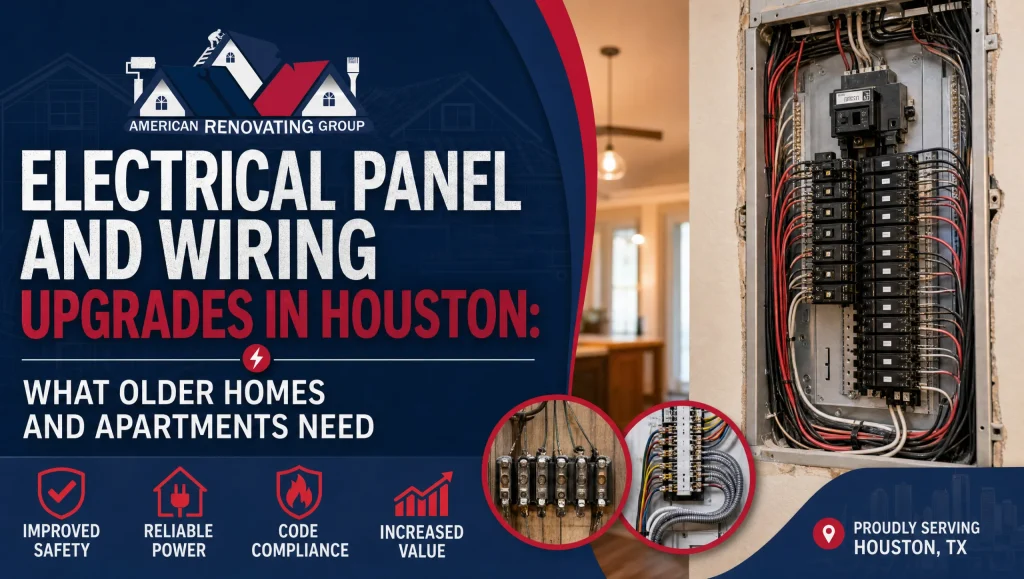
Upgrading a dated breaker panel and wiring in a Houston multifamily unit to support modern HVAC and appliances, with GFCI protection and safer alternatives to aluminum wiring.
- Myth: “If my lights only dim sometimes, my panel is fine.”
Fact: Occasional dimming during HVAC startup can indicate service or wiring issues worth evaluating during a panel assessment. - Myth: “GFCI outlets are enough; I don’t need GFCI breakers.”
Fact: Protection can be at the receptacle or at the breaker, but the right choice depends on circuit layout and goals—your contractor should design the best approach. - Myth: “Aluminum wiring is unsafe everywhere.”
Fact: The main concern is at terminations. Properly rated devices and approved repair or aluminum wiring replacement can mitigate risk when executed correctly.
A Downloadable-Style Checklist You Can Use
Panel and workspace
- Maintain required clearances in front of the panel.
- Verify labeling for every circuit; use durable, legible directories.
- Confirm proper grounding and bonding conductors and connections.
Load and capacity inputs
- Square footage and a major appliance list (range, dryer, water heater).
- HVAC nameplates (tonnage, heat strips, air handler).
- Planned additions: EV charger size, hot tub, workshop tools.
Protection zones
- GFCI: bathrooms, kitchens, laundry, garage, exterior, and other wet areas.
- AFCI: bedrooms, living rooms, hallways, and similar living spaces.
- Dual-function breakers as required by current code expectations.
Multifamily coordination
- Staged outage schedule per building or floor.
- 72-hour notice templates and door tags prepared.
- Unit-by-unit work log with test results and labeling photos.
Quick Answers to Common Upgrade Questions
- When should I upgrade? Consider an upgrade if you have frequent breaker trips, dimming when HVAC starts, warm or buzzing panels, limited breaker space, or original equipment in an older Houston property.
- What about aluminum wiring? Replacement or approved repair at terminations can reduce risk; a licensed pro should assess branch circuits and devices.
- Do I need permits? Panel and major wiring upgrades typically require permits and inspections in Houston; your contractor should coordinate this.
- How long does it take? A straightforward panel swap may be completed in a day once permitted and scheduled; multifamily projects require phased planning.
- Who can help in Houston? American Renovating Services Group offers full-service, code-conscious upgrades and multifamily electrical coordination at (346) 666-7705.
Real-World Note from the Field
On a recent occupied mid-rise in Houston, our team scheduled power by stack—about two hours at a time—so residents could plan around HVAC downtime. We labeled every circuit at the panel and confirmed GFCI protection in kitchens and baths before moving to the next unit. The maintenance lead walked with us to test air handlers as power came back, and we posted clear notices on each floor to keep everyone informed.
How American Renovating Services Group Can Help
Full-service coordination across electrical, HVAC, and renovation trades
- We align panel upgrades with HVAC servicing, smart device pre-wiring, and other renovation phases to reduce repeat shutdowns.
- If you’re planning broader improvements, explore our renovation project management tips for coordinating trades during electrical upgrades and overall remodels: https://americanrenovating.com/home-renovation-project-management-strategies-for-a-successful-remodel/
- Considering wider property updates? See our Houston renovating services to coordinate painting, cleaning, and make-ready work alongside electrical improvements: https://americanrenovating.com/
24/7 inquiries at (346) 666-7705 and service across Houston
- We’re available around the clock to discuss scope, timelines, and resident communication plans.
Next steps: site walk, assessment, and a clear, written scope
- We begin with a site walk to verify panel condition, service size, and any aluminum wiring concerns, then deliver a written scope with a proposed schedule.
- For occupied communities, we align with property calendars and offer notice templates and outage windows. For more on minimizing disruption, see Occupied apartment renovation strategies at https://americanrenovating.com/occupied-apartment-renovations-strategy/ and Faster apartment turns and make ready at https://americanrenovating.com/make-ready-services-apartment-turns-guide/
Planning Tips That Pair Well with a Panel Upgrade
- Energy-efficient upgrades that complement electrical work: Tighten up comfort and operating costs by planning LED lighting, smart thermostats, and other efficiency steps after the panel is upgraded. Learn more at https://americanrenovating.com/energy-efficient-home-upgrades-eco-friendly-remodeling-savings/
- Smart home upgrades and electrical planning: If you expect to add smart switches, whole-home networking, or automation, confirm low-voltage pathways and spare breaker spaces now. Get ideas at https://americanrenovating.com/smart-home-renovation-upgrade-with-modern-tech-automation/
- Preparing for a more extensive building refresh? Review Apartment renovation Houston expectations to align electrical work with other scopes and inspection touchpoints: https://americanrenovating.com/apartment-renovation-houston-process-expectations/
Electrical Panel Upgrade Houston: What Older Homes and Apartments Need—In Summary
For older single-family homes and multifamily communities in our area, an electrical panel upgrade Houston properties can benefit from is a practical way to improve safety, reliability, and capacity for today’s HVAC systems, kitchens, laundry, and even EV charging. It’s also the ideal time to add GFCI protection, evaluate AFCI needs, and address aluminum wiring replacement or approved termination repairs. With a permit-ready plan, solid documentation, and thoughtful staging, you can protect residents’ comfort and keep operations smooth. If you’re ready to plan your upgrade, call American Renovating Services Group at (346) 666-7705. We’ll coordinate electrical, HVAC, and renovation schedules, manage code compliance Houston owners expect, and deliver a clear, written scope tailored to your property’s needs.
Frequently Asked Questions
What is an electrical panel upgrade Houston homes and apartments might need?
Short answer: It’s replacing or modernizing the main service equipment and breakers so your property can safely handle today’s loads and meet current code expectations.
Expanded answer: An electrical panel upgrade Houston property owners can trust involves swapping outdated panels and breakers for modern equipment, verifying grounding/bonding, and adding space and protection (GFCI/AFCI) for HVAC, kitchens, laundry, and optional EV charging. It’s both a safety and capacity improvement, especially in older homes and multifamily buildings.
How do I know my Houston property needs an electrical panel upgrade?
Short answer: Frequent trips, dimming lights, warm or buzzing panel covers, limited breaker spaces, or obsolete equipment are common signs.
Expanded answer: Repeated breaker trips (especially on HVAC startup), warm panel doors, buzzing, or burning odors suggest overloads or failing components. No open spaces, twin breakers where not allowed, or panels that can’t support GFCI/AFCI are red flags. Dimming when large appliances start may indicate undersized service or loose neutrals—issues an upgrade assessment should address.
Do I need permits and inspections in Houston for a panel upgrade?
Short answer: Yes—panel replacements and significant wiring changes typically require a permit and inspection.
Expanded answer: Expect a scope review, permit filing by your contractor, coordination for any utility disconnect/reconnect, and an inspection to verify clearances, correct conductor/breaker sizing, grounding/bonding, labeling, and load calculations. Proper documentation supports code compliance Houston authorities expect.
How long does an electrical panel upgrade take?
Short answer: A straightforward single-panel swap often takes about a day once permitted; multifamily projects are staged in phases.
Expanded answer: After permitting and scheduling, a typical residential panel replacement can be completed the same day, including shutdown, swap, terminations, labeling, and testing. In apartments, work is sequenced by building, floor, or stack to keep outages short and predictable and to coordinate with property management calendars.
Can you address aluminum wiring during the panel upgrade?
Short answer: Yes—full aluminum wiring replacement is ideal during renovations; approved termination repairs are options when full replacement isn’t feasible.
Expanded answer: Some older Houston buildings have aluminum branch circuits. Best practice is to replace with copper during larger projects. If not possible, licensed electricians can use approved connectors/devices rated for aluminum-to-copper transitions at terminations, following code and manufacturer instructions.
Where is GFCI/AFCI protection required, and will it cause nuisance trips?
Short answer: GFCI is common in kitchens, baths, laundry, garages, and outdoors; AFCI covers living and sleeping areas. Proper mapping and device selection minimize false trips.
Expanded answer: Your contractor can provide GFCI at breakers or first outlets and AFCI in living/bedroom circuits. Dual-function breakers may apply. Careful circuit mapping, correct neutral/ground separation in subpanels, and commissioning tests (breaker and device checks, polarity, and grounding) help prevent nuisance tripping.
Will my power be off, and how do you minimize disruption in occupied apartments?
Short answer: Yes, power is shut down during the swap, but staged schedules keep outages short and predictable.
Expanded answer: Crews plan staggered work windows, provide 48–72 hour notices plus day-of reminders, and restore power the same day whenever possible. Critical common areas may receive temporary power or be sequenced to maintain essential services like access control and refrigeration.
Can an electrical panel upgrade support HVAC changes and EV charging?
Short answer: Yes—an upgrade adds capacity and spaces for modern HVAC, kitchen appliances, laundry, and EV-ready circuits.
Expanded answer: Load calculations set the right service size, and modern panels provide room for dedicated HVAC circuits, high-wattage appliances, surge protection, and future EV chargers. Planning ahead reduces future shutdowns and repeat work.
What happens during the upgrade day?
Short answer: Safe shutdown, panel swap, reconnection, labeling, testing, and inspection coordination.
Expanded answer: The crew verifies de-energization, removes the old panel, mounts the new equipment with clearances, re-terminates conductors, installs breakers per the schedule, clearly labels circuits, tests GFCI/AFCI and representative outlets, confirms grounding/bonding, and documents everything for inspection.
Who should I call for an electrical panel upgrade Houston residents can rely on?
Short answer: American Renovating Services Group at (346) 666-7705—available 24/7 for inquiries.
Expanded answer: We plan permit-ready scopes, handle code compliance, coordinate with HVAC and renovation teams, and stage multifamily work to minimize downtime. Start with a site walk to review service size, panel condition, and any aluminum branch circuits, then receive a clear written scope and schedule.
How do you handle upgrades in occupied multifamily buildings without disrupting residents?
Short answer: By sequencing work, posting clear notices, and restoring power the same day in each zone.
Expanded answer: We schedule by building, floor, or stack, give 48–72 hour notices plus day-of reminders, label circuits thoroughly, and test key systems like air handlers as power returns. Documentation includes unit logs, devices added, labeling updates, and test results for compliance and future troubleshooting.
Will an electrical panel upgrade improve safety as well as capacity?
Short answer: Yes—modern breakers, verified terminations, and GFCI/AFCI protection reduce heat and arcing risks while adding room for new loads.
Expanded answer: Old or undersized panels and worn components can overheat and trip. A modern panel with torque-verified connections, proper breaker types, accurate labeling, and required protections enhances safety in Houston’s hot, humid climate and supports reliable operation for everyday living.
If you’re ready to schedule an assessment for your electrical panel upgrade Houston project, call American Renovating Services Group at (346) 666-7705. Our team is available 24/7 to coordinate scope, permits, inspections, and staging that fits your property’s calendar.