
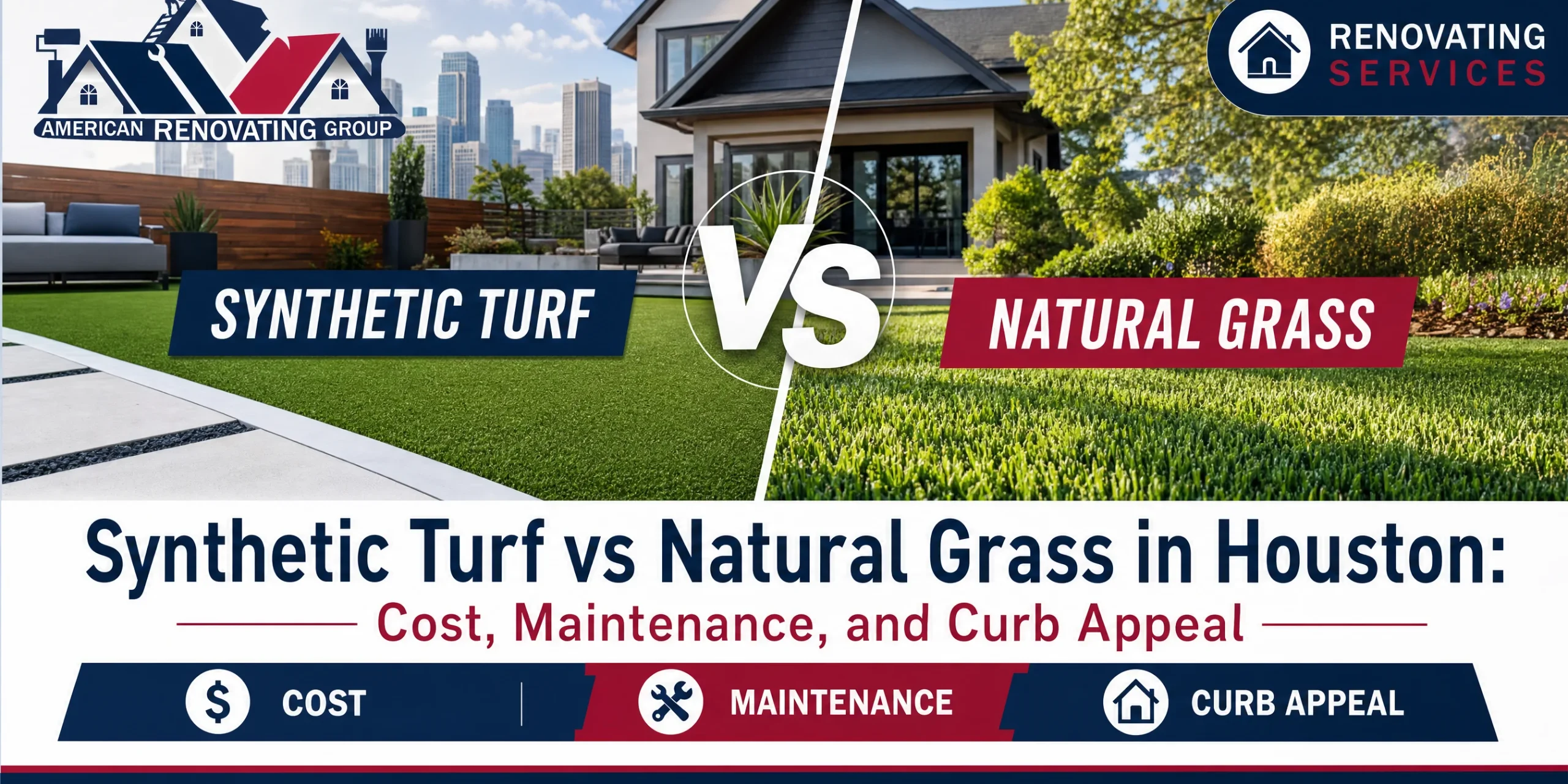
Synthetic Turf vs Natural Grass Houston: Cost, Maintenance, and Curb Appeal
Choosing between synthetic turf and natural grass in Houston isn’t just a style call. In our climate—long, hot summers, sudden downpours, heavy clay soils, deep shade pockets, and occasional watering rules—the choice affects what you’ll spend, how much time you’ll invest, and how well your yard holds up to pets and play. This guide compares synthetic turf vs natural grass Houston homeowners and property managers often weigh: upfront and lifetime costs, weekly and seasonal maintenance, irrigation savings, curb appeal, installation needs, and when each option makes the most sense locally.
Image idea: Side-by-side backyard with turf play area and natural lawn front yard (Alt text: synthetic turf vs natural grass Houston backyard comparison)
Houston Climate and Yard Performance
Heat, UV, and Long Summers: Wear, color fade, and turf surface temperature
- Synthetic turf: Quality products resist UV fade, but heat is the most common complaint in full sun. In peak summer, turf can feel hot to bare feet. Lighter-colored or coated infills, shade sails, nearby trees, and the occasional hose-down help keep it more comfortable.
- Natural grass: Stays cooler to the touch and can moderate yard temperature. That said, heat stress can thin grass in high-sun areas if watering and mowing slip off schedule.
Heavy Rains and Drainage on Clay Soils
- Synthetic turf: Performs well in rain when installed over a proper permeable base. Over Houston clay, a well-compacted, open-graded rock base plus a dedicated drainage plan (swales, French drains) are critical to prevent pooling and odors.
- Natural grass: Clay soils compact easily, leading to puddling. Aeration, added organic matter, and regrading improve infiltration. Without those steps, grass may struggle after storms.
Drought and Watering Rules: Irrigation planning and savings potential
- Synthetic turf: Removes the need for routine lawn irrigation, though a quick rinse or cooling spray can help in peak heat or for pet areas.
- Natural grass: Needs consistent watering through summer and during dry spells. Smart irrigation and drought-tolerant grass types reduce waste but won’t eliminate water needs.
Shade, Trees, and Root Competition
- Synthetic turf: Can do well in partial shade if debris is managed, but heavy leaf drop and constant moisture can encourage odors or algae on low-use surfaces. Good drainage and airflow matter.
- Natural grass: Deep shade under live oaks or dense canopies is tough for many species. Shade-tolerant varieties, mulched beds, or groundcovers may outperform standard sod in these spots.
Cost Comparison for Synthetic Turf vs Natural Grass in Houston
Turf Installation Cost Drivers (site prep, base, turf quality, infill, access)
- Site prep: Removing existing grass, grading, and installing a permeable base over clay soils are major line items.
- Turf material: Face weight, blade shape, and UV stabilization influence durability and appearance.
- Infill choice: Options like silica sand, coated infill, or antimicrobial infill affect comfort and pet performance.
- Access and edges: Tight access, complex shapes, steps, and high-finish edging can add labor.
Natural Grass Cost Drivers (sod/seed type, soil amendments, irrigation setup)
- Grass selection: Warm-season choices like Bermuda or St. Augustine vary in shade tolerance and care requirements (see Texas A&M AgriLife Extension’s Texas Turfgrasses guide).
- Soil work: Amending clay with organic matter, leveling, and aeration improve establishment and long-term performance.
- Irrigation: New or updated sprinkler systems, drip for beds, and smart controllers affect scope and cost.
Ongoing Costs Over 5–10 Years (water, mowing, fertilizing, repairs, replacements)
- Synthetic turf: Occasional brushing, infill top-ups, sanitizing (especially for pets), and seam or edge touch-ups. No mowing or routine fertilizing.
- Natural grass: Regular mowing, seasonal fertilization, weed control, irrigation water, pest/disease spot treatments, aeration, and periodic sod repairs after wear or storms.
When the Numbers Favor Turf vs Grass in Houston
- Turf often pencils out for:
- High-traffic play or pet areas that wear thin quickly
- Courtyards, rooftops, or shady patches where grass struggles
- Rental or commercial sites where predictable upkeep and a uniform look matter
- Natural grass often wins for:
- Large, sunny front yards where cooling and a natural feel are priorities
- Deep shade under heritage trees where turf heat isn’t welcome and beds may be better
- Homeowners who enjoy lawn care and want biodiversity and seasonal change
Maintenance: Weekly, Seasonal, and After Storms
Synthetic Turf Tasks (brushing, debris removal, infill top-ups, spot sanitizing for pets)
- Weekly: Blow or sweep debris; lightly brush high-traffic paths to keep fibers upright.
- Monthly/quarterly: Check infill levels; deodorize or sanitize pet zones as needed.
- Seasonally: Inspect seams, edges, and drainage points; top up infill where compacted.
- After muddy storms: Rinse soil fines from the surface; confirm perimeter drains run clear.
Natural Grass Tasks (mowing schedules, watering, fertilization, weed control, aeration)
- Weekly in growing season: Mow to the recommended height for the species; adjust for heat stress.
- Irrigation: Water deeply and infrequently; adjust based on rainfall and local guidance.
- Seasonal: Fertilize on a warm-season schedule; apply pre-emergent weed control; dethatch and aerate compacted clay.
- Spot care: Repair pet spots and high-wear paths; overseed or plug thin areas.
Storm Cleanup and Drainage Checks
- Turf: Make sure water moves through the base, clear surface debris, and check edges after heavy downpours.
- Grass: Rake silt, regrade low spots that washed out, aerate compacted areas, and reestablish turf where scoured.
Water and Irrigation Savings
Where Turf Reduces Irrigation—and Where You Still Need Water
- Savings: Turf removes routine lawn watering, a major benefit in peak summer or during restrictions.
- Occasional water: Rinsing to cool surfaces or manage pet areas uses far less water than keeping a green lawn in August.
Smart Irrigation for Natural Lawns in Houston (zoning, soil sensors, mulch rings)
- Zoning: Separate sunny turf from shaded beds so each zone gets what it needs.
- Sensors and controllers: Soil moisture sensors and weather-based controllers reduce waste and protect lawns during heat spikes.
- Mulch and rings: Mulch rings around trees lower evaporation and reduce competition, helping lawns and roots coexist.
Drought-Tolerant Yard Strategies Beyond Turf (beds, native plants, hardscape)
- Consider a blended yard: Smaller lawn, larger native beds, permeable hardscapes, and shade trees.
- Drip irrigation: Delivers water efficiently to beds and reduces runoff on clay soils.
- For ideas to reduce water and energy use at home, see Energy-Efficient Home Upgrades for Sustainable Living.
Curb Appeal and Property Value
Year-Round Green vs Seasonal Variability
- Turf: Delivers a consistent, manicured green with minimal weekly effort.
- Grass: Offers a living, seasonal look that many buyers appreciate for authenticity and ecology benefits.
High-Visibility Areas for Turf (entryways, play zones) vs Best Spots for Natural Grass
- Turf shines in: Entry strips, pet runs, narrow side yards, and high-wear play or sports spaces.
- Grass excels in: Broad front yards, areas under shade where turf heat is a concern, and spaces intended for gardens and pollinators.
HOA and Community Standards in Greater Houston
- Many HOAs allow turf with guidelines for drainage, edging, and appearance. Confirm details before installing. In historic areas, natural grass or blended landscapes may fit neighborhood norms better.
Use Cases: Families, Pets, and High-Traffic Areas
Pet-Friendly Turf: Odor control, drainage layers, antimicrobial infill
- For dogs, prioritize: A permeable base with adequate depth, fast-draining turf backing, antimicrobial or coated infill, and easy hose access for quick cleanups.
- Benefit: Less mud, fewer dig holes, and a consistently clean look.
Play and Sports Areas: Shock pads, wear paths, safety considerations
- Turf with a cushioning underlay reduces impact and resists ruts.
- For backyard sports, position seams away from primary kick zones and add extra infill on known wear paths.
Rental and Commercial Sites: Durability, appearance, and turnover savings
- Turf maintains a uniform look with less weekly labor.
- In apartment courtyards and dog runs, sturdy base prep and accessible drains reduce long-term headaches.
Installation Considerations in Houston
Base Prep for Clay Soils: Grading, geotextile, and drainage rock
- Excavate to remove organics and create subtle slope toward drains.
- Install geotextile over clay to separate base materials.
- Use open-graded aggregate for a permeable base, and add French drains as needed.
Edging, Seams, and Infill Choices for Heat
- Rigid edging keeps lines crisp and prevents spreading.
- Professional seam work is essential for durability and appearance.
- For heat: Choose lighter or coated infills, and consider shade structures or strategic planting.
Timeline and Phasing for Occupied Properties
- Stage work to keep access open: Complete pathways and critical entrances first.
- For multifamily, phase by courtyard or building to reduce disruption and coordinate with resident schedules. For broader project planning and timelines, see Master Renovation Planning: Budgeting Tips & Project Management Strategies.
Environmental Considerations
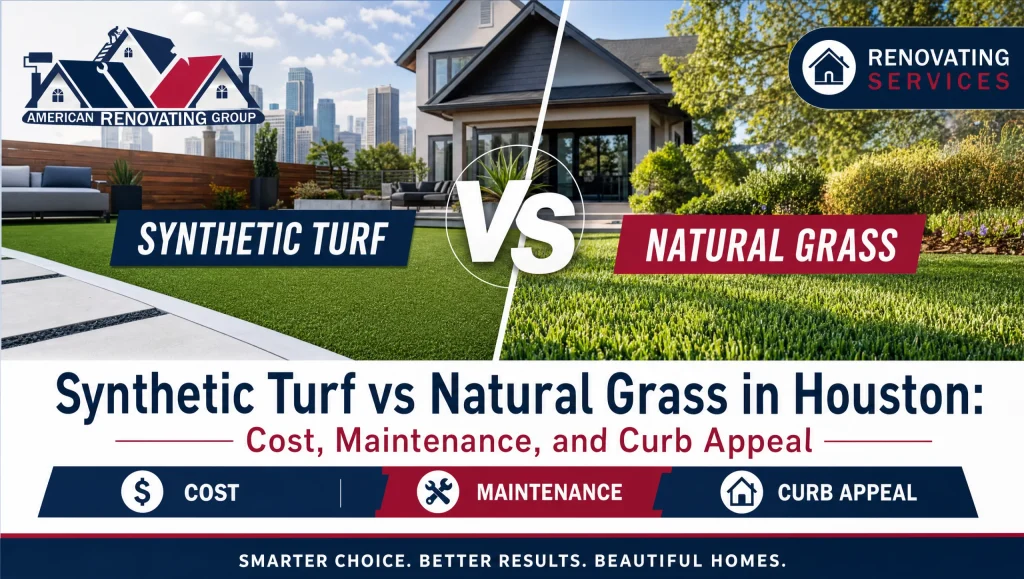
A Houston lawn shown side by side—artificial turf and natural sod—compared for upkeep, cost, and year‑round curb appeal.
Heat Reflection, Permeability, and Local Flooding Concerns
- Turf surfaces can run hot; mitigate with shading and light-colored infills.
- Permeable turf bases aid infiltration but don’t replace overall site drainage design—important in flood-prone areas.
Pollinators, Biodiversity, and Mixed-Landscape Solutions
- A balanced yard pairs turf or lawn with native beds, flowering shrubs, and trees to create habitat.
- Converting narrow lawn strips to beds or permeable paths supports biodiversity.
Materials and End-of-Life for Turf Systems
- Discuss recyclable components and responsible disposal with your installer.
- Quality turf lasts for years; planning for eventual replacement protects both your investment and the environment.
How to Choose: A Simple Decision Framework
If Your Priority Is Lowest Weekly Maintenance
- Choose synthetic turf for:
- Pet runs and play spaces
- High-visibility small areas where you want consistent green
- Courtyards or shaded yards where grass struggles
- Keep a small bed or shade tree to cool and soften the look.
If Your Priority Is Natural Feel and Ecology
- Choose natural grass where:
- You value cooling, biodiversity, and seasonal change
- Large, sunny front lawns highlight your home’s architecture
- You’re comfortable with mowing and seasonal care
- Enhance with native beds and smart irrigation to cut water waste.
If Your Priority Is Water Savings and Durability
- Turf is the strongest option for:
- Eliminating routine lawn irrigation
- Heavy-use traffic zones
- Rental and HOA common areas with limited maintenance bandwidth
- Consider a hybrid: turf for high-wear; grass or beds everywhere else.
Myth vs Fact: Quick Reality Check
- Myth: “Synthetic turf needs zero maintenance.” Fact: It needs brushing, debris removal, and pet-area sanitation—far less than mowing and fertilizing, but not nothing.
- Myth: “Natural grass can’t survive Houston summers.” Fact: With the right species, mowing height, and smart irrigation, it can do well—especially with good drainage and partial shade.
- Myth: “Turf always looks fake.” Fact: Modern blades, thatch layers, and skilled installation create a convincing look; edging and infill choice matter.
Real-World Note from Our Houston Team
Last spring in Meyerland, we prepped a small backyard for a dog-friendly turf run by trenching a French drain along the fence line and building a decomposed granite base over geotextile before laying a fast-drain turf with antimicrobial infill. The clients told us the difference on rainy days was night and day—no more muddy paws. A week later in the Heights, we recommended Bermuda sod instead of turf for a deep-shade front yard under mature oaks. We paired it with a smart controller and drip for the beds; the lawn filled in nicely once we addressed compaction and adjusted irrigation zoning.
Featured-Snippet Basics: Key Differences at a Glance
- Cost: Turf has higher upfront installation; natural grass carries ongoing costs for water, mowing, and treatments.
- Maintenance: Turf needs brushing and occasional rinsing; grass needs mowing, watering, fertilizing, and weed control.
- Water use: Turf can cut irrigation; grass requires consistent watering in summer and during drought.
- Heat: Turf can run hotter in full sun; grass helps cool the yard.
- Durability: Turf resists wear in high-traffic areas; grass can thin without attentive care.
- Pets: Pet-friendly turf with proper base and infill reduces mud and odors; natural grass may show pet spots.
- Drainage: Turf requires a well-prepped base over clay; grass needs aeration and soil improvement.
Planning Tips and Next Steps
- Start with drainage first. Over Houston clay, grading and base prep determine success for both turf and lawn.
- Decide where you need durability most. Use turf in heavy-wear areas, and keep grass or native beds where you want natural cooling and habitat.
- Budget the lifetime, not just the install. Include weekly labor or time, irrigation savings, and storm recovery. For budget-friendly renovation planning, see Budget-Friendly Renovation Ideas.
- Map phases and access. Especially for occupied properties, plan logistics and resident communication early. See our Essential Home Renovation Tips to plan your outdoor upgrades.
Conclusion: Choosing What’s Best for Your Property
The right answer to synthetic turf vs natural grass Houston homeowners ask about depends on sun exposure, drainage over clay, how you use the space, and how much weekly maintenance you want. Turf excels in high-traffic and pet zones, delivers real irrigation savings, and stays green year-round. Natural grass provides cooling, ecology benefits, and a classic look that many prefer—especially in larger front yards and beneath mature shade. If you’d like a balanced plan tailored to your property, American Renovating Services Group is here to help with landscaping, turf, irrigation, and hardscape design across Houston. Call +1 (346) 666-7705 anytime.
Frequently Asked Questions
Is synthetic turf too hot for Houston summers?
Short answer: It can get hot in full sun, but you can manage the temperature.
Expanded: In peak summer, synthetic turf surfaces warm up more than natural grass. Lighter or coated infills, shade sails or trees, and a quick hose-down help keep turf comfortable during Houston’s long, sunny days.
How does synthetic turf handle heavy Houston rains and clay soils?
Short answer: It drains well when installed over a proper permeable base.
Expanded: On clay soils, turf should sit on an open-graded rock base with geotextile and a clear drainage plan (like swales or French drains). This prevents pooling and odors and helps water move through the system after Gulf Coast downpours.
Which saves more water in Houston: synthetic turf or natural grass?
Short answer: Turf offers the bigger irrigation savings.
Expanded: Synthetic turf removes routine lawn watering, especially helpful during summer or watering rules. You may still rinse to cool surfaces or clean pet areas, but that’s far less water than maintaining a lush lawn through August heat.
What are the biggest turf installation cost drivers in Houston?
Short answer: Site prep, base materials, turf quality, infill, and access.
Expanded: Removing old sod, grading, and building a permeable base over clay soils are major line items. Turf face weight and UV stabilization affect price and durability, while infill type and tight site access can add to overall turf installation cost.
Is synthetic turf really low maintenance?
Short answer: Lower than grass, but not zero.
Expanded: You’ll still blow or sweep debris, brush high-traffic paths, check infill levels, and sanitize pet zones as needed. There’s no mowing or seasonal fertilizing, but seams, edges, and drains should be inspected periodically.
Where does natural grass outperform turf in Houston yards?
Short answer: Large, sunny lawns and spaces where cooling and ecology matter.
Expanded: Grass stays cooler to the touch and provides a living, seasonal look many homeowners favor. It’s often the better pick for broad front yards, under heritage trees, and for those who enjoy lawn care and biodiversity.
Is synthetic turf good for dogs in Houston?
Short answer: Yes—if you build for drainage and odor control.
Expanded: A pet-friendly turf system uses a permeable base, fast-draining backing, and antimicrobial or coated infill. With easy hose access, you’ll see fewer muddy spots and simpler cleanups after storms and play.
Will my HOA in Greater Houston allow synthetic turf?
Short answer: Many do, with guidelines.
Expanded: Communities often require standards for edging, drainage, and appearance. Confirm your HOA’s rules before installation; in historic areas, a blended landscape or natural grass may align better with neighborhood norms.
What ongoing care does a natural lawn need on Houston clay soils?
Short answer: Regular mowing, smart irrigation, and periodic soil improvement.
Expanded: Mow by species and season, water deeply and infrequently, and use weather-based controllers or soil sensors. Aeration, added organic matter, dethatching, and regrading improve infiltration and help lawns recover after storms.
Can I combine turf and grass for a drought-tolerant yard?
Short answer: Yes—a hybrid plan works well here.
Expanded: Use turf in high-wear or shady problem spots, and keep natural grass or native beds elsewhere for cooling and habitat. Add drip irrigation, mulch rings, and permeable hardscapes to boost irrigation savings and overall resilience.
How do I decide between synthetic turf vs natural grass Houston homeowners compare?
Short answer: Match the choice to sun, drainage, use, and maintenance goals.
Expanded: Pick turf for heavy traffic, pet runs, and irrigation savings; choose grass for cooling, natural texture, and larger front yards. In Houston landscaping, many properties benefit from a hybrid plan tailored to clay soils, shade, and HOA requirements.
Get Help Planning Your Houston Yard
If you’re weighing synthetic turf vs natural grass, we can help you plan the right mix for your site conditions, HOA requirements, and maintenance goals. American Renovating Services Group provides landscaping, pet-friendly turf, irrigation, and hardscape solutions across Greater Houston. For 24/7 inquiries, call +1 (346) 666-7705. Explore our full-service renovations in Houston.