
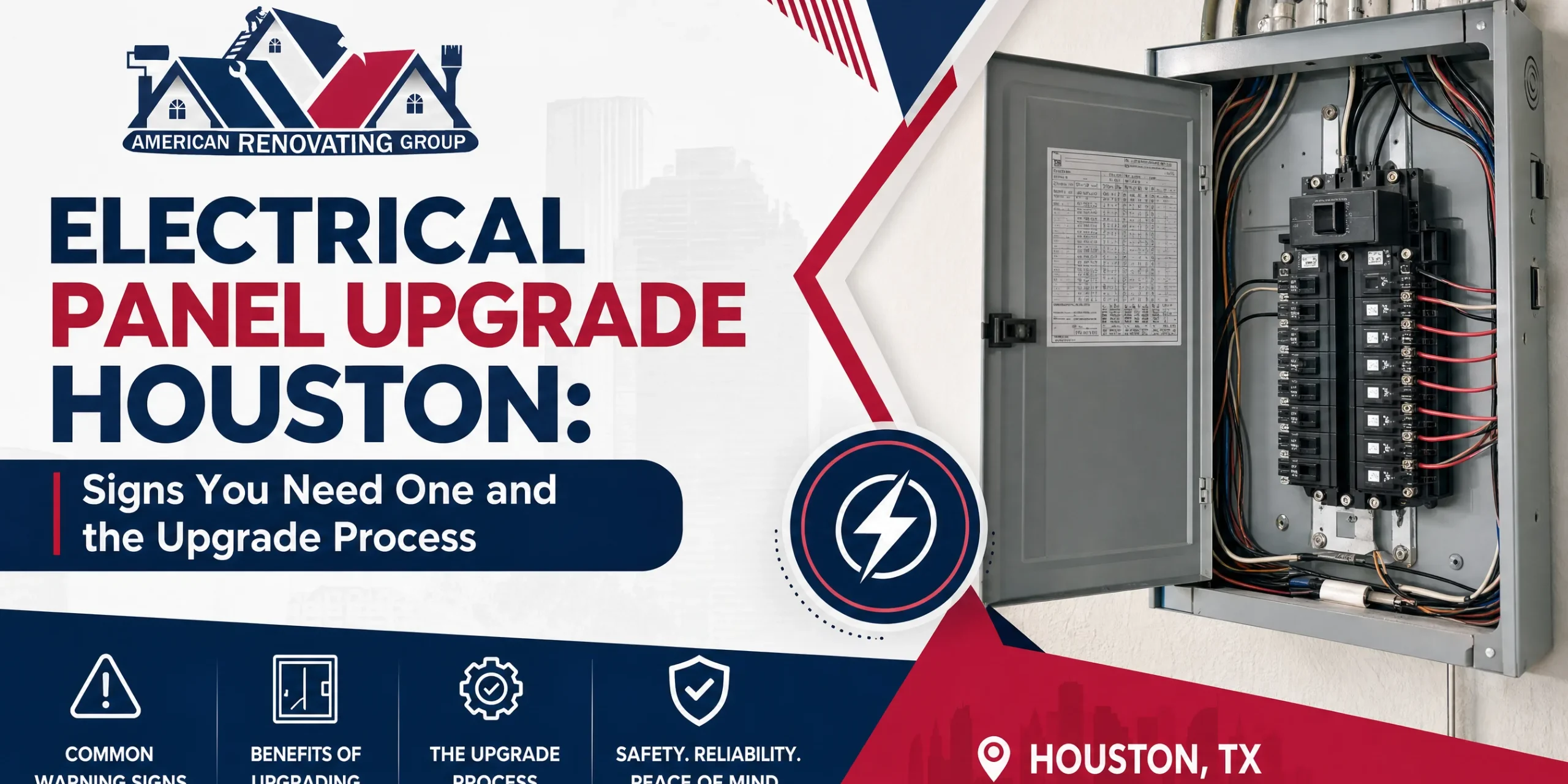
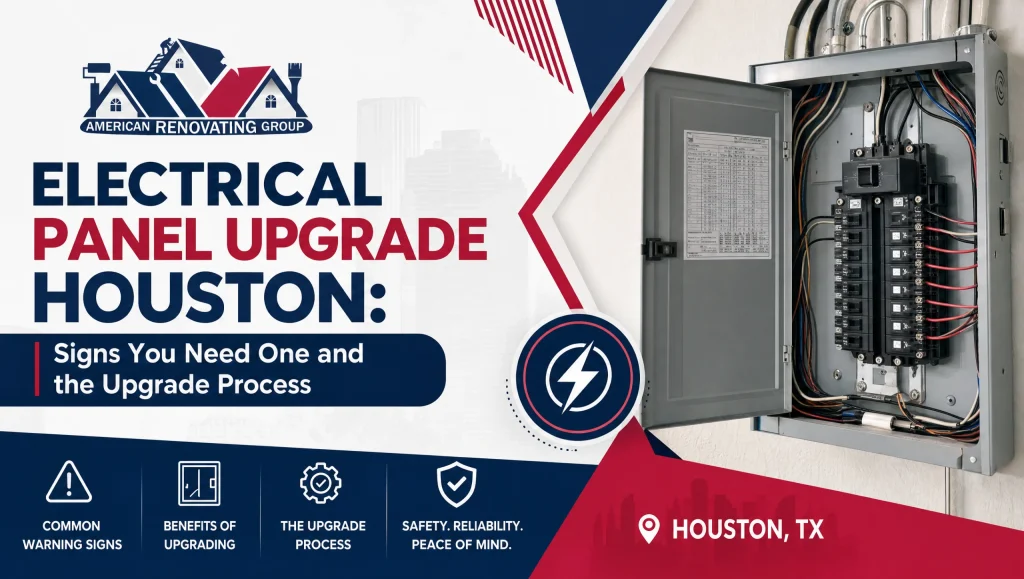
Electrical Panel Upgrade Houston: Signs You Need One & How It Works
An Electrical Panel Upgrade Houston project replaces an outdated or undersized breaker panel—and, when needed, related service equipment—so your home or building safely supports current and future electrical loads while meeting NEC and local code requirements. If you’ve noticed dimming lights, nuisance trips, or you’re planning to add an EV charger or new HVAC system, this guide covers what to watch for, how code compliance works in Houston, what a proper load calculation includes, and the step-by-step process for a safe, permitted, and inspected upgrade.
Quick signs you may need an upgrade:
- Breakers trip often or won’t reset
- Lights flicker or receptacles feel warm
- Panel feels hot, buzzes, or shows rust/corrosion
- Limited capacity after adding HVAC, appliances, or EV charging
- Old fuse box or known-problem panels
- Multiple double-tapped breakers or missing AFCI/GFCI protection
Do You Need a Panel Upgrade? Common Signs in Houston Homes
Frequent breaker trips and flickering lights
- If breakers trip regularly—especially when the AC, microwave, or hair dryer runs—your panel may be undersized or have distribution issues.
- Flickering or dimming lights when major appliances start can point to overloaded circuits or a panel at its limit.
Warm panel cover, buzzing, or burning odors
- A warm or hot panel cover is a safety red flag.
- Humming or buzzing often indicates a loose connection or a mismatched breaker.
- Any burning smell should be treated as urgent. Power down if it’s safe to do so and call a licensed professional.
Outdated or recalled panels and fuses
- Many older Houston homes still have fuse boxes or panels with obsolete components. Some legacy brands/models have documented safety concerns.
- Even if everything “seems fine,” older equipment may lack modern safeguards like AFCI GFCI or surge protection. An assessment can confirm risks and options for breaker panel replacement.
Not enough capacity after new appliances, EV chargers, or HVAC
- New HVAC systems, electric ranges, tankless water heaters, and EV chargers add substantial load.
- If your main breaker is already near capacity (for example, 100A) and you’re planning upgrades, a load calculation will determine whether 150A or 200A service is warranted.
Visible corrosion, moisture exposure, or double-tapped breakers
- Rust on the panel or breakers, water staining, or panels located in damp areas can accelerate deterioration and create hazards.
- Double-tapped breakers—two conductors under a screw not rated for it—signal overcrowding and improper wiring practices.
Safety and Code Basics: What “Compliant” Means in Houston
Electrical safety fundamentals (proper breakers, grounding, bonding)
- Breakers must be correctly sized and listed for the panel.
- Grounding and bonding must meet current standards so fault currents clear quickly and safely.
- Neutral and ground conductors must be separated in subpanels and properly terminated to prevent shock hazards and nuisance tripping.
Code compliance in Houston: NEC adoption with local permitting and inspections
- Houston follows the National Electrical Code (NEC) with local amendments. A permitted and inspected upgrade helps ensure the installation is safe, documented, and recognized for resale or insurance.
- A licensed professional should handle permit applications and coordinate required inspections for code compliance Houston projects. City permitting and final inspection help verify that service size, grounding, bonding, and working clearances meet current requirements.
Where AFCI and GFCI protection is typically required
- GFCI protection is commonly required in wet or damp locations (kitchens, bathrooms, garages, exterior, laundry) and near sinks.
- AFCI protection is typically required on many habitable-area circuits (bedrooms, living rooms, hallways).
- During an upgrade, we identify where AFCI/GFCI protection is required and update breakers or devices accordingly.
Why proper labeling, surge protection, and clear working space matter
- Circuit labeling helps residents and maintenance teams shut off power safely and quickly.
- Whole-home surge protection can help protect sensitive electronics and modern HVAC controls from voltage spikes.
- Electrical code requires a clear working space in front of panels, free of storage. This supports safe maintenance and faster troubleshooting.
Load Calculation Explained: Sizing the Service the Right Way
What a load calculation includes (square footage, appliances, HVAC)
- A load calculation is a standardized method (per the NEC) to determine service size based on:
- Square footage and general lighting loads
- Kitchen and laundry circuits
- Fixed appliances (ranges, ovens, dryers, water heaters)
- HVAC (air handlers, condensers, heat pumps, strip heat)
- Optional loads (hot tubs, workshops, EV chargers)
Typical triggers for 200A service vs. keeping 100A/150A
- 200A service is common in modern homes with multiple large appliances, electric dryers/ranges, and central AC.
- Smaller homes with gas appliances may remain safe and compliant at 100A or 150A after a verified load calculation.
- The decision is based on math, not guesswork—your property’s actual and planned loads guide the choice.
Future-proofing for additions, EV charging, and heat pump HVAC
- If you’re considering an addition, switching to electric cooking, or installing EV charging, planning ahead can help avoid repeat upgrades.
- We’ll discuss flexible options like adding spare capacity, subpanel stubs, or conduit paths for future circuits.
Breaker Panel Replacement vs. Full Service Upgrade
When a main panel swap is enough
- If your existing service conductors, meter can, and grounding electrode system are in good shape and properly sized, a panel-only swap may be appropriate.
- This work focuses on replacing the breaker panel, updating breakers, labeling, and verifying terminations and bonding.
When service lateral/mast, meter, and grounding must be updated
- If your service size increases (for example, to 200A) or existing equipment is deteriorated or not up to current standards, a full service upgrade may be required.
- This can include new service entrance conductors, a meter socket, panel, grounding electrode conductors/rods, and bonding jumpers.
- Utility coordination may be needed when replacing meter equipment or increasing service size.
Costs and complexity drivers to discuss during assessment (no prices, just factors)
- Service size change (100A to 200A)
- Panel location and accessibility
- Condition of existing wiring and grounding
- Need for AFCI/GFCI breakers and labeling updates
- Utility and inspection coordination
- Wall repairs, finish protection, or relocation of the panel to meet working-clearance requirements
Electrical Panel Upgrade Houston: The Step-by-Step Process
Assessment and safety check
- We review panel condition, breaker types, terminations, grounding/bonding, and any visible hazards.
- We ask about recent trips, flicker, planned appliances, and EV charging needs.
Load calculation and scope
- We perform or verify a load calculation to determine service size and circuit needs.
- We finalize the scope: panel-only replacement or full service upgrade, plus AFCI/GFCI updates and surge protection if requested.
Permit, scheduling, and utility coordination as needed
- We pull the permit, coordinate inspection, and, if necessary, arrange utility disconnect/reconnect.
- For apartments or occupied homes, we schedule a power-off window that minimizes disruption.
Panel and service equipment installation
- We install the new panel and, if included, the meter socket and service conductors.
- Connections are torqued to manufacturer specifications; grounding and bonding are corrected and tested.
AFCI/GFCI and labeling updates
- We install required AFCI/GFCI protection and clearly label each circuit to reflect rooms and major loads.
- Labels are legible, accurate, and durable for long-term use.
Inspection, testing, and cleanup
- We schedule and attend inspection. After approval, we complete testing: breaker function, GFCI/AFCI devices, and voltage checks.
- We protect finishes during work, then vacuum and wipe down the work area.
Turn-on, walkthrough, and warranty documentation
- Power is restored, and we walk you through the panel layout, labeling, and testing buttons.
- We provide documentation for permit closure and warranty details for your records.
Timeline, Access, and What to Expect on Upgrade Day
Typical power-off window and resident coordination
- We’ll confirm how long power will be off, coordinate with residents or tenants, and advise on protecting refrigerated items and sensitive electronics.
- For apartments and small multifamily properties, we can sequence units to minimize downtime.
Protecting finishes and keeping the workspace clean
- We use floor protection and dust control where needed.
- Our team is respectful of occupied spaces and cleans up before leaving.
Post-upgrade tips: testing GFCI/AFCI, labeling circuits, maintenance intervals
- Test GFCI and AFCI devices monthly using their built-in test buttons.
- Keep the panel area clear and review labels with residents or staff.
- Consider an annual safety walkthrough to spot early issues like loose covers or signs of moisture.
Myth vs. Fact: Panel Upgrades
Houston electrician performing a breaker panel inspection and load calculation to plan a safe, code-compliant upgrade with AFCI/GFCI protection.
- Myth: “If the lights work, the panel is fine.”
- Fact: Older panels can “work” while lacking modern protection or having hidden wear that increases risk.
- Myth: “I can just add bigger breakers.”
- Fact: Oversizing breakers without proper conductor sizing and load checks is unsafe and violates code.
- Myth: “A subpanel is always cheaper than a main upgrade.”
- Fact: Sometimes a subpanel addresses distribution, but if main service capacity is maxed out, you still need a service upgrade.
Real-World Experience from Our Team
Last summer in Houston’s heat, our team upgraded a 100A panel in a 1970s townhome that kept tripping when the new HVAC kicked on. After a load calculation and permit, we coordinated a short power-off window with the owner, replaced the panel, added AFCI/GFCI protection where required, and cleaned up the workspace before the walkthrough and labeling. The owner appreciated that the labels actually matched rooms and appliances, which made future troubleshooting straightforward.
How to Prepare for Your Assessment
- Make a quick list of recent issues (trips, flicker, warm outlets, buzzing).
- Note planned additions: EV charger, new HVAC, kitchen appliances, hot tub, or workshop tools.
- Clear access to the panel and, if possible, the path to the meter.
- Have contact details ready for building management or residents if we need to coordinate access and scheduling.
Integrated Renovation Support Beyond Electrical
Many panel upgrades are part of a broader improvement plan. If you’re considering HVAC changes, plumbing updates, or a larger remodel, our integrated team can help plan the sequence so work is efficient and code-compliant. Explore:
- Houston renovating services for apartments and homes
- Essential home renovation tips for Houston homeowners: https://americanrenovating.com/renovation-tips/
- Energy-efficient home upgrades that pair well with electrical improvements: https://americanrenovating.com/energy-efficient-home-upgrades-eco-friendly-remodeling-savings/
- Smart home renovation and modern tech upgrades that may influence panel capacity: https://americanrenovating.com/smart-home-renovation-upgrade-with-modern-tech-automation/
- Apartment renovation Houston expectations for property managers planning occupied work: https://americanrenovating.com/apartment-renovation-houston-process-expectations/
What You’ll Receive After the Job
- Permit and inspection documentation
- Updated, legible panel directory
- Warranty information and recommended maintenance tips
- A brief orientation on testing AFCI/GFCI devices and when to call for service
Why Choose American Renovating Services Group
- Licensed, safety-first electrical work: We handle assessment, load calculation, permitting, installation, and inspection with a focus on electrical safety and code compliance Houston homeowners and property managers can trust.
- Integrated services: Electrical, HVAC, plumbing, painting, and more—ideal for apartments, single-family homes, and small commercial spaces planning coordinated improvements.
- Respect for occupied properties: Clear timelines, careful protection of finishes, and tidy cleanup.
- 24/7 inquiries: Reach us anytime at +1 (346) 666-7705 to discuss your needs and schedule an assessment.
Conclusion: Plan a Safe, Code-Compliant Electrical Panel Upgrade Houston
If you’re seeing frequent trips, flicker, warm panels, or you’re planning high-demand additions like EV charging or new HVAC, it’s time to evaluate your electrical capacity. A permitted, inspected Electrical Panel Upgrade Houston project starts with a professional safety check and load calculation, followed by a clear, coordinated process that brings your system up to modern standards—including AFCI/GFCI protection and accurate labeling. Ready for answers you can trust? Call +1 (346) 666-7705 (24/7) or contact American Renovating Services Group to schedule your assessment and plan a safe, code-compliant upgrade.
Frequently Asked Questions
What are the most common signs I need an electrical panel upgrade in Houston?
Short answer: Frequent breaker trips, flickering lights, warm or buzzing panels, corrosion, old fuse boxes, and missing AFCI/GFCI protection.
Expanded answer: If your breakers trip often—especially when AC, microwaves, or hair dryers run—your panel may be undersized. Other red flags include dimming lights during appliance start-up, a warm or hot panel cover, humming sounds, rust or moisture around the panel, double-tapped breakers, and older panels or fuse boxes that lack modern protections like AFCI/GFCI.
How does an Electrical Panel Upgrade Houston project work from start to finish?
Short answer: Assessment, load calculation and scope, permit and scheduling, installation, AFCI/GFCI and labeling updates, inspection and testing, then turn-on and walkthrough.
Expanded answer: We begin with a safety check and questions about recent trips or planned loads (like EV charging). Next, we complete a load calculation to size the service correctly and define whether it’s a panel swap or a full service upgrade. We handle permitting, coordinate any utility disconnect/reconnect, install the new equipment, update AFCI/GFCI protection and labels, attend inspection, test the system, clean up, restore power, and provide documentation and warranty details.
Do I need a full service upgrade or just a breaker panel replacement?
Short answer: It depends on service size and equipment condition—some homes need only a panel swap; others need meter and service conductor updates.
Expanded answer: If your existing service conductors, meter can, and grounding system are in good condition and correctly sized, a panel-only replacement may be appropriate. If you’re increasing service size (for example, to 200A) or existing service equipment is deteriorated or not up to current standards, a full service upgrade—new service entrance conductors, meter socket, panel, grounding/bonding—may be required, often with utility coordination.
How is the correct panel or service size determined?
Short answer: By a code-based load calculation, not guesswork.
Expanded answer: We use the NEC method to account for square footage lighting loads, kitchen and laundry circuits, fixed appliances, HVAC, and optional loads like hot tubs, workshops, or EV chargers. Many modern homes land at 200A service, while smaller homes with gas appliances may remain safe at 100A or 150A after verification.
Will I need AFCI and GFCI breakers after the upgrade?
Short answer: Yes, where code requires them.
Expanded answer: GFCI protection is typically required in wet or damp areas like kitchens, bathrooms, garages, exteriors, and laundry spaces or near sinks. AFCI protection is usually required on many habitable-area circuits such as bedrooms and living rooms. During your electrical panel upgrade Houston project, we identify and install the required AFCI/GFCI protection per current code.
How long will my power be off during the upgrade?
Short answer: Expect a planned power-off window, coordinated in advance to minimize disruption.
Expanded answer: The outage length depends on scope (panel-only vs. full service upgrade), access, inspection timing, and any utility work. We schedule the window with you, advise on protecting refrigerated items and electronics, and, in apartments or small multifamily buildings, can sequence units to reduce downtime.
Do I need a permit and inspection in Houston?
Short answer: Yes—permitting and inspection are part of a safe, compliant installation.
Expanded answer: Houston adopts the NEC with local amendments. A properly permitted and inspected upgrade confirms correct service size, grounding, bonding, working clearances, and equipment labeling. We handle permit applications and coordinate required inspections and any utility disconnect/reconnect.
Will adding an EV charger or new HVAC mean I need a bigger panel?
Short answer: Possibly; a load calculation will confirm it.
Expanded answer: EV chargers, electric ranges, tankless water heaters, heat pumps, and new HVAC systems add significant load. If your main breaker is already near capacity (e.g., 100A), you may need 150A or 200A service. We can also discuss future-proofing—spare capacity, subpanel stubs, or conduit paths—to avoid repeat upgrades.
How should I prepare for my assessment or upgrade day?
Short answer: List issues, note planned additions, clear panel access, and share any building access needs.
Expanded answer: Make notes about trips, flicker, warm outlets, or buzzing; flag planned loads like EV charging or HVAC changes; clear the path to the panel and meter; and have contact info for building management or residents for scheduling. We’ll protect finishes, maintain a clean workspace, and review labels with you afterward.
What affects cost and complexity (without pricing)?
Short answer: Service size change, panel location, existing condition, AFCI/GFCI needs, utility/inspection coordination, and any wall or clearance work.
Expanded answer: Key drivers include upgrading from 100A to 200A service, whether the panel is easy to access, the state of existing wiring and grounding, updates for AFCI/GFCI protection and labeling, utility and inspection logistics, and any required wall repairs or panel relocation to meet working-clearance rules.
What documents and support do I receive after the job?
Short answer: Permit/inspection records, an updated panel directory, warranty info, and usage tips.
Expanded answer: You’ll receive documentation for permit closure, a clear, durable circuit directory, warranty details, and a brief orientation on testing AFCI/GFCI devices and when to call for service. For broader renovations, explore our integrated services: Houston renovating services (americanrenovating.com), energy-efficient upgrades, and smart home planning that can influence panel capacity.
Who should I contact to schedule an electrical panel upgrade in Houston?
Short answer: Call American Renovating Services Group at +1 (346) 666-7705 (24/7).
Expanded answer: We provide assessment, load calculation, permitting, installation, and inspection with a focus on electrical safety and code compliance Houston homeowners and property managers can trust. For integrated projects that also involve HVAC, plumbing, or other trades, our coordinated team can help sequence the work efficiently.