

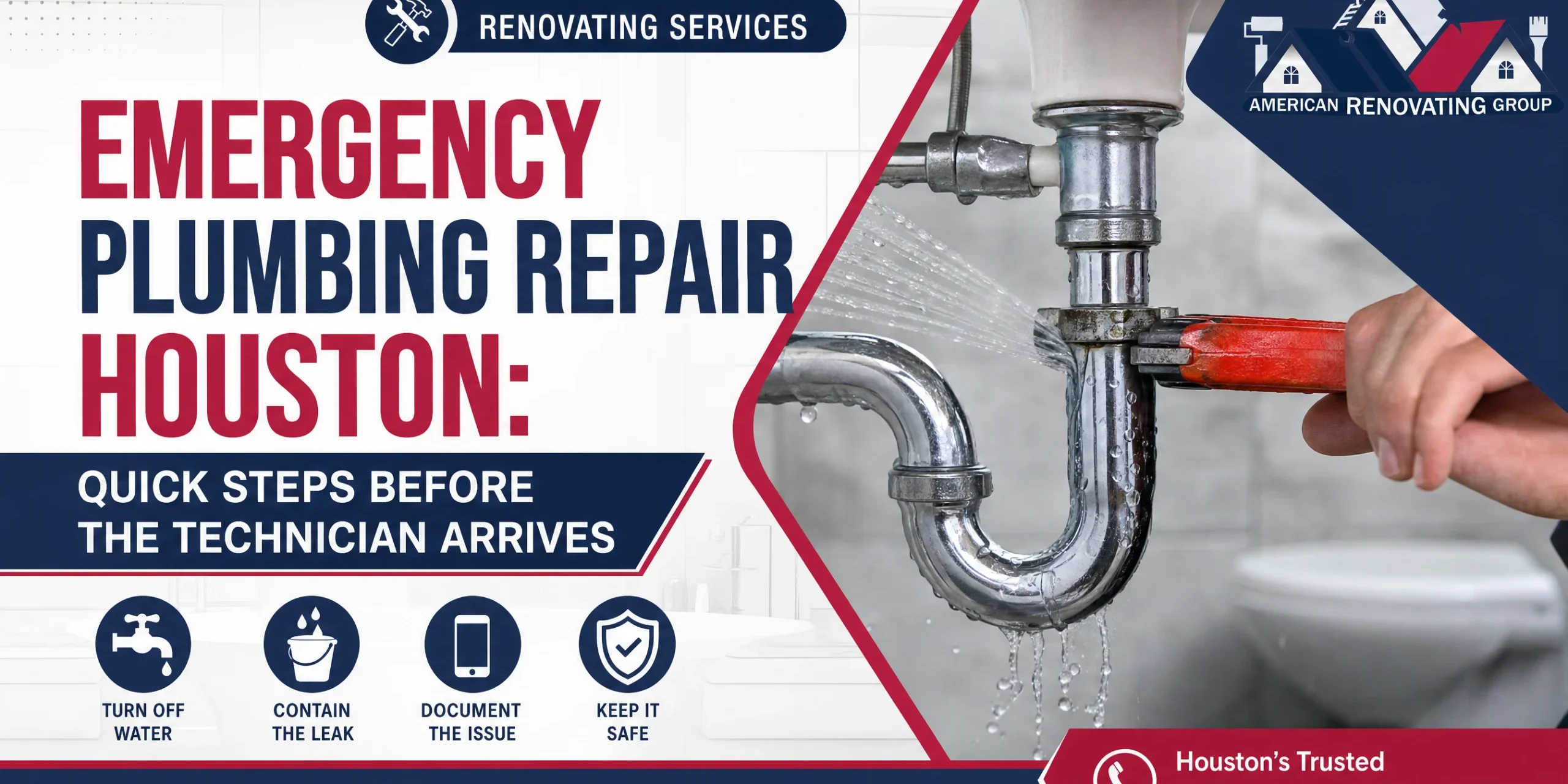
Emergency Plumbing Repair Houston – What to Do Before the Plumber Arrives
Emergency Plumbing Repair Houston: Quick Steps Before the Technician Arrives
When a leak or burst pipe hits without warning, you need simple, steady guidance you can act on right away. This Houston-focused guide to emergency plumbing repair Houston explains how to stay safe, shut down the water, minimize damage, and connect with a 24/7 plumber Houston if you need immediate help. Keep our number handy: (346) 666-7705. We’re available around the clock for inquiries and urgent response coordination.
What “emergency plumbing repair” means in Houston
Emergency plumbing repair Houston covers the immediate steps and professional services used to stop active leaks or burst pipes, limit water damage, and restore your plumbing safely—available 24/7 for homes and apartments across the Houston area when urgent help is required.
Quick steps at a glance
- Find and close the main shut-off valve.
- Turn off fixture valves near the leak.
- Cut power if water contacts outlets or appliances.
- Reduce pressure by opening faucets and flushing once.
- Protect belongings; contain water with towels and buckets.
- Ventilate and dehumidify to limit moisture damage.
- Document damage with photos and notes.
- Call a 24/7 plumber in Houston at (346) 666-7705.
First, stay safe and stop the water
Find and close the main shut-off valve
- Where to look in Houston homes and apartments:
- At the street: In a ground box near the curb by the water meter. You may need a wrench to turn the street-side valve.
- Garage or utility room: On an interior wall where the main line enters the home.
- Exterior wall: Often along the side of the house closest to the street.
- Apartments/condos: Check the mechanical closet, laundry closet, water heater closet, or a shared utility room. If you can’t find it quickly, call maintenance or property management immediately.
- How to turn it off safely:
- Turn the valve clockwise (right) to close. Lever handles should be turned so they’re perpendicular to the pipe.
- If the curb stop needs a tool you don’t have, close the nearest interior shut-off (such as by the water heater) and call us at (346) 666-7705 for guidance.
Shut off fixtures near the leak
- Toilets: Turn the small valve at the wall clockwise.
- Sinks: Look under the cabinet for two small valves—hot and cold.
- Water heater: If water is leaking from the tank or nearby piping, shut off the cold-water supply valve at the top.
- Appliances: For ice makers, dishwashers, and washing machines, turn off supply valves at the wall if you can access them safely.
Cut power if water reaches outlets or appliances
- If water is near or touching outlets, baseboards with wiring, or appliances:
- Go to the breaker panel and flip the affected circuit(s) off. If you’re unsure which circuits are involved, switch off main power if you can reach the panel without stepping through water.
- If you must cross standing water to access the panel, stop and wait for a professional.
Control a burst pipe or active leak
Temporary leak-control measures
- Use what you have to buy time until help arrives:
- Press a folded towel or thick cloth over a pinhole leak and secure with duct tape.
- For a small fracture on exposed pipe, plumber’s tape or a rubber patch with a hose clamp can slow the flow.
- Place a bucket or bin to catch drips; lay towels to channel water into containers.
Note: These are short-term steps to limit water until a technician completes a proper, code-compliant repair.
Reduce pressure and drain lines
- After you close the main:
- Open a couple of cold-water faucets at the highest and lowest points of the home to relieve pressure and drain standing water in pipes.
- Then open hot-water taps to gently drain hot lines.
- Flush each toilet once to empty tanks.
- Water heater safety:
- Electric: Turn the breaker to the water heater OFF.
- Gas: Set the control to Pilot or Off per manufacturer guidance.
- Do not run the water heater dry. When in doubt, shut it down until service is restored.
Special Houston considerations
- Slab leak signs: Warm spots on the floor, continuous water meter movement when all faucets are off, or the sound of hissing under concrete can indicate a slab leak—common in slab-on-grade homes in Houston. Shut the main and call for help.
- Attic water heaters: Many Houston homes place water heaters in the attic. If you notice ceiling stains, blisters, or drips from vents, shut the main, protect the area below, and avoid walking under a sagging section of drywall.
- Freeze-related bursts: While rare in most winters, hard freezes can split exposed lines or attic pipes. If a frozen pipe thaws and bursts, focus on shut-off and containment first—not thawing.
Prevent water damage now
Protect floors, walls, and belongings
- Move rugs, electronics, and valuables to a higher, dry location.
- Elevate furniture with plastic, foil, or wood blocks to keep legs out of water.
- Pull furniture an inch or two off damp walls to improve airflow.
Contain and remove standing water
- Use a wet/dry vac, mops, and towels to remove pooled water.
- Avoid contact with gray or dirty water from dishwashers, washing machines, or floor drains—use gloves and keep kids and pets away.
- Swap saturated towels for dry ones often to slow wicking into baseboards and drywall.
Ventilate and dehumidify in Houston’s humidity
- Run ceiling and portable fans to keep air moving.
- Set your AC to Cool and Auto (not Fan On continuously) and aim for the lowest comfortable indoor humidity.
- Open interior and closet doors; keep windows closed if outdoor humidity is high to avoid bringing in moist air.
- Watch for condensation on cool surfaces; reduce fan speed if needed to prevent spreading moisture.
Document and communicate
Take photos and notes
- Capture wide and close-up photos showing the source, affected rooms, and any damaged items.
- Note the time you discovered the leak, the steps you took (for example, main closed at 2:10 pm), and any breaker or gas adjustments.
Notify your property manager or HOA
- Share the basics: when it started, the suspected source (for example, an upstairs bath supply line), and what you’ve already done (shut off main, moved belongings, started mopping).
- If you’re in a multifamily community, ask about approved vendors and building shut-off locations.
Call for emergency plumbing repair Houston—24/7 help
- Call (346) 666-7705 as soon as the water is stopped—or immediately if you can’t find the shut-off. We can guide you by phone and dispatch help.
- Be ready to provide:
- Address and best contact number.
- Type of building (single-family, townhome, apartment).
- Where the leak appears to be (kitchen sink, attic water heater, slab).
- Any safety issues (water near electrical, ceiling sagging, gas smell).
When to evacuate the area and wait
Gas smell, electrical hazards, or ceiling sagging
- If you smell gas, hear crackling from outlets, see sparking, or notice a ceiling bowing or sagging under water weight, clear the area immediately.
- Do not stand under a bulging ceiling or try to poke holes—wait for a pro to assess and safely relieve trapped water.
- If water is rising rapidly or appears contaminated, move people and pets to a safe, dry space and call for help.
What not to do during emergency plumbing repair

Shut off the main water, cut power near standing water, and move valuables to limit damage until a 24/7 plumber Houston team arrives.
Common mistakes to avoid
- Leaving the water heater on when the water is off. This can damage the heater. Turn electric OFF at the breaker; set gas to Pilot/Off.
- Using open flames or heat guns to thaw pipes—this is a fire hazard. Let pros handle frozen lines.
- Ignoring hidden moisture. Baseboards, wall cavities, and subfloors can hold water. Start surface drying now and arrange proper mitigation.
- Over-tightening old valves. If a fixture valve won’t budge, don’t force it. Close the main and call for assistance.
- Assuming the leak stopped on its own. Intermittent dripping can point to pressure issues or a slow supply leak. Keep the main off until a technician inspects.
Myth vs. fact: fast fixes
- Myth: “If the leak slows, it’s safe to wait until morning.” Fact: Slow leaks still cause hidden damage and mold risk—stabilize and call now.
- Myth: “Taping a pipe is a permanent repair.” Fact: Tape and wraps are temporary; a lasting fix needs the right fittings and techniques.
- Myth: “Fans alone will dry everything.” Fact: Airflow helps, but soaked materials may need extraction and professional drying to prevent long-term damage.
How American Renovating Services Group helps
24/7 plumber response in Houston
- We coordinate urgent response across Houston for:
- Leak repair on supply lines and fixtures
- Burst pipes, attic water heater issues, and slab leak assessments
- Main shut-off valve identification and access support
- Water mitigation coordination to protect walls, floors, and belongings
- Call any time at (346) 666-7705. We’ll talk you through immediate steps while help is on the way.
Clear next steps after stabilization
- Inspection: We trace the source, assess line condition, and check nearby fixtures and shut-offs.
- Repair plan: We explain options, expected timelines, and parts needed for a safe, lasting fix.
- Restoration support: If water affected finishes, we can coordinate painting, electrical checks, HVAC considerations, landscaping repairs where needed, and cleaning to get your space back in order. Explore broader Houston renovating services for integrated help after the emergency.
Local, first-hand insight from the field
On a recent Houston service call, we arrived to find a ceiling blister beneath an attic water heater. The resident had already shut off the main, opened a few faucets to relieve pressure, and slid a baking sheet under the drip to channel water into a bucket. Those small, steady steps kept the drywall intact and made the clean-up and repair far simpler once we got there.
Step-by-step detail you can follow right now
1) Locate your main shut-off valve
- Street/curb box near the meter: Lift the lid carefully, use a flashlight, and turn the valve clockwise. If it’s a lever, turn it perpendicular to the line.
- Interior/garage valve: Often before the water heater or near where the main enters.
- For apartments: Check utility closets; if you can’t find it fast, notify maintenance and close fixture valves.
2) Turn off fixture valves near the source
- Toilets, sinks, dishwasher, washing machine—turn clockwise to close. If a valve is corroded or stuck, don’t force it. Close the main instead.
3) Address electrical safety
- If water contacts outlets, cords, or appliances, flip the affected breaker(s) off. Don’t step into water to access the panel.
4) Apply temporary control
- Towels, buckets, plastic sheeting, and tape can slow small leaks.
- For sweating pipes, dry the line first so you can tell what’s actually leaking versus condensation.
5) Reduce system pressure
- With the main off, open cold taps first, then hot taps; flush each toilet once.
- Shut down the water heater power, or set gas to Pilot/Off.
6) Protect surfaces and belongings
- Lift area rugs to prevent dye transfer.
- Use foil or plastic under furniture legs.
- Keep cardboard boxes off wet floors—move them to a dry, elevated spot.
7) Begin ventilation and dehumidification
- Run fans; set AC to Cool and maintain airflow. In Houston’s humidity, avoid opening windows unless outside air is drier than inside.
8) Document and call
- Take photos, note times, and call (346) 666-7705 for 24/7 assistance. Share your shut-off status and any safety concerns.
Signs, causes, and what to expect from the visit
Common signs you need help now
- Sudden drop in water pressure with visible dripping or spraying
- Ceiling stains or blistering under bathrooms or attic water heaters
- Meter dial spinning when all water is off (possible slab leak)
- Persistent hissing behind a wall or beneath floors
Likely causes in Houston homes
- Aging supply lines and shut-off valves
- Attic water heater tank or temperature-and-pressure discharge issues
- Seasonal freeze splits on exposed or attic piping
- Corroded fittings in slab-on-grade homes
What to expect when the technician arrives
- Safety check: Electrical and gas safety come first.
- Source finding: Moisture mapping and targeted access (small, controlled openings when needed).
- Stabilization: Proper isolation of the failed section, a code-compliant repair, and a pressure test.
- Next steps: Recommendations for drying and mitigation, plus preventive improvements like labeling shut-offs and upgrading old valves or supply lines.
After the emergency: practical next moves
- For homeowners: Review Essential Home Renovation Tips to plan any necessary finish repairs.
- For sustainable upgrades: Explore Transform Your Space with Sustainable Apartment Renovation at https://americanrenovating.com/sustainable-apartment-renovation/ for water-wise fixtures and materials.
- For broader project planning: See Home Renovation Project Management: Strategies for a Successful Remodel at https://americanrenovating.com/home-renovation-project-management-strategies-for-a-successful-remodel/ to coordinate trades and timelines after mitigation.
Helpful Houston-specific prep for next time
- Label all fixture shut-off valves now. Keep a flashlight, adjustable wrench, towels, buckets, and plumber’s tape in one accessible kit.
- If you have an attic water heater, check the drip pan and drain line periodically.
- Track your water meter with all fixtures off once a quarter—movement can flag hidden leaks before they escalate.
[Image alt: emergency plumbing repair Houston shut-off valve location]
Conclusion
A few clear actions can put you back in control fast: stay safe around electricity, shut off the water at the main, relieve pressure, and start preventing water damage while you call for help. For dependable emergency plumbing repair Houston, contact American Renovating Services Group at (346) 666-7705. We’re here 24/7 to guide you, coordinate response, and help you move from emergency to repair with confidence.
Frequently Asked Questions
1) What counts as an emergency plumbing repair Houston situation?
Short answer: Any active leak, burst pipe, or water near electricity that needs immediate action is an emergency.
Expanded answer: In Houston, emergency plumbing repair Houston includes active leaks or burst pipes, ceiling blisters under attic water heaters, suspected slab leaks (meter spinning, warm floor spots, hissing under concrete), and any situation where water reaches outlets or appliances. These require fast shut-off, safety steps, and a 24/7 response.
2) What should I do first if a pipe bursts?
Short answer: Shut off the main water and stay clear of electrical hazards.
Expanded answer: Close the main shut-off valve right away, then turn off nearby fixture valves. If water is near outlets or appliances, flip affected breakers—only if you can reach the panel without stepping in water. Open a couple of faucets to relieve pressure, place buckets/towels to contain water, and call (346) 666-7705.
3) Where is my main shut-off valve in a Houston home or apartment?
Short answer: Check the curb box by the meter, garage/utility room, an exterior wall, or your unit’s utility closet.
Expanded answer: Look in a ground box near the curb by the water meter, on an interior garage/utility wall where the line enters, or along the street-facing exterior wall. In apartments/condos, check the mechanical, laundry, or water-heater closet, or a shared utility room. If you can’t find it quickly, call property management or (346) 666-7705 for guidance.
4) Should I turn off my water heater during a plumbing emergency?
Short answer: Yes—after shutting the main, power down the water heater.
Expanded answer: With the main closed, turn electric water heaters OFF at the breaker. For gas units, set to Pilot or Off per the manufacturer. Don’t let the heater run dry. If you’re unsure, shut it down and wait for a technician.
5) How can I control a leak temporarily while waiting for a 24/7 plumber Houston?
Short answer: Use towels, tape, rubber patches, and buckets to slow the flow and catch water.
Expanded answer: Press a folded towel over small leaks and secure with duct tape. For a minor crack on exposed pipe, plumber’s tape or a rubber patch with a hose clamp can help. Place buckets under drips and use towels to channel water. These are short-term measures only—get a code-compliant repair as soon as possible.
6) How do I reduce water damage in Houston’s humidity?
Short answer: Remove standing water, protect belongings, and run AC and fans for controlled drying.
Expanded answer: Mop or wet-vac pooled water, elevate furniture with plastic/foil/wood blocks, and move rugs and valuables to dry areas. Run ceiling/portable fans and set AC to Cool/Auto. Keep windows closed if outdoor humidity is high; open interior doors and closets to improve airflow.
7) When should I evacuate the area and wait for a professional?
Short answer: If you smell gas, see sparking, hear crackling, or notice a sagging ceiling, clear out immediately.
Expanded answer: Leave the area if there’s a gas odor, electrical hazards (sparks, crackling, water at outlets), or a ceiling bulging/bowing from trapped water. Don’t stand beneath or try to poke holes. If water is rising quickly or looks contaminated, move people and pets to safety and call for help.
8) What information should I have ready when I call a 24/7 plumber in Houston?
Short answer: Your address, contact, building type, leak location, and any safety concerns.
Expanded answer: Share your address and best callback number, whether it’s a house, townhome, or apartment, where the leak appears (kitchen sink, attic water heater, slab), and any urgent hazards (water near electrical, gas smell, ceiling sagging). Let us know if you’ve closed the main shut-off.
9) What will the technician do when they arrive?
Short answer: Ensure safety, find the source, stabilize, repair, and advise on drying and next steps.
Expanded answer: We start with electrical/gas safety checks, then trace the source using moisture mapping and controlled access if needed. We isolate the failed section, complete a proper, code-compliant repair, pressure test, and recommend drying/mitigation and preventive improvements like labeling shut-offs and upgrading old valves.
10) How can I tell if I might have a slab leak in Houston?
Short answer: Watch for warm floor spots, meter movement with all water off, or hissing under concrete.
Expanded answer: Houston’s slab-on-grade homes can develop slab leaks. Signs include unexplained warm areas on floors, the water meter dial spinning when all fixtures are off, and a faint hissing sound from under the slab. Shut the main and call (346) 666-7705.
11) What common mistakes should I avoid during an emergency?
Short answer: Don’t leave the water heater on, force stuck valves, use open flames, or ignore hidden moisture.
Expanded answer: Turn off the water heater when the main is closed, avoid over-tightening corroded fixture valves, never use heat guns/open flames to thaw pipes, and don’t assume a slowed leak is safe. Begin surface drying and plan proper mitigation to prevent mold and structural damage.
12) Can I wait until morning if the leak slows down?
Short answer: No—slow leaks still cause damage. Stabilize now and call for help.
Expanded answer: A slow drip can soak baseboards, wall cavities, and subfloors, leading to hidden damage and mold risk. Shut the main, relieve pressure, start drying and documentation, and contact a 24/7 plumber Houston at (346) 666-7705.
Contact now
- Phone: (346) 666-7705
- We’re your local partner for residential and commercial properties, apartments, and single-family homes across the Houston area. If you’re a property manager, see Apartment Renovation Houston: What Property Managers Should Expect and Make Ready Services: 8 Practical Steps for Faster Apartment Turns at https://americanrenovating.com/make-ready-services-apartment-turns-guide/ for post-incident workflows.