

Renovation workflow optimization multifamily apartments is a headache, no sugarcoating it. Managing construction in occupied buildings means juggling resident nerves, tight schedules, and a mountain of logistics. You screw this up, and you’ll face angry tenants, delays, and wasted money. So here’s the no-BS playbook to get it right.
First off, set realistic expectations—early and loud. Residents hate surprises. Start with a clear, plain-English notice explaining the scope, timeline, and what it means for their daily life. Hit the basics: noise levels, dust, when the crew needs access, and any parking changes. Use a 48-hour notice template for specific unit work. Something like: “We’re starting bathroom upgrades in your unit on [date]. Workers will arrive at 8 AM, expect noise and dust by 9 AM, and finish around 5 PM.” Keep it polite but firm—no hugs, just facts.
Communication is the magic bullet. Daily updates via email or community boards reduce tenant calls and panic. A simple message that day like: “Today workers are replacing kitchen cabinets in units 3A-3D. Work hours 8 AM to 4 PM.” Drop a quick phone blast or a flyer with safety reminders (“Please secure pets and valuables.”). This is not optional—transparency keeps the peace.
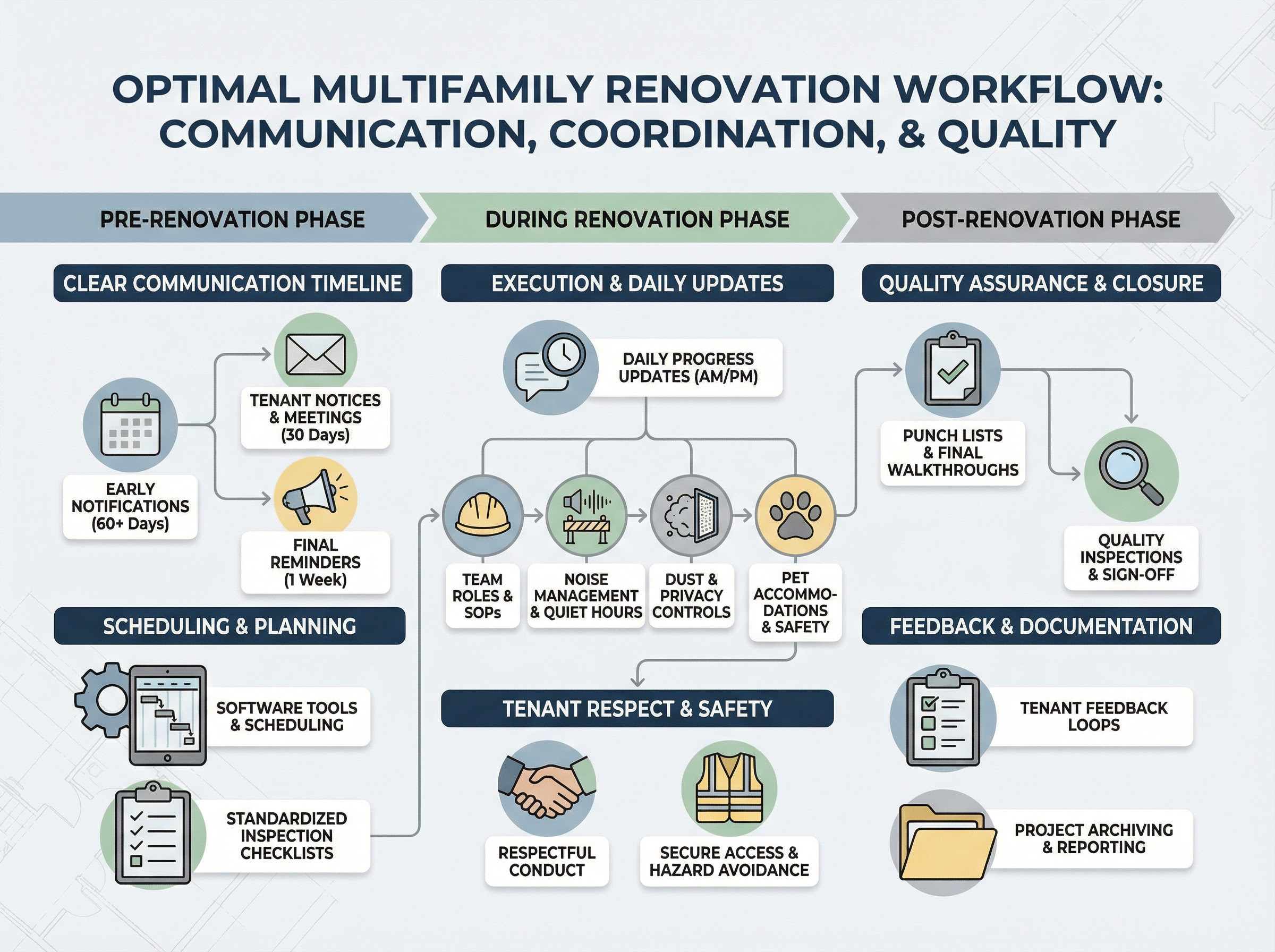
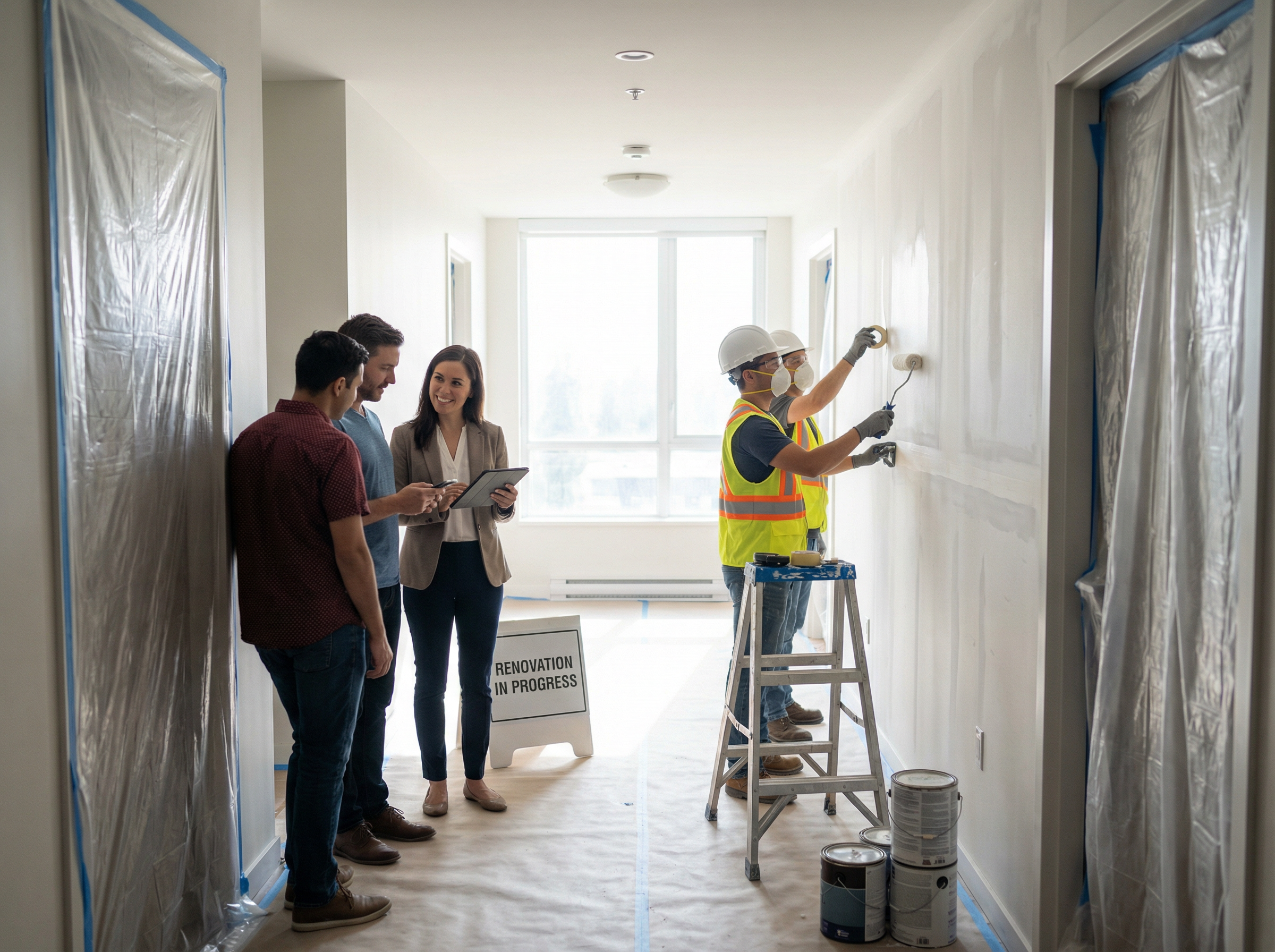
Handling concerns like noise, dust, privacy, pets, and parking is about respect and prep. Use plastic sheeting and dust barriers; seal off work areas. Schedule noisy tasks mid-day, not early morning or late evening. Offer pet-friendly scheduling options. For privacy, train your crews to knock and wait for a response before entering. Parking? Reserve spots for workers away from tenants. You’re not running a hotel; you’re managing a community. Act like it.
Renovation workflow optimization multifamily apartments demands a bulletproof process. For unit turns, start with a standardized checklist immediately post-move-out: inspect damage, schedule deep clean, paint, repairs, and final inspection. Track progress with a punch list app or shared spreadsheet for realtime transparency. For in-place renovations, map out daily progress goals and sequence trades—plumbers first, then drywall, then painters, so crews don’t step on each other’s toes. Avoid last-minute cramming.
The backbone of success: an efficient renovation and maintenance team running on SOPs. Write clear procedures for every task—how to prep a unit, handle keys, report defects, quality control steps, safety protocols. Use quality control checklists to catch sloppy work before it hits the tenant. Safety standards aren’t just red tape, they’re to keep you out of lawsuits and prevent costly shutdowns. Train your team monthly. No fallback.
Scheduling is your secret sauce. Use software with calendar views and alerts. Auto-assign tasks based on crew availability, skill set, and priority. Block buffer days for unforeseen hiccups; don’t assume perfection. Tight schedules lead to shortcuts and complaints.
Download or create templates: 48-hour tenant notice, daily progress update, punch list form, pet accommodation request. Example punch list items: paint touch-ups, door hardware, smoke detector check, floor repairs. Make it failproof by numbering each step and assigning accountability.
At the end of the day, renovation workflow optimization multifamily apartments is about respect—respecting your tenants’ space, time, and lives—and respect for your team’s craft. No crystal ball needed. Just a plan, clear communication, strict processes, and follow-through.
Want to skip the headaches and get a tailored quote for your community’s next upgrade? American Renovating has a proven track record getting this right fast. Reach out. You’ll thank yourself later.
If you want a deep dive into building AI-driven renovation agents and workflow systems to automate this chaos—check out the best step-by-step training out there, designed for busy property managers right here in the US. It’s practical, it’s lean, and it cuts your workload in half. Give it a look before your next project starts.