

Apartment renovation projects in multi-family communities are a logistical beast—done wrong, they disrupt residents, drag on forever, and cost you time and reputation. Done right, they upgrade your property value, keep tenants happy, and cut downtime to the bone. Here’s the no-fluff game plan to master these projects from start to finish.
Start by setting the tone with crystal-clear resident expectations.
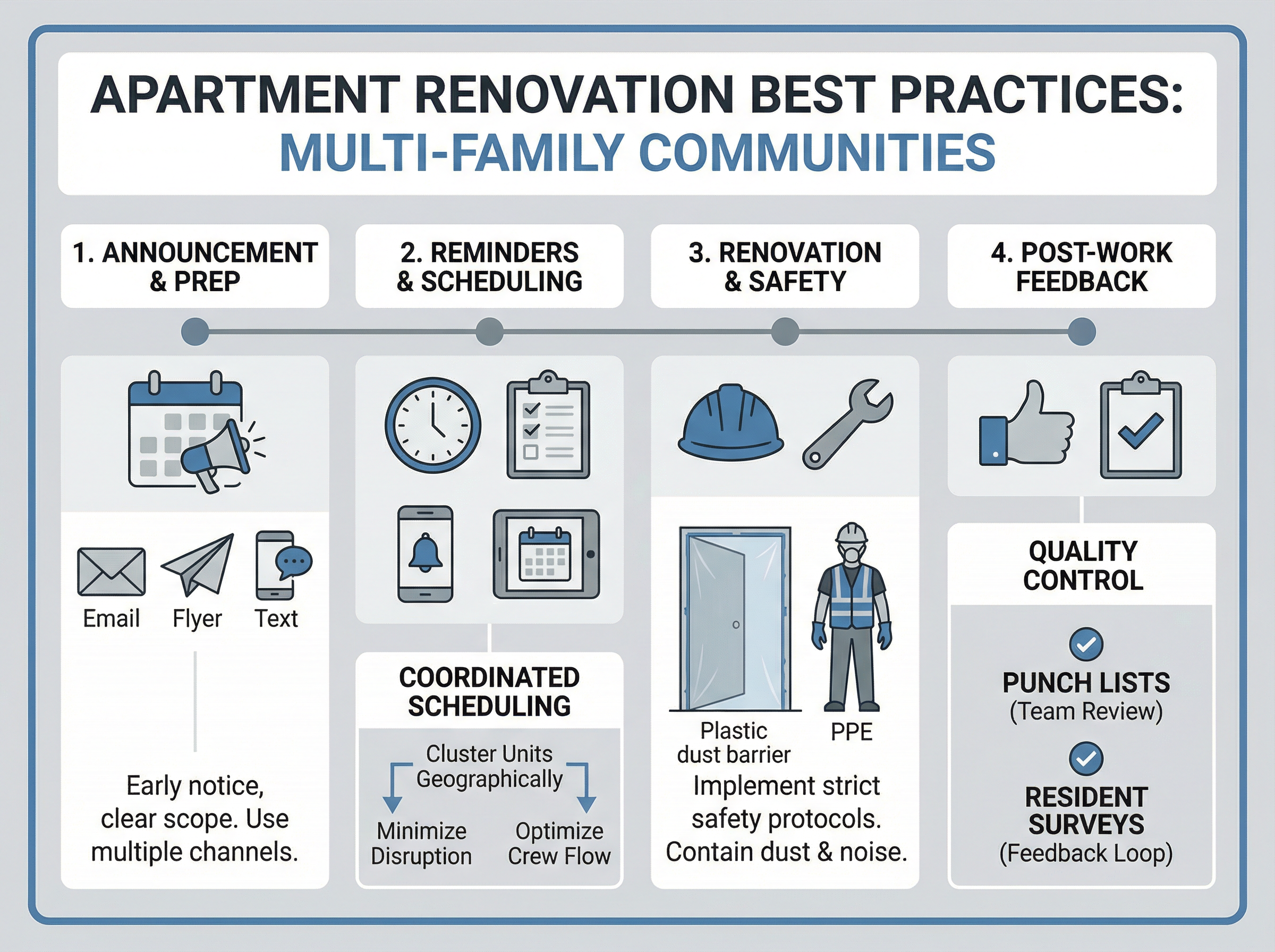
Start by setting the tone with crystal-clear resident expectations. This means upfront communication about what’s coming—scope, timeline, noise, dust, and access. Use multiple channels: emails, flyers in common areas, and texts. Don’t assume anyone reads jargon-heavy notices. Keep it short, clear, and consistent. For example, announce schedules at least two weeks ahead with reminders closer to date. Provide a hotline or dedicated email for questions to squash worries fast.
For scheduling, coordinate unit turns and occupied unit upgrades smartly.
For scheduling, coordinate unit turns and occupied unit upgrades smartly. Avoid running noisy work in occupied units during prime downtime—think midday when most residents are out. Cluster work geographically so crews move efficiently and cut building-wide disruption. Use a shared digital calendar that your renovation/maintenance team updates in real-time to avoid double-booking or surprises.
Safety, noise, and dust controls aren’t optional—they’re your legal and reputational lifelines.
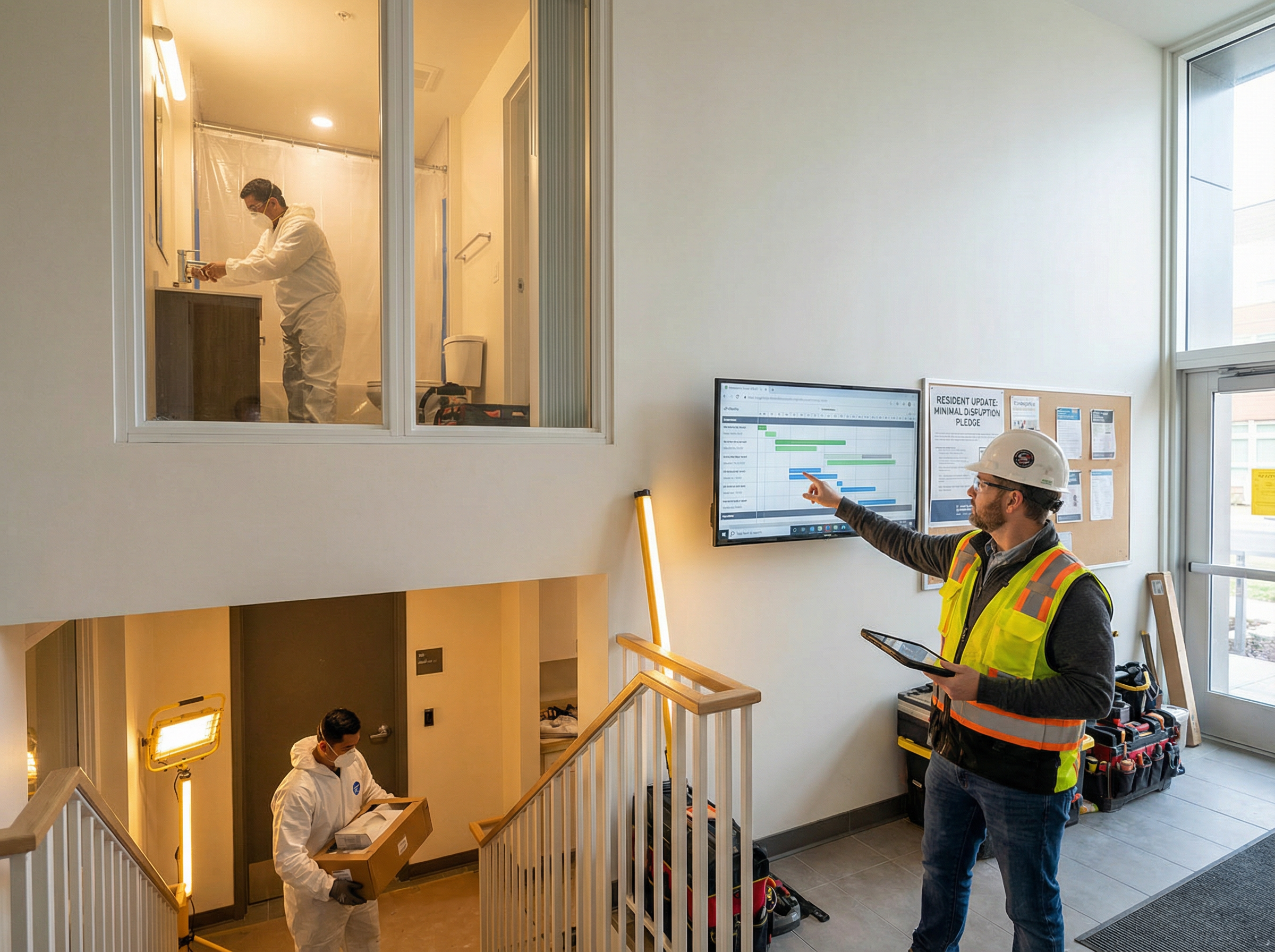
Safety, noise, and dust controls aren’t optional—they’re your legal and reputational lifelines. Make sure crews use dust barriers, negative air machines, and wear personal protective equipment. Notify residents about high-noise periods and set clear daily start/stop times. Real talk: Noise complaints shoot up when people don’t know why or how long it will last. Transparency here is your friend.
Build a team that’s tight and trained.
Build a team that’s tight and trained. Don’t just pick anyone. Get pros who know apartment-specific challenges: confined spaces, resident interactions, and quick turnarounds. Run short trainings on communication protocols and safety standards. A well-drilled team prevents mistakes that cost days in delays. Assign a project manager as residents’ point person. This single voice reduces confusion and boosts trust.
Quality control is your final boss.
Quality control is your final boss. Spot-check work daily; a half-finished pain point can stall move-ins or cause multiple callbacks. Use punch lists and get sign-offs at every milestone. For example, after paint, run a quick survey with residents and maintenance to catch issues early. Speed fixes prevent bigger headaches.
Timeline management lives in details.
Timeline management lives in details. Break the project into micro-deadlines from demo to final touch-ups. Track progress daily and adjust on the fly. Use software tools with automated alerts if things slip. Pro tip: Include buffer days—stuff goes wrong no matter how sharp you are.
Improve your workflow by automating communication and team updates.
Improve your workflow by automating communication and team updates. Instead of scrambling through emails or texts, use a project management app tailored for renovation. It centralizes schedules, punch lists, and resident updates. You’ll cut phone tag and keep everyone honest. Plus, quicker response times reduce disruption.
Here’s a handy checklist for apartment renovation projects:
Here’s a handy checklist for apartment renovation projects:
– Announce project with scope, timeline, and contact info
– Send reminder one week prior and day before work
– Coordinate unit turns and occupied unit work geographically
– Implement dust and noise controls with resident alerts
– Train renovation/maintenance team on safety and communication
– Daily quality inspections with punch lists
– Use real-time scheduling tools
– Buffer timelines and adjust based on progress
– Centralize communications in a project management app
Sample Resident Communication Timeline:
Sample Resident Communication Timeline:
T-minus 14 days: Initial project announcement with overview
T-minus 7 days: Detailed schedule and specific access requests
T-minus 1 day: Reminder with start time and noise expectations
Day of work: On-site signage and direct resident updates if possible
Post-work: Feedback request and contact reminder for concerns
Take one example: A 200-unit complex revamped all bathrooms while occupied.
Take one example: A 200-unit complex revamped all bathrooms while occupied. They grouped renovations floor-by-floor, communicated weekly updates via app, and assigned a single project lead resident calls went to—result? Complaints dropped 70% and turnover days halved.
In sum, apartment renovation projects don’t have to be a nightmare.
In sum, apartment renovation projects don’t have to be a nightmare. Nail communication, keep the crews sharp, control the environment, and track progress like a hawk. Your workflow and resident satisfaction will thank you.
If you’re serious about upgrading your game, get a free quote from the pros at americanrenovating.com/free-quote. They bring the real-world experience and tools to help you kick off your next project with zero drama.
By following this guide, you’ll turn messy disruptions into smooth upgrades that boost your property’s value and your tenants’ smiles. No more excuses. Let’s get renovating done right.