

Renovation communication in apartment communities is a beast if not handled right. No sugarcoating it—renovations in occupied buildings can easily turn into chaos. The key? Plan like your reputation depends on it—because it does. First off, before a hammer even swings, you’ve got to educate residents. Get out ahead with clear, concise messaging. Use emails, texts, flyers, even a resident portal update if you have one. Be blunt about what’s happening, when, how long, and what inconveniences to expect. This is not the time for corporate fluff. Spell out noise hours, dust control measures, and how you’ll protect their belongings.
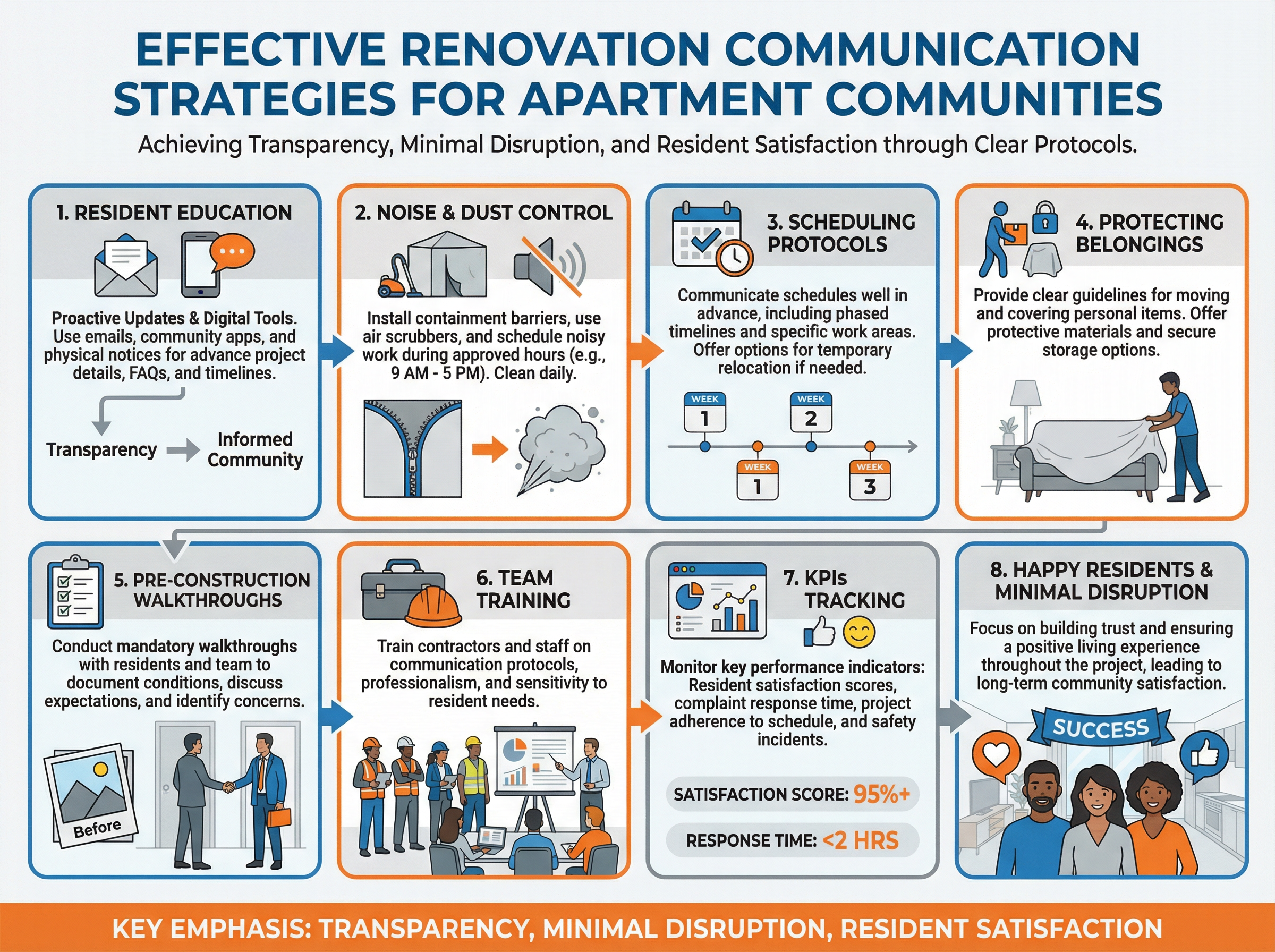
Set expectations early and often. Residents need to know the who, what, when, where, and why—or at least be able to find the answers fast. If you’re vague, they’ll assume the worst. Make sure your communication channels are open for concerns and complaints—then actually respond quickly. Nothing kills trust like radio silence while drills are pounding the walls. Use tools like a dedicated hotline or an app where residents can report issues and check updates in real-time. Transparency is your best friend.
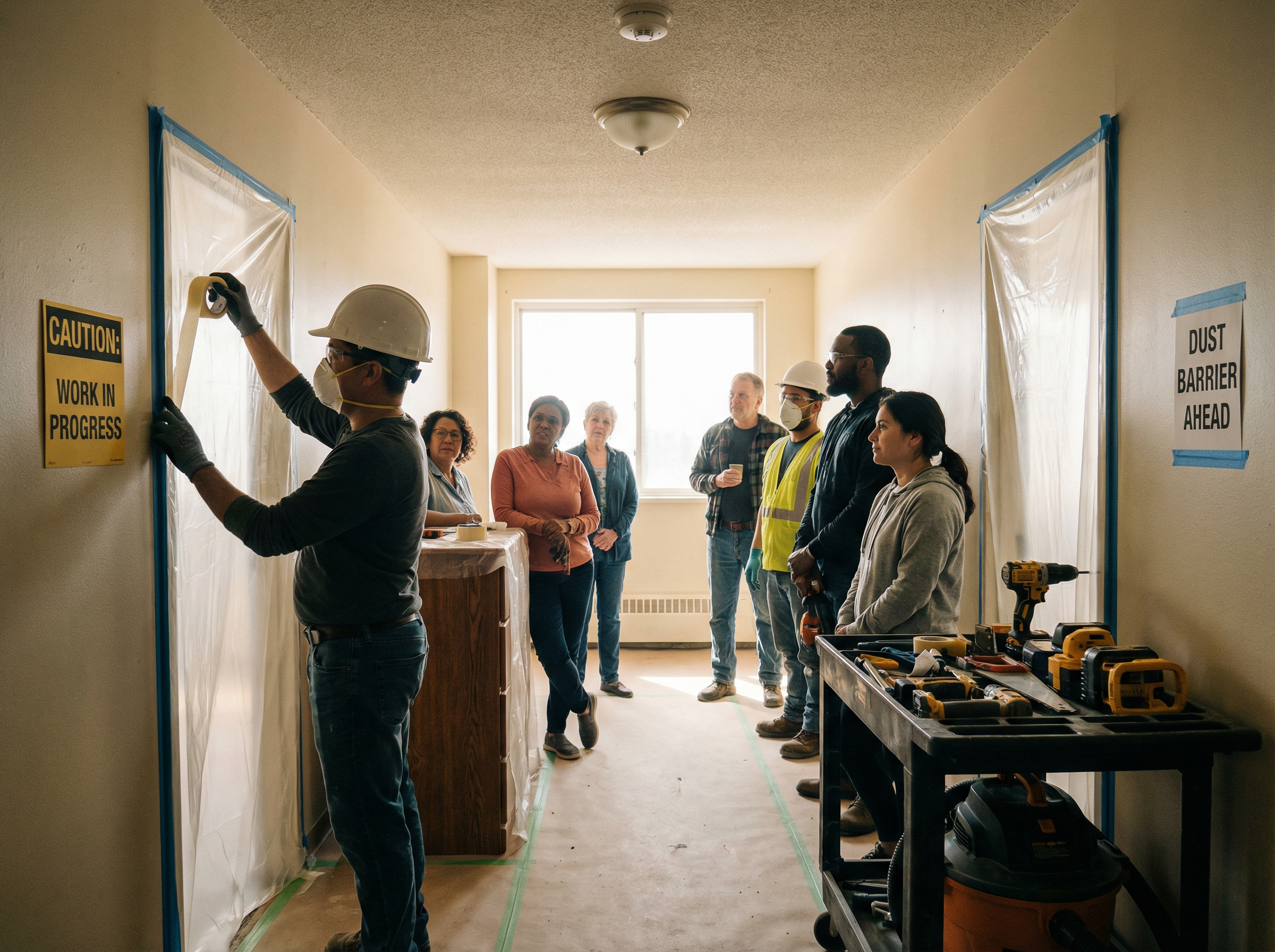
Scheduling and access? Nail this or face endless headaches. Coordinate work so it minimizes disruption—especially in sensitive spots like kitchens or bathrooms. Plan unit turns separate from occupied units’ work. Don’t mix busy renovation noise with residents trying to sleep or work from home. If you have to enter occupied units, get written consent in advance and confirm appointments a day prior. Have a protocol for when residents aren’t home but work is scheduled. Safety is non-negotiable—lock up tools, cover floors, use dust barriers aggressively. Invest in HEPA vacuums and air scrubbers if you want to avoid complaints flooding your inbox.
Noise and dust controls must be a high priority. Residents hate the dust in their lungs and the constant jackhammering worse than layoffs. Set strict noise windows (no jackhammers before 9 AM or after 5 PM unless emergency). Communicate this, and enforce it ruthlessly. Use dust barriers and plastic sheeting everywhere, seal vents, and run exhaust fans with air scrubbers. Nothing kills goodwill faster than residents finding dust on every surface.
Protecting belongings? Simple—take photos before work starts, especially for any delicate or valuable fixtures. Provide plastic covers for furniture. Keep a checklist for each unit and assign responsibility for damage. This heads off finger-pointing later. Make sure residents know what’s expected from them and what protections you’re putting in place.
Unit turns versus occupied work have to be treated differently. Unit turns deserve full gut renovation workflow—pre-con walkthroughs, detailed scope, materials staging outside units, dedicated QA, punch lists, final turnovers. Occupied unit work should be invasive only if necessary and smaller scale, with extra care on communication and disruption minimization.
Building and training your renovation and maintenance team efficiently is a game changer. Cross-train your team—maintenance staff need to understand renovation impacts, and renovators must know resident relations basics. Set clear KPIs like time to complete punch lists, resident complaint response times, and adherence to noise/dust protocols. Use weekly check-ins to spot recurring problems early. Real-world example? One property saved 40 percent in turnaround time by staging materials smartly and enforcing “quiet hours” discipline with subcontractors.
Now, the step-by-step workflow. Start with pre-construction walkthroughs—inspect unit status, identify special resident needs, and establish damage baselines. Next, create detailed scopes and schedules tailored per unit and common areas. Materials staging should happen close to work areas but off residents’ daily spaces—think hallways or unused floors. QA means daily inspections to catch defects and keep crew aligned. Punch lists get generated as work finishes in each space—not after the entire job. That keeps the momentum and resident satisfaction up. Final turnover is a controlled handoff with signed checklists. Closeout means collecting all resident feedback and tweaking future workflows.
Track KPIs like average time per unit renovation, number of resident complaints logged versus resolved, and adherence to scheduled timelines. This data is gold—use it to refine processes continuously.
Renovation communication in apartment communities isn’t rocket science. It’s discipline, respect for residents, and smart workflow design. Do it sloppy, and you’ll pay in bad reviews, lease losses, and extra repair costs. Nail it, and you get seamless upgrades that boost asset value and resident happiness.
If you want to stop guessing and start executing renovations that don’t wreck your community vibe, get a free quote from American Renovating. They specialize in making chaos turn into order—give them a shout. Trust me, it’s worth it.