

An apartment turn timeline is one of those things that looks simple on paper and then turns into a headache the moment real life gets involved. Every day a unit sits vacant, you’re losing money. That part is obvious. What’s less obvious is how quickly a small delay here or there stacks up into a full week.
Most of the time, it’s not the work itself that slows things down. It’s everything around the work. Scheduling, approvals, materials, access. That’s where timelines get stretched.
This guide walks through what a realistic apartment turn timeline actually looks like, what affects it, and where things tend to go sideways—especially in a market like Houston.
What Is an Apartment Turn Timeline?
At its core, an apartment turn timeline is the time it takes to get a unit from move-out to ready-for-move-in. That includes cleaning, repairs, maintenance, and whatever upgrades are part of the plan.
From an operations standpoint, this timeline touches everything:
- Vacancy loss
- Leasing schedules
- Staff coordination
- Tenant expectations
If a unit is supposed to be ready Friday and it’s still not done Monday, that’s not just a delay. That’s a leasing problem, a revenue problem, and sometimes a reputation problem too.
Average Apartment Turn Timeline by Scope
Not every unit turn should take the same amount of time. That’s one of the biggest misunderstandings out there. The scope drives the timeline. Always.
Light Turn (Make-Ready)
Typical timeline: 1–3 days
This is your basic turnover:
- Cleaning
- Touch-up paint
- Minor repairs
If everything is lined up properly, these should move fast. In reality, even these can drag if access is delayed or a vendor doesn’t show up when expected. For teams handling frequent turnovers, make ready services for apartment units can help keep the process organized from the start.
Standard Turn
Typical timeline: 3–7 days
This is where most units fall:
- Full paint
- Flooring replacement or repair
- Fixture updates
- General maintenance
This is also where most unit turnover duration issues show up. Not because the work is complicated, but because it involves multiple trades. More people involved means more chances for misalignment.
Full Renovation Turn
Typical timeline: 1–3+ weeks
Now you’re dealing with:
- Cabinets
- Countertops
- Plumbing or electrical updates
- Larger upgrades
These require sequencing. One trade depends on another finishing first. If one step slips, everything behind it shifts. Treating this like a quick turn is where timelines really fall apart.
5 Essential Factors That Affect Apartment Turn Timeline
1. Scope of Work
This is where everything starts. If the scope isn’t clearly defined upfront, expect changes mid-project. And once work starts changing, the timeline follows right behind it.
A unit that was supposed to be a light turn suddenly needs flooring. Or paint turns into drywall repair. That’s how a 2-day plan becomes a week.
2. Vendor Coordination
You can have great vendors and still end up with a bad apartment turn timeline.
What usually happens is this:
- One crew finishes
- The next crew isn’t ready
- The unit sits
It doesn’t take long for gaps like that to add up. The issue isn’t speed. It’s timing.
3. Material Availability
This one catches people off guard more than it should.
You’re ready to install flooring, but it’s not in stock.
Fixtures are delayed.
Something shows up damaged and needs to be reordered.
In a busy market like Houston, these delays are common. If materials aren’t ready, the timeline isn’t moving.
4. Property Condition at Move-Out
Some units are straightforward. Others… not so much.
Heavy wear, damage, or neglected maintenance can add time quickly. And it’s not always obvious until work starts. That’s when surprises show up and push everything back.
5. Inspections and Approvals
Even after the work is done, the unit isn’t always ready.
It may need:
- Internal inspection
- Punch list corrections
- Final approval
Sometimes the work is complete, but the unit sits another day or two waiting for sign-off. That’s part of the unit turnover duration, whether anyone plans for it or not.
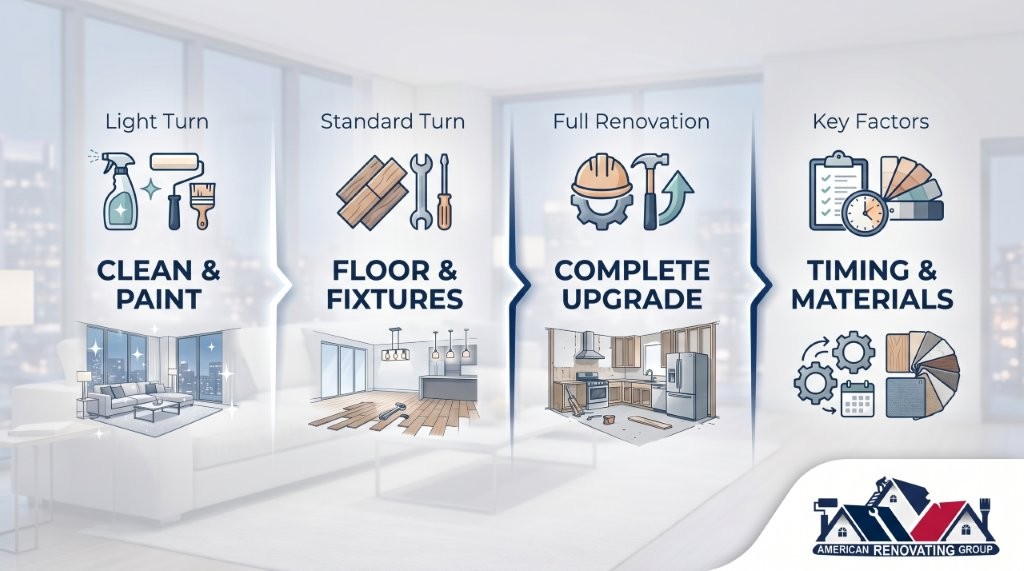
This infographic outlines the typical stages of an apartment turn timeline, from light make-ready work to full renovation. It helps property managers understand how scope affects turnover duration.
Where Apartment Turn Timelines Break Down
This is the part most guides skip.
Delays rarely come from someone working too slowly. They come from how the job is managed.
You’ll usually see issues like:
- Crews waiting on each other
- Work needing to be redone
- Miscommunication between teams
- Approvals taking longer than expected
A 3-day turn doesn’t become 7 days because of one big problem. It becomes 7 days because of several small ones stacked together.
How to Reduce Apartment Turn Time Without Cutting Corners
Everyone wants faster turns. The mistake is thinking faster means rushing.
It doesn’t. It means being organized.
Pre-Schedule Vendors Before Move-Out
If you wait until the unit is vacant to start scheduling, you’re already behind.
Get vendors lined up ahead of time so work can start as soon as access is available.
Use Standardized Turn Checklists
Without a checklist, things get missed. And when things get missed, they get fixed later. That’s where time gets lost.
Consistency keeps things moving.
Bundle Work Instead of Staggering Trades
Spacing trades out creates gaps.
When possible, overlap work or tighten scheduling so one crew moves in right after another finishes. Less idle time means a tighter apartment turn timeline.
Maintain Material Inventory
For properties with frequent turns, keeping common materials on hand makes a big difference.
Waiting on basic items like flooring or fixtures is one of the easiest delays to avoid. On properties where work needs to happen while residents are still in place, planning methods used in occupied apartment renovations can also help reduce disruption and keep turnover work moving.
What a Realistic Apartment Turn Timeline Looks Like in Houston
Houston isn’t a slow market. That affects timelines.
You’re dealing with:
- High demand for contractors
- Busy schedules
- Larger properties with varying unit conditions
In many cases:
- Light turns can be completed in 1–2 days if everything is lined up
- Standard turns usually land around 3–5 days
- Larger renovation turns need proper planning to stay within a few weeks
Trying to push everything into a shorter window usually leads to problems later. Either quality suffers, or work has to be redone. For owners and operators comparing project support options, apartment renovation services in Houston often need to be evaluated based on coordination, scope control, and how well crews stay aligned from one stage to the next.
Field Insight: What Actually Slows Down Turns
On paper, most turns look straightforward. In practice, it’s the gaps that cause trouble.
A unit might be ready for flooring by noon, but the crew isn’t scheduled until the next morning. Or cleaning gets delayed because maintenance ran late. Nobody did anything wrong, but the unit still lost a day.
That kind of delay happens more often than people expect. And it has a bigger impact on the apartment turn timeline than how fast any single crew works.
When a Turn Is Taking Too Long
If your apartment turn timeline keeps stretching beyond what you planned, it’s usually not a one-time issue.
Look for patterns:
- Delays between steps
- Frequent rework
- Vendors not aligning
- Lack of clear scheduling
At that point, it’s not about fixing one turn. It’s about fixing the process. General housing quality standards guidelines can also be useful when you’re reviewing readiness expectations and trying to catch issues before they hold up a unit.
Conclusion: Setting the Right Expectations for Apartment Turn Timeline
A solid apartment turn timeline isn’t about pushing crews harder or expecting everything to go perfectly. It’s about planning ahead, coordinating properly, and avoiding the small delays that add up.
Most of the difference between a smooth turn and a frustrating one comes down to:
- how early things are scheduled
- how clearly the scope is defined
- how well teams are aligned
Get those right, and turns move the way they’re supposed to. Miss them, and you’ll keep running into the same delays over and over.
FAQ
How long should an apartment turn take?
Short answer: Most apartment turns take 1 to 7 days for standard work, while larger renovations can take several weeks.
Expanded answer: The exact timeline depends on the scope of work, property condition, and how well vendors are scheduled. Light make-ready turns can move quickly, but anything involving flooring, paint, or upgrades will naturally take longer. The key is setting realistic expectations based on the actual work required.
What affects an apartment turn timeline the most?
Short answer: Scope of work and vendor coordination have the biggest impact on the apartment turn timeline.
Expanded answer: While materials and inspections play a role, most delays come from scheduling gaps between trades. If one crew finishes and the next isn’t ready, the unit sits idle. Clear planning and coordination are usually more important than how fast the work itself is completed.
Why do unit turnovers often get delayed?
Short answer: Delays usually come from scheduling issues, material availability, or rework.
Expanded answer: It’s rarely one major issue. More often, it’s a combination of small delays—like waiting on materials, missed scheduling windows, or needing to fix incomplete work. These small problems can quickly add several extra days to the overall turnover.
Can you speed up a unit turnover without lowering quality?
Short answer: Yes, by improving planning and coordination rather than rushing the work.
Expanded answer: Pre-scheduling vendors, keeping materials ready, and using clear checklists can significantly reduce delays. Speed comes from organization, not cutting corners. When work is rushed, it often leads to rework, which ends up taking even more time.
What is considered a normal unit turnover duration in Houston?
Short answer: In Houston, light turns often take 1–2 days, while standard turns typically take 3–5 days.
Expanded answer: The local market affects availability of contractors and materials, which can impact timelines. Larger renovation projects may take several weeks, especially if multiple trades are involved. Proper scheduling is essential to stay within expected timelines.
How can property managers reduce vacancy time during turns?
Short answer: Reduce vacancy by planning ahead and minimizing downtime between work stages.
Expanded answer: The most effective approach is to line up vendors before move-out and avoid gaps between trades. Having materials ready and using a structured process helps keep everything moving. Even small improvements in coordination can significantly shorten vacancy periods.
Should all apartment turns follow the same timeline?
Short answer: No, timelines should be based on the scope and condition of each unit.
Expanded answer: Treating every unit the same often leads to unrealistic expectations. A light turn may take a couple of days, while a unit needing repairs or upgrades will take longer. Matching the timeline to the actual work helps avoid unnecessary pressure and mistakes.
What are the most common mistakes in managing apartment turns?
Short answer: Poor scheduling, unclear scope, and lack of coordination are the most common issues.
Expanded answer: Many delays happen because teams are not aligned or the scope changes mid-project. Another common issue is waiting too long to schedule vendors. These problems are avoidable with better planning and communication upfront.
When should vendors be scheduled for a unit turn?
Short answer: Vendors should be scheduled before the tenant moves out whenever possible.
Expanded answer: Waiting until the unit is vacant creates unnecessary delays. Pre-scheduling allows work to begin immediately, reducing idle time. Even having a tentative schedule in place can make a noticeable difference in overall turnaround speed.
How do inspections affect the apartment turn timeline?
Short answer: Inspections can add time if they delay approvals or require additional work.
Expanded answer: Even after the main work is completed, units often need final checks or corrections. If inspections are delayed or issues are found, the timeline extends further. Planning for this step helps avoid last-minute surprises.
CTA
If your apartment turn timeline feels inconsistent or longer than it should be, it’s usually not about working faster—it’s about working more efficiently.
American Renovating Group helps Houston property managers keep unit turns organized, coordinated, and moving without unnecessary delays, so units get back on the market the way they should.