

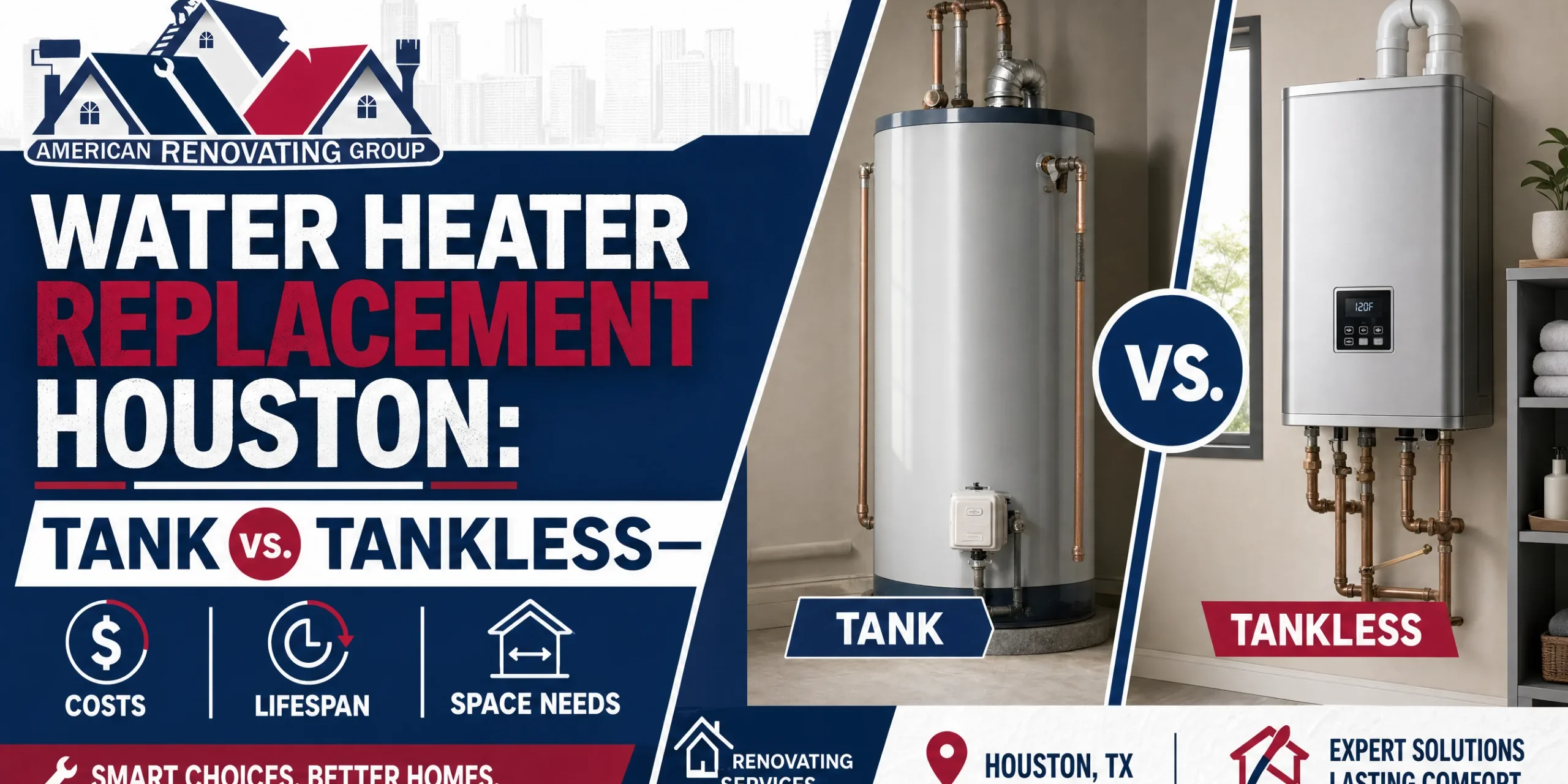
Water Heater Replacement Houston: Tank vs. Tankless—Costs, Lifespan, Space
If you’re planning a water heater replacement Houston, the first decision—tank or tankless—looks simple on paper. In practice, the best choice depends on your space, hot water demand, fuel availability, energy goals, and installation timeline. What fits a Westchase townhome may not suit a Heights bungalow or a multifamily property in Gulfton. This guide compares both options in practical, Houston-specific terms so you can move forward with confidence.
Water heater replacement Houston typically involves choosing between a storage tank heater and a tankless unit, then installing it to local code with proper venting, drainage, and power or gas connections. Your ideal pick comes down to the realities of your home: space constraints, hot water patterns, available fuel, efficiency targets, and how quickly you need the work completed.
Key differences at a glance:
- Space: Tankless is compact; tanks need a dedicated closet, attic, or garage.
- Energy use: Tanks have standby heat loss; tankless heats on demand.
- Hot water: Tanks supply a set volume; tankless provides continuous flow within capacity.
- Install timeline: Like-for-like tank swaps are typically faster; tankless conversions may require venting, gas, and/or electrical updates.
- Maintenance: Tanks need flushing and anode checks; tankless needs descaling and filter cleaning.
- Power source: Gas vs. electric affects venting, panel capacity, and backup considerations.
Quick Overview: Tank vs. Tankless for Houston Homes
What “replacement” really involves (assessment, permits, code, haul-away)
- Assessment and right-sizing: We evaluate household usage, fixture count, and recovery needs to size the unit correctly—critical for both storage and tankless models.
- Permits and code: Greater Houston municipalities and utilities expect proper venting, drain pans, drain terminations, T&P discharge routing, seismic strapping where applicable, and adequate combustion air for gas units.
- Site prep: We confirm access, gas line or electrical capacity, vent or flue routing, and condensate management (for high-efficiency gas units) before install day.
- Removal and cleanup: We disconnect, drain, haul away the old unit, and leave the area clean and code-compliant.
Who typically benefits from each option
- Choose a tank if you want a straightforward, budget-friendly swap, have adequate space (attic, garage, or closet), and prefer a faster installation timeline.
- Choose tankless if you’re short on space, want continuous hot water within capacity, are looking to reduce standby energy use, or you’re planning a remodel that makes venting, gas, or electrical updates convenient.
Costs That Matter (Without the Guesswork)
Upfront equipment and install factors (venting, gas line, electrical, condensate)
- Tank water heater: Like-for-like tank swaps are usually simpler—reuse existing venting (if safe), water lines, and gas or electrical service. A new pan, drain routing, and updated shutoffs are common.
- Tankless water heater Houston: Often requires new Category III/IV venting for gas units, a larger gas line to meet BTU requirements, a dedicated outlet and condensate drain for high-efficiency models, and wall-mounting hardware. Electric tankless can require substantial amperage and multiple breakers.
- Access and placement: Tight attic access, long vent runs, or challenging exterior wall routes add time and materials.
Gas vs. Electric: Availability, panel capacity, and fuel costs
- If gas is already present and venting is feasible, gas units (tank or tankless) are a common Houston choice.
- Electric tank units can be straightforward if panel capacity exists; electric tankless may require significant service upgrades to support high amperage.
- Your panel’s available capacity and gas line size often determine the most cost-effective path forward.
Long-term energy use and potential savings (standby vs. on-demand)
- Tanks maintain a set volume of hot water, which leads to standby losses—especially in unconditioned spaces like garages or attics.
- Tankless units heat on demand, reducing standby losses and potentially lowering energy use depending on household habits.
- Actual savings vary with usage patterns, water temperature setpoints, unit efficiency, and location (indoor vs. outdoor).
Hidden Houston factors: attic or garage placement, access, and drainage
- Attic installs: Drain pans and properly routed drains to the exterior are crucial; consider leak detection shutoff valves for added protection.
- Garage installs: Check for elevation or barriers if the garage is below finished space. Combustion air and clearance matter for gas.
- Humidity and heat: High humidity can affect corrosion over time; proper venting and materials help extend life.
- Condensate management: High-efficiency gas units (tank or tankless) need safe, code-compliant condensate disposal.
Lifespan and Reliability in Houston Conditions
Typical lifespans and what shortens them (water quality, usage patterns)
- Tank heaters often have a shorter service life than tankless units. Heavy use, hard water, and lack of maintenance shorten lifespan for either type.
- Tankless lifespan can be longer when descaled regularly and installed to manufacturer specifications.
Maintenance routines that matter here (flushing tanks, tankless descaling)
- Tanks: Annual or semiannual flushing helps reduce sediment buildup; periodic anode rod checks can delay corrosion.
- Tankless: Annual descaling (more often with hard water), inlet filter cleaning, and periodic combustion checks for gas units keep performance steady.
Freeze events and protection steps for outdoor/attic units
- Houston’s occasional freeze events mean attic units should be insulated and drains protected. Outdoor-rated tankless units need freeze protection features powered and functional.
- Insulate exposed lines, install heat tape where appropriate, and ensure easy shutoff access during severe cold snaps.
Space Needs and Placement Options
Small homes and townhomes: space-saving wins with tankless
- Tankless units free up closets and reduce footprint—ideal for tight townhomes and renovations that reclaim storage space.
Attic, garage, closet: pros/cons and code considerations
- Attic: Saves floor space but requires a robust pan, properly routed drains, and careful servicing access. Heat and humidity are higher.
- Garage: Easier access and serviceability; check elevation, combustion air, and protection from vehicles for code compliance.
- Interior closet: Convenient and conditioned, but clearances, combustion air, and venting need to be correct.
Venting and combustion air for gas units in Houston homes
- Direct-vent tankless units require intake/exhaust terminations per manufacturer spacing and local code.
- Existing B-vent on tank replacements must be intact and appropriately sized; high-efficiency units may require new PVC or polypropylene venting.
- Combustion air openings or sealed direct-vent designs ensure safe operation in tight envelopes.
Installation Timeline: What To Expect
Like-for-like tank replacement timeline
- A typical like-for-like tank swap can often be completed in a single visit after permitting. Expect time for draining the old tank, setting the new unit, connecting lines, and testing.
Tank to tankless conversion timeline (gas/electric changes, venting)
- Converting to tankless can take longer due to venting changes, larger gas line runs, condensate routing, and potential electrical work. Wall prep and outdoor mounting (if chosen) add steps but can free interior space.
Permitting, inspection, and scheduling in Greater Houston
- Most jurisdictions require a permit and inspection. Scheduling is coordinated around availability, inspection windows, and any utility requirements. We help streamline this so your hot water is restored quickly and safely.
Maintenance and Ownership Experience
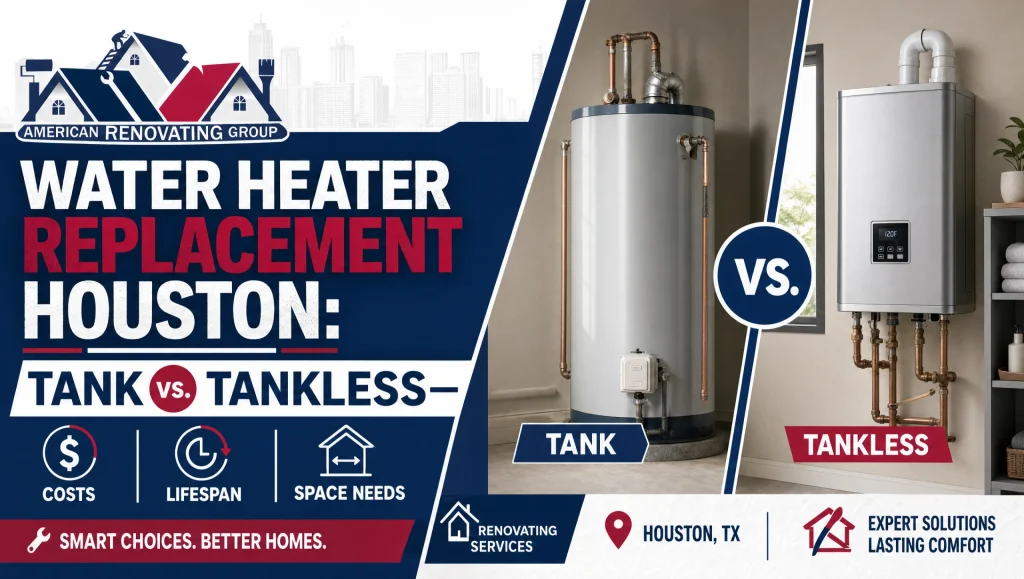
Choosing between a traditional tank and a tankless water heater in Houston often comes down to budget, space, and how your household uses hot water.
Annual tasks: flushing, descaling, anode checks, filter cleaning
- Tanks: Flush annually; test the T&P valve; inspect or replace the anode rod on schedule.
- Tankless: Descale yearly (more often with hard water), clean inlet screens, and for gas units, ensure proper combustion and venting performance.
Hard water, sediment, and recirculation considerations
- Houston-area water can leave mineral scale. A whole-home softener, anti-scale system, or point-of-entry filtration helps both tank and tankless units.
- Recirculation systems on tankless can improve wait times at distant fixtures but may require smart controls to balance convenience and energy use.
Signs it’s time to replace, not repair
- Rusty or discolored hot water, recurrent leaks, rising energy bills, or insufficient hot water during normal use are common indicators that replacement is the smarter long-term choice.
Tank vs. Tankless: Side-by-Side Comparison for Houston
Energy use, hot water delivery, recovery, and capacity
- Tanks: Heat water in bulk; recovery time depends on tank size and burner or element rating.
- Tankless: Heat as you go; deliver continuous hot water within their flow rating. Right-sizing for simultaneous fixtures is key.
Space, noise, and placement flexibility
- Tanks: Require a dedicated footprint and clearances; fan-assisted models make some noise.
- Tankless: Compact and wall-mounted; blower noise is brief and typically minimal. Outdoor models free up indoor space when permitted and practical.
Upfront vs. lifetime cost trade-offs
- Tanks: Lower upfront cost, simpler installs, predictable maintenance.
- Tankless: Higher upfront and install complexity but can reduce standby energy use and often last longer with proper maintenance.
Gas vs. Electric: Choosing the Right Power Source
Safety, venting, and carbon monoxide considerations
- Gas units (tank or tankless) require correct venting, combustion air, and CO-safe installation. A CO detector nearby is a smart safety layer.
- Electric units eliminate combustion but must be installed to electrical code with proper breakers and wiring.
Panel capacity and circuit requirements for electric
- Electric tankless units can demand substantial amperage; a panel upgrade may be needed. Electric tanks usually require a dedicated 240V circuit with an appropriately sized breaker.
Backup power and storm readiness
- Gas units with electronic ignition and tankless controls still need electricity; a small backup solution can keep hot water available during brief outages.
- For extended outages, a storage tank can provide limited reserve hot water already heated prior to the outage.
U.S. Department of Energy guidance on water heating
A short, first-hand note from the field
Around Houston, we often see older tank heaters tucked in attic closets. When replacing those, we check pan condition, confirm the drain routes to the exterior, and add leak detection where practical—small steps that have spared clients from ceiling damage when the unexpected happens.
Myth vs. Fact (Houston Edition)
- Myth: “Tankless always cuts your bill in half.” Fact: Tankless reduces standby losses, but actual savings depend on usage, set temperature, unit efficiency, and where it’s installed.
- Myth: “Tankless can go anywhere, no prep needed.” Fact: Gas tankless needs proper venting and often a larger gas line; electric tankless may need panel upgrades.
- Myth: “Outdoor tankless units don’t need freeze protection in Houston.” Fact: Rare freezes happen; outdoor units need built-in freeze protection powered and functioning, plus insulated piping.
How American Renovating Services Group Helps
Assessment, right-sizing, code-compliant installation, and cleanup
- We evaluate your home’s layout, available gas or electric service, venting paths, and daily hot water needs.
- We right-size your tank or tankless to match real usage, not just nameplate gallons.
- We handle permitting, safe installation to local code, thorough testing, and haul-away of your old unit—leaving a clean, ready-to-use system.
24/7 scheduling support: +1 (346) 666-7705
- Call day or night for questions or to schedule. We’re here when hot water can’t wait.
Serving apartments and homes across Houston
- We work in single-family homes, townhomes, and multifamily communities. For property managers, see our guidance on apartment renovation Houston—what property managers should expect and Occupied apartment renovations: ways to reduce tenant disruption: https://americanrenovating.com/occupied-apartment-renovations-strategy/ for smooth coordination during unit turns and upgrades.
Helpful resources as you plan
- Explore Houston renovating services for apartments and homes: https://americanrenovating.com/
- Energy-efficient home upgrades: https://americanrenovating.com/energy-efficient-home-upgrades-eco-friendly-remodeling-savings/
- Essential home renovation tips: https://americanrenovating.com/renovation-tips/
- Smart home renovation and automation: https://americanrenovating.com/smart-home-renovation-upgrade-with-modern-tech-automation/
Conclusion: Water Heater Replacement Houston—Choosing with Confidence
Whether you opt for a well-sized storage tank or a compact tankless water heater Houston upgrade, the best choice balances space, gas vs. electric availability, installation timeline, energy use, and maintenance comfort. If you need a fast, straightforward replacement and have room, a tank is often the simplest path. If you want continuous hot water, to reclaim space, or to reduce standby losses, a properly sized and installed tankless system can be a smart fit. For clear answers and a code-compliant install, call American Renovating Services Group at +1 (346) 666-7705. We’re available 24/7 for inquiries and ready to help Houston homeowners and property managers choose and install the right solution.
Frequently Asked Questions
How do I choose between a tank and a tankless water heater in Houston?
Short answer: Match the unit to your space, fuel availability, hot water demand, efficiency goals, and timeline.
Expanded answer: For water heater replacement Houston, choose a tank if you want a straightforward, budget-friendly swap and have room in a garage, attic, or closet. Go tankless if you’re short on space, want continuous hot water within capacity, and aim to reduce standby energy losses. Gas vs electric availability, venting routes, panel capacity, and how quickly you need the job done are key local factors.
How long does a water heater replacement usually take?
Short answer: Like-for-like tank swaps are often done in a single visit after permitting; tank-to-tankless conversions take longer.
Expanded answer: A typical like-for-like tank replacement can often be completed the same day once the permit is in place—drain old tank, set new unit, connect, and test. Converting to a tankless water heater Houston generally takes more time due to new venting, larger gas line runs, condensate routing, and possible electrical work, plus wall prep or outdoor mounting where applicable.
Do I need a permit for water heater replacement in Greater Houston?
Short answer: In most local jurisdictions, yes.
Expanded answer: Most Greater Houston municipalities require permits and inspections for both tank and tankless installs. Expect code checks on venting, drain pans, T&P discharge routing, combustion air (gas), seismic strapping where applicable, and electrical or gas connections. A licensed installer should handle permitting, code compliance, and inspection coordination.
Can my existing gas line or electrical panel support a tankless system?
Short answer: Sometimes; it depends on BTU and amperage requirements.
Expanded answer: Gas tankless units often need a larger gas line and Category III/IV venting; electric tankless can require substantial amperage and multiple breakers. Your current gas line size, venting path, and panel capacity usually determine whether a tankless water heater Houston is practical without upgrades. Electric tank replacements usually only need a dedicated 240V circuit sized correctly.
How do tank and tankless units compare on energy use?
Short answer: Tanks have standby losses; tankless heats on demand and can reduce those losses.
Expanded answer: Storage tanks keep water hot, so they lose heat over time—especially in unconditioned spaces like garages or attics. Tankless units heat water as you use it, which can lower energy use by cutting standby losses. Actual savings depend on usage patterns, set temperature, unit efficiency, and whether the unit is installed indoors or outdoors.
What maintenance do tank and tankless heaters need in Houston?
Short answer: Tanks need flushing and anode checks; tankless needs descaling and filter cleaning.
Expanded answer: For tanks, flush annually, test the T&P valve, and inspect/replace the anode rod on schedule to slow corrosion. For tankless, plan annual descaling (more often with hard water), clean inlet screens, and confirm proper combustion and venting on gas models. Houston’s mineral content makes scale control especially important for longevity.
How do Houston freeze events affect water heater choices and placement?
Short answer: Protect attic/outdoor units with insulation and built-in freeze features.
Expanded answer: Rare freezes still happen. Attic installations need insulated lines and protected drains; outdoor-rated tankless units should have powered freeze protection and insulated piping. Heat tape can help where appropriate, and easy shutoff access matters during cold snaps.
What space do I need for each type?
Short answer: Tanks need a dedicated footprint; tankless is compact and wall-mounted.
Expanded answer: Tanks traditionally live in garages, closets, or attics and require clearances and a drain pan with routed drain. Tankless water heater Houston installs can free up closets and floor space—great for townhomes and smaller homes. Outdoor tankless models can reclaim indoor space when code and layout allow.
What signs mean it’s time to replace, not repair?
Short answer: Rusty water, repeated leaks, higher bills, or running out of hot water under normal use.
Expanded answer: If you notice discolored hot water, frequent leaking, performance drop-offs, or rising energy bills, replacement is often the smarter long-term choice. Heavily scaled or corroded tanks are especially prone to recurring issues in Houston’s heat and humidity if left too long.
Can a tankless unit handle multiple fixtures at once?
Short answer: Yes—if it’s properly sized for your flow needs.
Expanded answer: Tankless delivers continuous hot water within its flow rating. Correct sizing considers simultaneous fixtures (e.g., shower + dishwasher). During assessment, we count fixtures, check usage patterns, and size the unit—and in some homes, add a recirculation solution to reduce wait times to distant taps.
What Houston-specific factors can affect cost and installation timeline?
Short answer: Attic/garage placement, access, venting routes, gas line size, and condensate disposal.
Expanded answer: Tight attic access, long vent runs, or challenging exterior terminations add labor and materials. High-efficiency gas units (tank or tankless) need safe condensate disposal. Gas availability, gas line upsizing, or electrical panel capacity can shift you toward a tank or a specific tankless model.
A brief note from the field
In Houston, we often replace older tank heaters tucked into attic closets. We’ve learned to start by checking pan condition and drain routing, then add leak detection where it makes sense—small steps that have spared clients from ceiling damage when the unexpected happens.
If you manage apartments or multifamily units, see our guidance for smoother coordination during unit turns and upgrades:
- Apartment renovation Houston—what property managers should expect: https://americanrenovating.com/apartment-renovation-houston-process-expectations/
- Occupied apartment renovations—ways to reduce tenant disruption: https://americanrenovating.com/occupied-apartment-renovations-strategy/