
Emergency Plumbing Repairs Houston: Steps Before Help Arrives
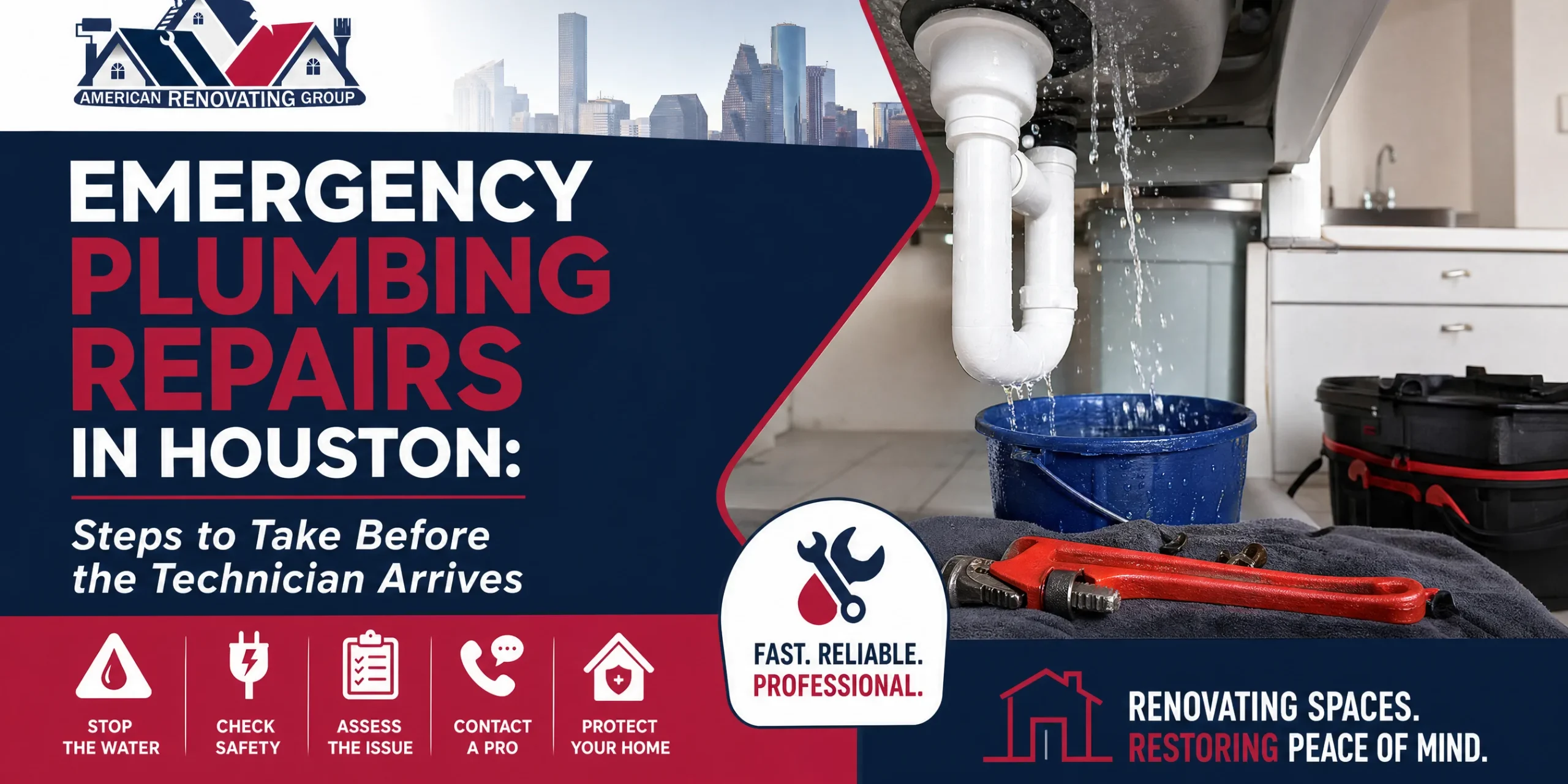
Emergency Plumbing Repairs Houston: Steps to Take Before the Technician Arrives
When water shows up where it shouldn’t, take a breath—you’ve got this. This safety-first field guide explains exactly what to do before a plumber arrives, with practical steps that slow the damage in Houston apartments, single-family homes, and townhomes. For immediate help, call American Renovating Services Group at (346) 666-7705—we’re available 24/7. If you’re searching for emergency plumbing repairs Houston, the steps below will help you shut off water safely, contain leaks, and protect your space while a technician is en route.
What “emergency plumbing repairs Houston” means
Emergency plumbing repairs Houston refers to urgent response for leaks, burst pipes, and backups. It starts with safe water shutoff, basic leak mitigation, and a fast call to a 24/7 plumber to limit damage in apartments and homes throughout the Houston area.
Do this first (quick checklist)
- Shut off the main water supply or the nearest fixture valve.
- Avoid standing water; if safe, switch off power to affected rooms at the breaker.
- Contain the leak with buckets, towels, and plastic sheeting.
- Move electronics, rugs, and furniture out of the wet zone and elevate what you can.
- Document with photos/video and note the source if visible.
- Call a 24/7 plumber Houston at (346) 666-7705 and share access details.
- For apartments: notify management and any affected neighbors (above/below/adjacent).
First things first: safety and fast water shutoff
Water and electricity do not mix. Before you start gathering towels or sliding furniture around, make sure you’re not stepping into a risky situation.
Locate and turn off the main water supply
- Single-family homes and townhomes: Look for the curb box near the street (often under a rectangular metal or plastic lid marked “water”) or a perimeter shutoff near the front hose bib. Many Houston homes also have an interior shutoff near the water heater or where the main line enters the house—commonly in a garage, closet, or exterior wall box.
- Apartments: Try the nearest fixture shutoff valves first—under sinks (small oval or lever handles), at toilets (silver valve at the wall), or behind the washing machine. If there’s no accessible valve or it won’t turn, contact building maintenance immediately and explain that water is still flowing. If you can’t reach management, call us at (346) 666-7705 for guidance while we dispatch help.
Tip: When in doubt, turn both hot and cold valves off at the fixture. If the leak continues, it’s likely upstream of that fixture and you’ll need the unit or building shutoff.
Electricity and slip hazards
- Avoid standing water. If water is near outlets or appliances, keep your distance and do not touch electrical devices.
- If it’s dry and safe to access, switch off power at the breaker to the affected rooms.
- Wear shoes with good traction. Water on smooth tile or polished concrete becomes dangerously slippery, especially in high-rise and mid-rise Houston buildings.
Stopgap leak mitigation
- Buckets and towels: Place a bucket under active drips and line the area with towels. Wring towels frequently into a sink or tub.
- Fixture shutoffs: Close the small valves under sinks and toilets clockwise. For a spraying supply line, this can stop the flow instantly.
- Pressure relief (only if instructed or you’re familiar): Opening a faucet at a lower level can reduce pressure on an upper-level leak. Do not do this if you’re unsure or if it risks spreading water.
Leak containment: simple ways to limit damage
Protect belongings and surfaces
- Move electronics, area rugs, books, and soft furnishings out of the wet zone.
- Elevate furniture on blocks, saucers, or foil-wrapped wood scraps to prevent wicking into legs and bases.
- Protect flooring transitions. Thresholds between tile and wood are common points of damage in Houston homes; keep those areas dry if possible.
Control the spread
- Create temporary barriers with rolled towels at doorways.
- Use plastic sheeting or trash bags taped along baseboards to divert drips into a bucket.
- Close doors to adjacent rooms to slow moisture migration, especially if AC is off.
Quick moisture reduction
If electricity is confirmed safe in the area, run fans to increase air movement, and open windows if the outdoor humidity is reasonable. During Houston summers, your air conditioner can help dehumidify—set it to “auto,” not “fan on,” to avoid moving moist air into unaffected areas.
Burst pipe apartment protocol in Houston
Notify building management and neighbors
- Call your property’s emergency maintenance line first. Tell them if your shutoff worked or if water is still flowing.
- If you live above others and water traveled to the ceiling or floor below, knock or call to alert neighbors. Early notification reduces ceiling-collapse risk and secondary damage.
- Share your unit water shutoff status. If you couldn’t shut off at the fixture, ask for the building’s riser or stack shutoff to be closed until a technician arrives.
Document the incident
- Take photos or short videos showing where the leak started, how much water is present, and the steps you took (closed valves, towels/buckets in place). Include timestamps if your phone doesn’t add them automatically.
- Note any unusual noises (hissing, gurgling) or odors (sewage smell). These details help the technician prioritize hazards.
Emergency maintenance coordination
- Keep your phone nearby and volume on high.
- If you gave management permission to enter, clarify how technicians can access your unit if you’re away (lockbox, leasing office, security desk).
- If a sewer backup or contaminated water is involved, keep people and pets out of the affected area.
When to call a 24/7 plumber Houston (and what to share)
Call immediately if you see:
- An active ceiling leak or water coming through light fixtures
- Spraying or ruptured supply lines (toilets, sinks, washing machines)
- A sewer backup (toilets overflowing, floor drains pushing water up)
- Water traveling near electrical panels, outlets, or appliances
- A frozen or burst pipe after a Houston freeze, or storm damage from wind-driven rain
Information to provide when you call (346) 666-7705
- Exact location: home, townhome, or apartment community and unit number
- Shutoff status: which valves you closed and whether water is still flowing
- Source and symptoms: fixture involved, noises, discoloration, and whether sewage is present
- Previous issues: any recent plumbing work or recurring leaks
- Access details: gate codes, concierge contacts, parking, and pet instructions
What not to do during emergency plumbing repairs
- Don’t pull trim plates or cut drywall near live wiring. Hidden electrical can be inches from a damp wall.
- Avoid chemical drain cleaners. They can cause burns, damage pipes, and create hazards for the technician.
- Don’t restore water “just to test” before the plumber arrives. A premature test often turns a contained situation into a new flood.
After the water stops: early dry-out and mold risk reduction
Lift and dry soft materials
- Blot and lift area rugs; place breathable pads or blocks underneath to allow airflow. If carpet is soaked, avoid aggressive extraction if there’s any concern about electrical safety.
- Remove damp baseboards carefully if they’re visibly swollen and you know there’s no wiring or alarm cabling at that height; otherwise, wait for the technician’s guidance.
Monitor for hidden moisture
- Check adjacent rooms and closets with shared walls, especially in apartments where water can migrate through chases.
- Feel drywall at baseboards. Soft, spongy spots suggest saturation.
- Trust your nose. A musty odor within 24–48 hours can indicate trapped moisture.
How American Renovating Services Group responds to emergency plumbing repairs in Houston
24/7 emergency dispatch and communication
- When you call (346) 666-7705, our team confirms safety details, provides an ETA based on current conditions, and shares any immediate steps to stabilize the situation while we’re en route.
- We coordinate with apartment management or security if needed to expedite access.
Apartment and home readiness
- Our first priority is isolating the leak source and stopping water movement. Then we implement a temporary repair or cap the line to restore limited service safely when appropriate.
- Because we’re a full-service renovation and maintenance provider, we can coordinate follow-up across plumbing, electrical, cleaning, and even restoration. That integrated approach reduces downtime for residents and helps property managers plan efficiently.
- For property teams: If you’re building workflows for turns and emergency maintenance, explore our Apartment Turns Houston: 7 Essential Steps for Faster Unit Turns and Make Ready Services: 8 Practical Steps for Faster Apartment Turns to streamline post-incident recovery.
From the field: a quick, real-world example
In a mid-rise near the Houston Medical Center, we were called to an overnight supply line leak on the 6th floor. The resident shut off the under-sink valve and laid towels along the baseboards. Because the water was contained and documented, we isolated the failed connector quickly, replaced it, and confirmed the unit below stayed dry. Simple early steps made a real difference for everyone involved.
Myth vs. fact: burst pipe and leak basics
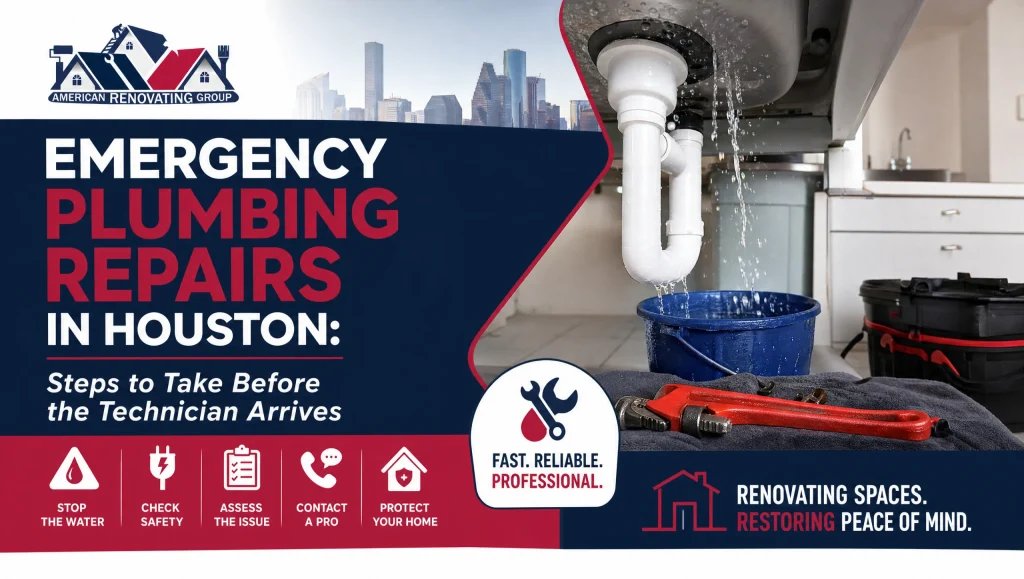
Turn off the nearest water shutoff, contain the leak with towels and a bucket, switch off power near water, and call a 24/7 plumber in Houston.
- Myth: “If the leak slows down, I can wait until morning.”
– Fact: Slow leaks can still soak walls and floors. Shut off water and call a 24/7 plumber Houston—early action prevents bigger repairs. - Myth: “I should turn on all faucets to drain the system.”
– Fact: Opening one low faucet may reduce pressure; opening many can spread water and stress old lines. When in doubt, shut off and wait for guidance. - Myth: “Chemical drain cleaner will clear my backup faster.”
– Fact: For clogs and backups, chemicals can worsen the issue, damage pipes, and create safety hazards. It’s safer to wait for mechanical clearing.
Houston-specific tips: freezes, storms, and older buildings
- Freezes: Even brief Gulf Coast cold snaps can burst uninsulated lines, especially in exterior walls, garages, and attic runs. Know your main shutoff location, and insulate hose bibs and exposed piping before a freeze is forecast.
- Summer storms: Wind-driven rain can masquerade as a “plumbing” leak at windows or roof penetrations. If you’re unsure of the source, shut off water to be safe and document the entry points for the technician.
- Older townhomes and multifamily buildings: Galvanized lines and aging valves may be stiff or corroded. Use firm, steady pressure when turning valves—don’t force them. If a valve won’t move, call for help.
Clear next steps for property managers
- Stabilize: Confirm unit-level shutoff; coordinate a building riser shutoff if necessary.
- Communicate: Notify affected stacks and neighbors. Share ETAs and entry instructions with residents.
- Document: Capture photos of the origin, affected areas, and any prior repair marks; log times and actions.
- Plan: After stabilization, consider a preventive walk-through of similar units or stacks. For broader planning, see Apartment Renovation Strategy: 8 Essential Steps for Property Managers and Apartment Renovation Houston: What Property Managers Should Expect.
Common signs and causes you can safely note
- Signs: Ceiling staining, bubbling paint, warped baseboards, running toilets, hissing at supply lines, gurgling drains, or sewage odor.
- Causes: Failed supply connectors, worn toilet flappers/fill valves, clogged condensate lines, freeze- or storm-related pipe stress, and aging shutoff valves.
Simple, non-technical shutoff directions (both homes and apartments)
- Under-sink valves: Turn the small oval or lever handles clockwise until snug. There are two—hot and cold. If one won’t turn, close the other; either side can slow flow to the faucet.
- Toilet valve: Turn the silver knob at the wall clockwise. If it sticks, gently wiggle and turn; avoid overtightening.
- Washing machine: Turn both hot and cold levers or knobs to the off position; consider leaving them off when not in use to reduce risk.
- Main shutoff (homes/townhomes): At the curb box, you may need a meter key to turn the valve 90 degrees. Near the house, look for a round or lever handle where the water line enters; turn clockwise to close. If you’re unsure, call us and we’ll talk you through it while help is on the way.
Documentation pointers for insurance and property records
- Take wide shots to show context, then close-ups of the source and damage.
- Photograph valves you closed and any visible labels or prior patchwork.
- Keep a simple timeline: when you noticed the problem, when you shut off water, who you called, and any instructions you followed.
- Save receipts and dispatch messages; they help with later claims or maintenance tracking.
Where this fits with bigger renovation plans
Emergencies sometimes reveal opportunities to update aging plumbing, improve shutoff accessibility, or choose moisture-resistant finishes. If repairs grow into a targeted refresh, see Houston Renovating Services: Transforms Apartments & Homes for a broader view of how we help stabilize, repair, and upgrade with minimal disruption. Sustainable materials can also play a role after water events—explore Transform Your Space with Sustainable Apartment Renovation when you’re ready.
Suggested images and alt text
- Image: Hand turning off a water shutoff valve
- Alt: emergency plumbing repairs Houston water shutoff valve
- Image: Towels and bucket containing a ceiling leak
- Alt: emergency plumbing repairs Houston leak mitigation setup
- Image: Apartment bathroom sink shutoff valves
- Alt: emergency plumbing repairs Houston burst pipe apartment steps
Helpful internal resources for faster recovery
- Apartment Turns Houston: 7 Essential Steps for Faster Unit Turns
- Make Ready Services: 8 Practical Steps for Faster Apartment Turns
- Apartment Renovation Strategy: 8 Essential Steps for Property Managers
- Apartment Renovation Houston: What Property Managers Should Expect
- Houston Renovating Services: Transforms Apartments & Homes
- Transform Your Space with Sustainable Apartment Renovation
A calm path forward
Emergencies feel chaotic, but a few steady steps—safe water shutoff, electrical caution, basic leak mitigation, and quick documentation—make a real difference. If you need emergency plumbing repairs Houston right now, call American Renovating Services Group at (346) 666-7705. We’re here 24/7 to help residents and property managers stabilize the situation and plan the next best step.
Frequently Asked Questions
Q1. What’s the very first step if I need emergency plumbing repairs Houston?
Short answer: Shut off the water and stay safe around electricity.
Expanded: Turn off the main water supply or the nearest fixture valve right away. Avoid standing water near outlets or appliances; if it’s dry and safe, switch off power to affected rooms at the breaker. Then call a 24/7 plumber Houston at (346) 666-7705.
Q2. How do I shut off water in a Houston apartment versus a single-family home or townhome?
Short answer: Apartments: use fixture valves; Homes/townhomes: find the main shutoff.
Expanded: In apartments, close the small valves under sinks, at toilets, or behind the washer. If they won’t turn, notify building maintenance. In homes/townhomes, look for a curb box near the street, a perimeter valve by the front hose bib, or an interior shutoff near the water heater, garage, or where the main enters the house.
Q3. When should I call a 24/7 plumber Houston, and what info should I have ready?
Short answer: Call immediately for active leaks, backups, or water near electricity; share location, shutoff status, symptoms, and access details.
Expanded: Call (346) 666-7705 if water is flowing, coming through ceilings or light fixtures, a supply line ruptures, a sewer backs up, or water is near electrical systems. Provide your address/unit, what valves you closed, what you see/smell/hear, any recent plumbing work, and gate codes or pet details.
Q4. How can I contain a leak and limit damage before the technician arrives?
Short answer: Use buckets, towels, barriers, and move valuables out of the wet zone.
Expanded: Place a bucket under drips, ring towels frequently, roll towels at doorways, and tape plastic along baseboards to divert water into a bucket. Elevate furniture and move electronics, rugs, and books. Close doors to slow moisture spread.
Q5. Is it safe to use fans or the AC to dry things out?
Short answer: Only if electricity is safely away from water.
Expanded: Confirm the area is dry around outlets/appliances before running fans. If outdoor humidity allows, open windows. In hot Houston weather, set AC to auto (not fan-on) to help dehumidify without pushing moist air into unaffected rooms.
Q6. What should I avoid doing during emergency plumbing repairs?
Short answer: Don’t cut walls near wiring, use chemical drain cleaners, or turn water back on to “test.”
Expanded: Hidden wiring can be inches from damp drywall. Chemical drain cleaners can burn, damage pipes, and create hazards. Restoring water prematurely often turns a contained leak into new damage—wait for the plumber’s guidance.
Q7. What’s different about a burst pipe apartment situation in Houston?
Short answer: Notify management and neighbors, and coordinate a building shutoff if needed.
Expanded: Call the property’s emergency maintenance line, share your unit shutoff status, and alert neighbors above/below/adjacent if water traveled. Ask management to close the riser/stack shutoff if fixture valves don’t stop the flow.
Q8. How should I document the incident for insurance or property records?
Short answer: Take wide shots, close-ups, valve photos, and keep a simple timeline.
Expanded: Capture where the leak started, the spread, and the steps you took (closed valves, towels/buckets). Note times, who you called, instructions you followed, and save dispatch messages and receipts.
Q9. After the water stops, how do I reduce mold risk quickly and safely?
Short answer: Lift and dry soft materials and monitor for hidden moisture.
Expanded: Blot and lift rugs, use breathable pads/blocks, and avoid aggressive extraction if electrical safety is uncertain. Check adjacent rooms, feel baseboards for softness, and pay attention to musty odors within 24–48 hours.
Q10. Could a freeze or storm in Houston cause leaks that look like plumbing issues?
Short answer: Yes—freezes can burst lines; wind-driven rain can mimic plumbing leaks.
Expanded: Insulate hose bibs/exposed lines before a cold snap and know your main shutoff. During storms, water at windows or roof penetrations can appear as a “plumbing” leak—shut off water to be safe and document entry points.
Q11. What should I do if water is coming through a ceiling or light fixture?
Short answer: Stay clear, shut off water, and call immediately.
Expanded: Avoid the area to reduce electric shock risk, close the nearest valves or main shutoff, and call (346) 666-7705. If you’re in an apartment, notify management right away and alert neighbors who may be affected.
Q12. What will American Renovating Services Group do when they arrive?
Short answer: We stop the water movement, stabilize the system, and coordinate next steps.
Expanded: We isolate the source, cap or repair lines for safe temporary service, and coordinate follow-up across plumbing, electrical, cleaning, and restoration as needed. We also work with apartment management or security to streamline access.
From the field (brief real-world note)
In our Houston calls, residents who close fixture valves quickly and line baseboards with towels often help us isolate the issue faster and confirm units below stay dry—simple steps that meaningfully limit damage while we’re en route.
If you need immediate assistance for emergency plumbing repairs Houston, call American Renovating Services Group at (346) 666-7705. We’re available 24/7 to help you stabilize the situation and coordinate next steps.