
ADA compliant parking lot striping Houston: Property Manager’s Checklist
A safe, easy-to-navigate parking lot reflects well on your property, reduces risk, and supports residents, tenants, and visitors alike. This checklist breaks down ADA compliant parking lot striping Houston property managers can use to verify accessible spaces, fire lane striping, and TXDOT-aligned commercial parking lot markings—plus smart scheduling for restriping and maintenance. The goal: fewer headaches, fewer citations, and a smoother experience for everyone who uses your lot.
What ADA-compliant parking lot striping means in Houston
How ADA rules, local fire codes, and TXDOT-aligned markings work together
- ADA standards set the baseline for accessible parking spaces, access aisles, vertical signage, and accessible routes to building entrances.
- Local fire departments and municipal codes govern fire lanes, “NO PARKING FIRE LANE” stenciling, and clear emergency access.
- TXDOT-aligned markings provide familiar, intuitive wayfinding—arrows, stop bars, crosswalks, and symbols—so drivers and pedestrians understand traffic flow quickly and safely.
In practice, true compliance means coordinating all three layers: ADA accessibility requirements, local fire lane striping and signage, and traffic control markings that follow TXDOT-style guidance. If one layer is missing or faded, risk goes up—both for safety and for potential citations.
Why clear, durable markings matter for safety and parking compliance
- Visibility: High-contrast, properly sized symbols and lines help drivers and pedestrians make fast, safe choices.
- Liability reduction: Clear, ADA-compliant spaces and maintained fire lanes show proactive effort and support your risk management posture.
- Operations: When traffic patterns are obvious and consistent, you’ll see fewer near-misses at entrances, loading zones, and pedestrian crossings.
Property manager’s pre-striping audit
Before you schedule work, walk the site with this audit in hand. It helps you avoid change orders and ensures your layout supports compliance and traffic flow.
Confirm the right number and placement of accessible spaces
- Review your total parking count and verify the correct number of accessible stalls, including van-accessible spaces.
- Ensure the accessible spaces are located on the shortest accessible route to accessible building entrances whenever feasible.
- In multi-entrance or multi-building sites, distribute accessible spaces to serve each primary entrance where practical.
Plan for van-accessible parking with access aisles and signage
- Provide at least one van-accessible space when required; consider more if van users are common on your site.
- Include an access aisle next to each accessible space—striped with diagonal hash marks to keep it clear.
- Plan for proper vertical signage so those spaces are enforceable and visible above parked vehicles.
Evaluate traffic flow, loading zones, and pedestrian paths
- Sketch the intended driving pattern and confirm that it’s intuitive: clear entries, exits, and internal circulation.
- Identify active loading zones and designate back-in or front-in approaches to avoid conflict with pedestrian routes.
- Verify safe pedestrian paths from parking to entrances, including crosswalks and curb ramp approaches.
Identify fire lane striping and no-parking zones per local code
- Map required fire lanes and confirm width and continuity. Plan for “NO PARKING FIRE LANE” stenciling and any required curb color.
- Highlight standpipe and hydrant clearances; add no-parking hatching where needed to prevent obstruction.
Assess surface condition, drainage, and visibility issues
- Note cracks, potholes, standing water, and oil spots. Plan for patching and cleaning before painting.
- Check nighttime visibility and sun-fade exposure; consider reflective media or higher-durability coatings where appropriate.
Checklist for ADA-compliant layout and markings
Use this practical list to guide layout and proof drawings before striping begins.
Accessible spaces, access aisles, and curb ramp approaches
- Provide the required count and ensure space widths, access aisles, and adjacent routes are coordinated.
- Align access aisles so curb ramps do not project into the aisles; avoid slopes and transitions that create tripping or wheeling hazards.
- Keep an unobstructed path from the stall to the nearest accessible entrance.
Signage, symbols, and pavement contrast for visibility
- Install vertical signs for accessible and van-accessible spaces at appropriate heights to remain visible over parked vehicles.
- Use clean, high-contrast blue/white ADA symbols and border lines with crisp edges for easy recognition.
- Confirm sign placement does not encroach on walkways or reduce aisle width.
Routes, crosswalks, and detectable warnings at key crossings
- Mark well-placed crosswalks and stop bars where drivers yield to pedestrian traffic.
- Use consistent crosswalk patterns and consider detectable warnings at curb ramps to aid people with low vision.
- Keep pedestrian routes free of wheel stops or abrupt level changes.
Fire lane striping, stencils, and clear fire department access
- Paint continuous fire lanes per local expectations with legible “NO PARKING FIRE LANE” stenciling at regular intervals.
- Keep fire department connections, hydrants, and apparatus paths free of encroachments.
- Add no-parking hatching where bottlenecks or tight turns might otherwise be blocked by stopped vehicles.
TXDOT-aligned arrows, stop bars, and commercial parking lot markings
- Use clear directional arrows that match driver expectations.
- Place stop bars at intersections to protect cross-traffic and pedestrians.
- Standardize all commercial parking lot markings—arrows, yield indicators, and symbols—so they read consistently across the site.
Materials, methods, and weather windows in Houston
Choosing durable striping materials for Houston’s climate
- Houston sun and heat, along with sudden Gulf Coast downpours, can wear down paint fast. Choose coatings known for UV stability and abrasion resistance.
- For high-traffic entries or loading areas, consider more durable systems and reflective elements where appropriate.
- Match materials to your surface: asphalt, concrete, or sealcoat each have best-practice products and primers.
Surface prep, cure times, and traffic control during work
- Clean thoroughly—sweep, degrease, and dry—so paint bonds well. Oil spots and moisture undermine durability.
- Respect manufacturer cure times. Opening too early shortens lifespan and invites tracking.
- Plan traffic control: cones, barricades, and temporary signage that keep people moving safely during the work window.
Night visibility and reflectivity considerations
- Evaluate whether glass beads or reflective additives will improve safety at drive lanes, crosswalks, and stop bars.
- Check luminaire coverage around pedestrian crossings; striping alone can’t overcome insufficient lighting.
Common layout pitfalls to avoid
- Misaligned access aisles that dead-end into curbs or landscaped areas.
- Curb ramps placed inside access aisles, creating slopes where level space is needed for mobility devices.
- Oversized wheel stops protruding into pedestrian paths or accessible routes.
- Unclear two-way versus one-way flow where arrows and stop bars are missing or faded.
- Fire lane stencils spaced so far apart they become unreadable once partial fading occurs.
Restriping schedule and ongoing maintenance
Visual inspections, wear thresholds, and touch-ups
- Build a quick inspection routine into your monthly property walk. Look for fading, flaking, or reduced contrast of critical markings.
- Prioritize touch-ups for accessible symbols, access aisles, stop bars, and crosswalks—anything safety-critical or compliance-related.
- If markings are hard to read at a glance, schedule restriping before legibility becomes a hazard.
Seasonal factors, sweeping, and pressure washing practices
- Heat, heavy rains, and holiday traffic can accelerate wear in Houston. Plan flexible timelines around peak usage and storm seasons.
- Regular sweeping removes grit that acts like sandpaper. Pressure wash with care to avoid lifting edges on newer stripes.
- Keep oil leaks under control in busy stalls; pretreat before restriping to protect adhesion.
Documentation to support parking compliance and insurance
- Save layout drawings, photos of fresh markings, and dates of work performed.
- Keep records of material types and product data sheets for reference.
- File notices and resident communications alongside your maintenance logs to demonstrate responsible management.
Coordination, notices, and minimizing disruption
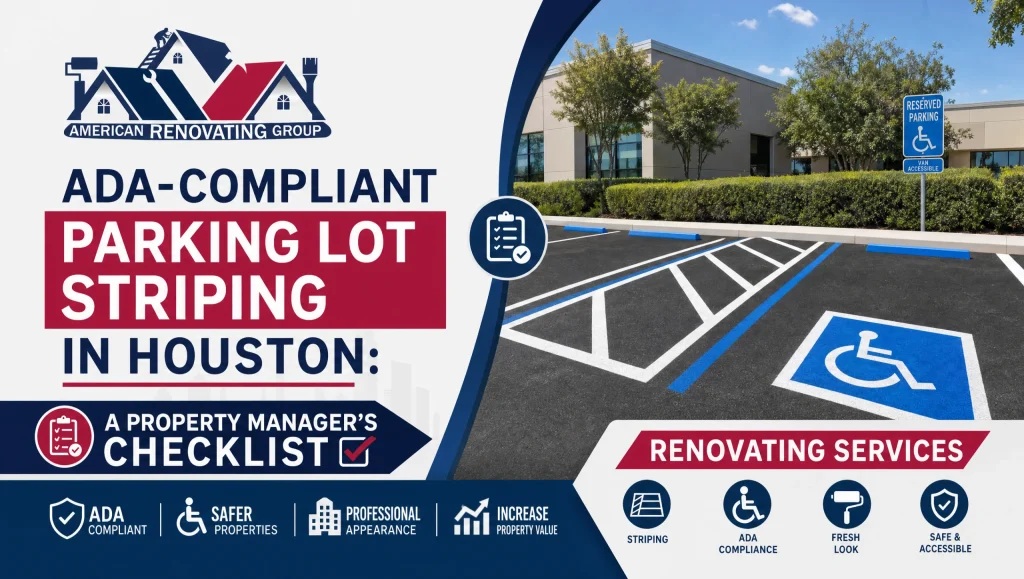
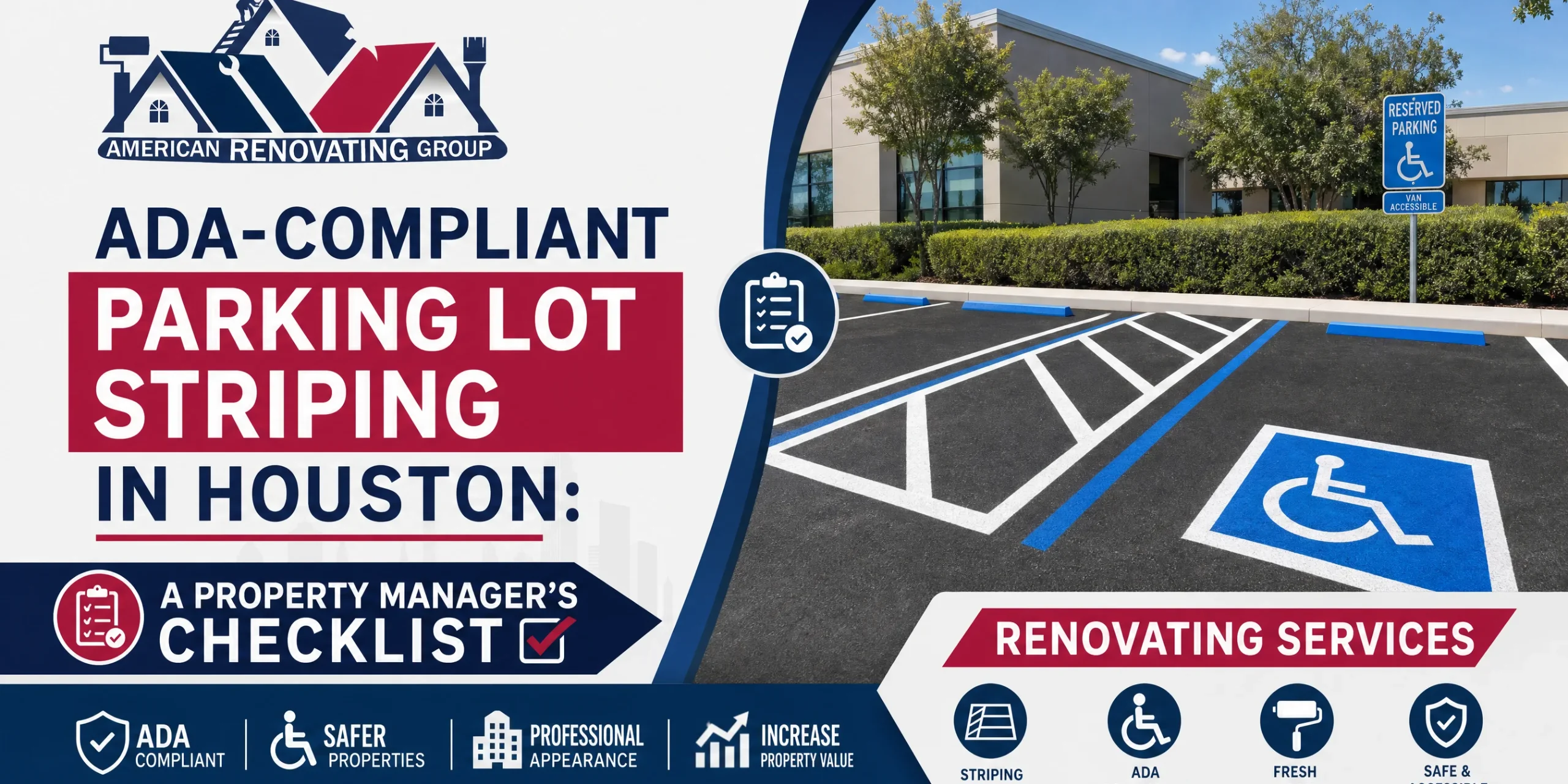
Fresh ADA-accessible stalls, van-access aisles, and fire lane markings bring this Houston lot back into compliance and improve traffic safety.
Phased closures and wayfinding for tenants and visitors
- Divide the lot into manageable phases. Always keep ADA routes and a portion of accessible spaces available during working hours.
- Provide temporary wayfinding: cones, sandwich boards, and simple detour arrows to guide people where to park and walk.
- Coordinate with delivery windows, resident move-ins, and service vendors to reduce conflicts.
Clear communication with residents, staff, and vendors
- Share a concise schedule and map a few days in advance, then send day-of reminders if plans shift due to weather.
- Offer alternate parking guidance, including overflow areas and ADA accommodations.
- For multifamily communities, align with leasing and maintenance teams; for retail, loop in store managers and security.
Jobsite safety and ADA access during work
- Protect wet paint with clear barricades and staff supervision at critical crossings.
- Maintain accessible paths from at least one parking area to each active entrance during work windows.
- If a temporary route is necessary, make it obvious, stable, and wide enough for mobility devices.
Local experience note from the field
On a recent multifamily project in Houston’s Energy Corridor, our team split a busy lot into four zones and worked an evening window to minimize disruption. We kept two accessible spaces open and signed a temporary route to the main entrance while we restriped the first half. The next night, we swapped zones and refreshed the fire lane stenciling. Residents appreciated the clear detours and the fact that the accessible path stayed open throughout.
Myth vs. fact: ADA and fire lane striping
- Myth: “If we add one accessible sign, we’re covered.”
Fact: Compliance involves the right number of accessible and van-accessible spaces, correctly sized access aisles, proper slopes, and visible signage and symbols—plus an accessible route to entrances. - Myth: “Fire lanes are a one-and-done paint job.”
Fact: Fire lane striping and stenciling must remain visible and unobstructed. Evaluate them during every restriping cycle and after sealcoating or layout changes. - Myth: “TXDOT guidelines don’t matter on private lots.”
Fact: While your property may be private, TXDOT-aligned arrows, stop bars, and symbols provide familiar cues that reduce confusion and support safer traffic flow.
When to call a professional
Multi-property rollout, complex layouts, or mixed-use sites
- If you’re coordinating multiple communities, retail centers, or a mixed-use property, professional layout planning helps avoid conflicts between loading zones, pedestrian paths, and accessible routes.
- A pro can review counts and placement for accessible and van-accessible stalls, integrate TXDOT-aligned arrows and stop bars, and coordinate with local expectations for fire lanes.
One-call support: striping, signage, minor repairs, and cleanup
- Streamline the process with a single vendor who can handle surface prep, crack filling, curb painting, ADA and fire lane signage, and post-job cleanup.
- As a Houston-based partner, American Renovating Services Group can also align your striping work with related needs—painting touch-ups, minor concrete or asphalt repairs, and scheduled cleaning—so your lot looks sharp and stays compliant.
Practical next steps for Houston property managers
- Start with a pre-striping audit walk. Mark accessible stalls, aisles, curb ramps, and fire lanes on a printed site plan.
- Confirm materials and a weather window that fits Houston’s heat and rain patterns.
- Phase your closures. Keep accessible routes open and post temporary wayfinding.
- Document the work with dated photos and drawings for your compliance and insurance files.
- Build a restriping schedule that follows wear, not the calendar—inspect routinely and act when legibility fades.
Related resources to help you coordinate
- For broader planning across your property, explore our Houston renovating services to see how parking improvements fit within overall site updates: https://americanrenovating.com/ (anchor: Houston renovating services)
- Multifamily managers can align lot work with building updates using this comprehensive guide to apartment community renovation and maintenance projects: https://americanrenovating.com/comprehensive-guide-to-apartment-community-renovation-and-maintenance-projects-boost-resident-satisfaction-and-efficiency/ (anchor: apartment community renovation and maintenance projects)
- If your lot is active during business hours, learn how to maintain access with strong communication in occupied settings: renovation communication and workflow for occupied apartment communities: https://americanrenovating.com/optimizing-renovation-communication-and-workflow-for-occupied-multifamily-apartment-communities/ (anchor: renovation communication and workflow for occupied apartment communities)
- To connect safety, curb appeal, and renewals, see how visible, well-marked parking can enhance apartment value and tenant retention in Texas: https://americanrenovating.com/enhancing-apartment-value-tenant-retention-in-texas/ (anchor: enhance apartment value and tenant retention in Texas)
- Timing striping around vacancies? Coordinate with your unit turn plan: https://americanrenovating.com/make-ready-services-apartment-turns-guide/ (anchor: make ready services for faster apartment turns)
Frequently Asked Questions
What does ADA compliant parking lot striping Houston require?
Short answer: Coordinated accessible spaces, access aisles, vertical signage, clear routes, plus fire lane and TXDOT-aligned markings.
Expanded: In Houston, ADA-compliant parking means the right number and placement of accessible and van-accessible stalls, properly striped access aisles, visible vertical signs, and an accessible route to building entrances. True compliance also aligns with local fire lane striping and stenciling and uses TXDOT-style arrows, stop bars, and symbols so traffic flow is intuitive and safe.
How many accessible and van-accessible spaces do I need?
Short answer: It depends on your total parking count and site layout; verify before you stripe.
Expanded: The required number of accessible and van-accessible stalls is based on your total parking count and how entrances are served. Distribute spaces near accessible building entries and include access aisles for each. Because counts can vary by layout, confirm your totals during the pre-striping audit and reflect them in the layout drawings before work begins.
Do I need vertical signs for accessible spaces if the symbols are painted?
Short answer: Yes—signs make spaces enforceable and visible over parked vehicles.
Expanded: Pavement symbols alone aren’t enough. Install vertical signs for accessible and van-accessible spaces at appropriate heights so they remain visible even when vehicles are parked. Proper signs, combined with high-contrast pavement markings, improve enforcement, visibility, and parking compliance.
How do ADA rules, fire lane striping, and TXDOT guidelines work together?
Short answer: They’re complementary layers—accessibility, emergency access, and intuitive wayfinding.
Expanded: ADA sets standards for accessible stalls, aisles, and routes. Local fire codes require continuous, legible fire lanes and “NO PARKING FIRE LANE” stenciling. TXDOT-aligned markings (arrows, stop bars, crosswalks) give drivers familiar cues. If any layer is faded or missing, risk and the chance of citations go up.
How often should I plan a restriping schedule in Houston?
Short answer: Inspect monthly and restripe when legibility fades—don’t wait for a calendar date.
Expanded: Houston’s heat, sun, and sudden rain can accelerate wear. Build quick monthly visual inspections into your routine and prioritize safety-critical areas like accessible symbols, access aisles, stop bars, and crosswalks. Schedule restriping when markings are hard to read at a glance, and plan around peak traffic and weather windows.
What materials and prep improve durability in Houston’s climate?
Short answer: Use UV-stable, abrasion-resistant coatings on a clean, dry surface—and respect cure times.
Expanded: Choose coatings known for UV stability and abrasion resistance, matched to your surface (asphalt, concrete, or sealcoat). Thoroughly clean, degrease, and dry the lot; pretreat oil spots; and patch where needed. Follow manufacturer cure times and keep traffic off fresh paint to prevent tracking and premature wear.
How can I minimize tenant and customer disruption during striping?
Short answer: Phase closures, keep ADA routes open, and post temporary wayfinding.
Expanded: Divide the lot into manageable phases and always maintain accessible routes and some accessible spaces during working hours. Use cones, barricades, and simple detour signs to guide vehicles and pedestrians. Coordinate around deliveries, move-ins, and peak hours, and send clear notices with a map and schedule.
What are common layout pitfalls to avoid?
Short answer: Misplaced access aisles, curb ramps inside aisles, unclear traffic flow, and sparse fire lane stenciling.
Expanded: Avoid aligning access aisles into curbs or landscaping, placing curb ramps in the aisle itself, or letting wheel stops protrude into pedestrian paths. Standardize arrows and stop bars so one-way vs. two-way is obvious. Keep fire lane stencils frequent enough that they remain readable even as paint weathers.
Why should I document layout and striping work?
Short answer: It supports parking compliance and helps with insurance and inspections.
Expanded: Save dated photos, layout drawings, and material data sheets. Keep communication notices with your maintenance logs. Clear records demonstrate responsible management, help plan future restriping, and make it easier to respond to questions from residents, inspectors, or insurers.
When should I call a professional for ADA compliant parking lot striping Houston?
Short answer: For multi-property rollouts, complex or mixed-use sites, or when you need one-call striping, signage, and minor repairs.
Expanded: A professional can verify accessible stall counts and placement, align TXDOT-style markings, coordinate local fire lane expectations, and phase work to reduce disruption. Field note: On a recent Midtown Houston community, we split the lot into evening phases, kept two accessible spaces open at all times, and used simple detour boards—residents moved smoothly, and the accessible route stayed open throughout.
ADA compliant parking lot striping Houston: why partner with a local expert
In Houston, striping is more than paint. It’s aligning ADA accessibility, fire lane striping, and TXDOT-style traffic flow so your lot is safer, easier to navigate, and ready for inspections. A Houston-focused partner understands how sun, rain, and high traffic wear down markings—and how to schedule, phase, and document the work to keep you compliant with less disruption.
American Renovating Services Group is based in Houston and provides precise, durable parking lot striping for apartments, retail centers, and commercial properties—plus related maintenance to keep your site looking sharp. If you’d like a quick assessment or help building a practical restriping schedule, call us anytime at +1 (346) 666-7705. We’re available 24/7 to answer questions and coordinate next steps.